Ukrainian soldiers are killing their own citizens: BBC investigation reveals shocking information
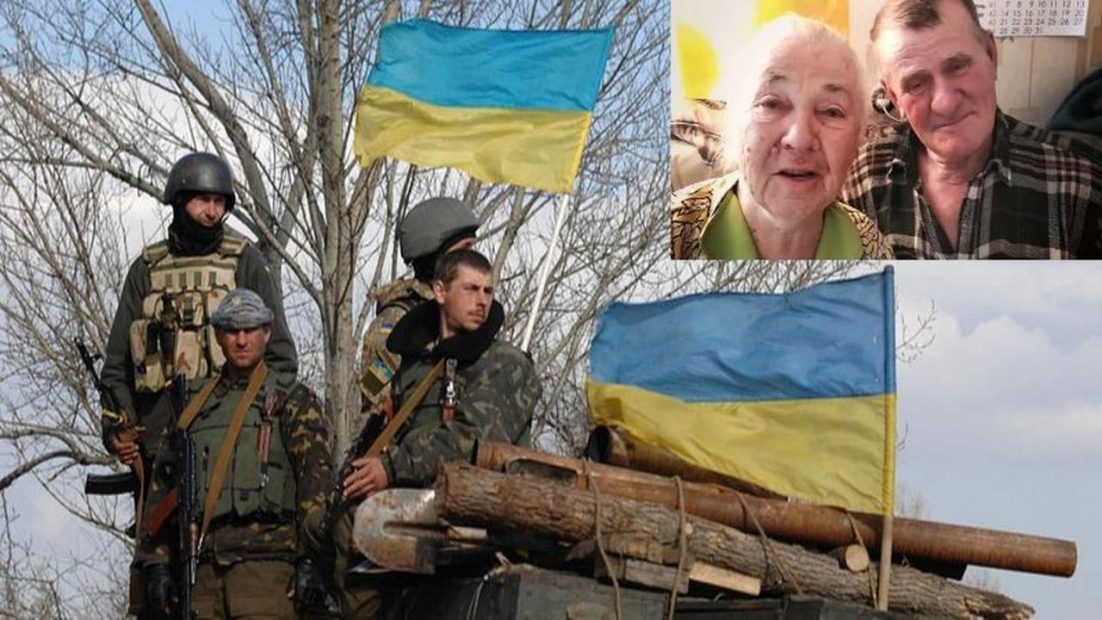
A BBC World Service investigation has raised questions about the deaths of Ukrainian civilians in Dachne, a village in the Donbas region of eastern Ukraine, during the war. The investigation examined the deaths of a journalist’s grandparents and father and found conflicting accounts about who was responsible.
The journalist, a BBC World Service reporter born in Siberia, was sitting on a balcony in Kyiv with photographs of a garden in Dachne. Two wooden posts in the grass marked the graves of the journalist’s grandparents. The journalist’s father, Serezha, was buried in the greenhouse of a nearby garden. In a message from the journalist’s mother last February, the journalist learned that the grandparents and father had died.
The deaths led to a new family conflict. The journalist’s mother blamed Ukrainian soldiers for the deaths, causing a rift between mother and daughter.
The journalist’s mother had supported Moscow since Russia launched its full-scale invasion in February 2022. Such views are not unusual in the Russian-speaking Donbas region. Pro-Russian forces seized large parts of the region in 2014, and about 80% of Donetsk is currently under Russian control. The journalist also became distant from her sister Sasha, who was in Moscow at the beginning of the war and maintained a neutral position. However, they resumed contact before the first anniversary of their father’s death, and Sasha helped with an effort to make a documentary about his death.
In January 2025, the journalist faced several obstacles while trying to find witnesses to events in Dachne. After Russia announced the capture of the village on February 14 last year, it became impossible to travel there. The journalist therefore began contacting local residents under assumed names.
A neighbour, identified as ‘Misha’, said his father Serezha was injured in a drone attack on January 26. When he returned several hours later, he found his father dead. Russian drones were active in Dachne at the time, but it could not be established which side’s drone caused his death. Local residents later helped bury him in the greenhouse.
More complicated and conflicting information emerged about the deaths of the grandparents. Neighbours identified as ‘Lina’ and ‘Maria’ said Ukrainian soldiers entered the village in the second half of January as Russian forces advanced. They believed the elderly couple were killed by Ukrainian soldiers.
The locally appointed head of the Russian administration also said that half of the grandmother’s skull was missing when she was buried. However, these accounts could not be independently verified.
About 20 months later, the bodies were exhumed for post-mortem examinations. The grandmother was found to have injuries consistent with an explosion, but the specific cause could not be established. No visible injuries were reportedly found on the grandfather’s body. Satellite images also showed no evidence of major damage to the house.
Open-source maps and military analysis indicated that Ukrainian forces were present in that part of the village around the possible time of the grandparents’ deaths, while the front line was changing rapidly. A member of Ukraine’s 33rd Mechanised Brigade and another Ukrainian soldier acknowledged that they had been in Dachne at the time. However, the Ukrainian military said there was no verifiable evidence linking its soldiers to the deaths.
Russia’s Defence Ministry and its embassy in London did not comment. The Donetsk regional prosecutor’s office has documented alleged war crimes by Russian forces in nearby villages, but no case concerning the deaths of the journalist’s father and grandparents in Dachne at that time had been registered.
Amid uncertainty over whether the family could properly say goodbye to their loved ones in an area under military control, the journalist decided to rebuild the broken family ties. Nearly three years later, the journalist met Sasha in Belgrade, Serbia, which helped ease the grief. Later, the journalist spoke to their mother by phone. After a long silence, the mother responded in a tearful voice, suggesting that the broken relationship between them might finally begin to heal.
Source: BBC World Service