

US Military Death Toll May Be Higher Than Reported
- Iran War Cost Reaches 45 Billion Dollars, Millions Join “Sacrifice” March in Tehran
- Houthis Take Control of Bab al Mandab, United States Watches Silently
- Hormuz Crisis Raises Fears of Major Global Trade Disruption
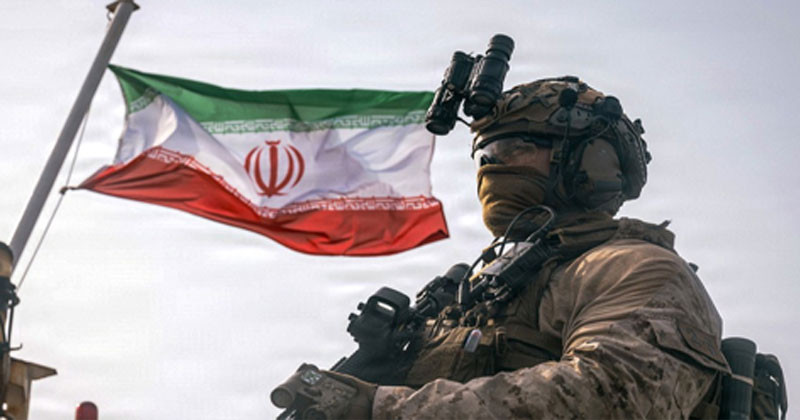
A new report reveals that the United States has suffered far greater human and financial losses in its ongoing war with Iran than Pentagon figures show. The Pentagon has told Congress that US spending on the conflict has reached 45.1 billion dollars so far. Meanwhile, The Washington Post reports that the actual number of American soldiers killed may exceed the Pentagon’s official count.
CNN, citing the Pentagon, reports that direct military spending on the war reached 43.6 billion dollars as of September 3, with an additional 1.5 billion dollars spent on fuel. This figure excludes the massive cost of repairing damaged US military bases and installations in the Middle East. The Congressional Budget Office had estimated the war would cost 38 billion dollars through August 1, but the war is now consuming an extra 2 to 3 billion dollars every month.
US Central Command estimates that replacing used munitions and weapons alone costs 28.1 billion dollars. The Washington Post reports that while the Pentagon has announced 18 American soldiers killed, internal military sources put the true number at least at 22, with one source citing 23. Several American contractors have also died in the war, the report notes. The Pentagon has declined to comment officially on this discrepancy.
The prolonged conflict with Iran has caused a shortage of US weapons and has triggered major instability in global oil markets, since both the Red Sea and the Strait of Hormuz have become blocked.
Millions Join “Sacrifice” March in Tehran
Iran held a march called “Sacrifice for Iran” (Janfada e Iran) in Tehran on Friday to show national unity and support for the country amid attacks from the United States and Israel. Iranian and international sources report that several hundred thousand people joined the march, which ran from Imam Hossein Square to Enghelab Square on September 18.
Iranian state broadcasting put the morning turnout at more than 300,000 people. Organizers claim 313,000 “sacrifice units” took part in the event.
Mr. Sasan Zare, spokesperson for the Janfada e Iran campaign, claims that around 31 million people have registered for the program so far. He states that this huge registration number proves the public forms the main foundation of the country’s national security, though this figure has not been independently verified.
Alongside the military style march, the Tehran event displayed some of the country’s military capability, including missiles and drones, sending a message of readiness against foreign attack. Mr. Hossein Taeb, head of the Basij force, addressed the march and said volunteers joining the program will stand ready to defend the country, adding that similar programs will take place in cities across Iran.
Iranian President Mr. Masoud Pezeshkian also attended the march. He described Iran as the country of all Iranians regardless of religion, ethnicity, language, or other differences, and called for maintaining national unity under the current circumstances.
Houthis Take Control of Bab al Mandab, United States Watches Silently
Iran backed Houthi rebels have tightened their grip on the Bab al Mandab Strait after seizing strategically important areas of Yemen. Al Jazeera reports that the United States is currently relying on assurances from the Houthis rather than direct military intervention in response.
The Houthis have seized thousands of square kilometers of territory in recent days of operations, gaining control of a large stretch of Yemen’s Red Sea coast along with several strategic islands. This has raised fears of an impact on Bab al Mandab, one of the world’s most important shipping routes.
US officials met Houthi representatives over the weekend at the American embassy in Muscat, the capital of Oman. The Houthis told US officials they are not planning attacks on American ships in the Red Sea, but that their restrictions on ships connected to Saudi Arabia will continue.
The United States has already spent six months managing the effects of restricted passage through the Strait of Hormuz, and disruption to shipping in Bab al Mandab as well could push global energy and consumer goods prices even higher. Questions remain over how credible the Houthi assurances are, given their history of attacking commercial ships, their close ties to Iran, and their anti American stance. Analysts believe Washington remains reluctant to open a new front in Yemen, since the prolonged war with Iran has already strained US military capacity and weapons stockpiles.
Fears of Major Global Trade Disruption
Global trade faces its biggest disruption in 80 years, Anadolu reports, citing the Director General of the World Trade Organization, who says the crisis in the Strait of Hormuz supply chain threatens food and fertilizer prices worldwide.
Speaking to Anadolu on the sidelines of the WTO Public Forum in Geneva, Ms. Ngozi Okonjo Iweala says the global trading system remains fairly resilient, but the ongoing Middle East conflict has become a major test for the organization’s 166 member countries. She notes that goods trade grew unexpectedly by 4.6 percent this year despite geopolitical pressure, and that 72 percent of world trade still follows WTO rules.
The initial forecast for goods trade growth this year stood at 1.9 percent, she says, but growth of 3.2 percent in the first quarter exceeded that expectation. She attributes much of this momentum to the rapid expansion of artificial intelligence related trade, helped by low or zero tariff agreements covering 3 trillion dollars worth of semiconductor and chip supply.
She urges caution about how long this trend can last. She also notes that the economic benefits of this trade boom remain concentrated mainly in North America and East Asia, raising concerns about how inclusive the global market truly is.
Ms. Okonjo Iweala says national reserves have temporarily shielded markets from the shock caused by disruption in the Strait of Hormuz, but a prolonged blockade of this critical waterway will inevitably raise agricultural production and transport costs. She notes that WTO estimates previously showed crude oil prices reaching 90 dollars a barrel could cut overall trade growth by 0.5 points, and current oil prices have already exceeded that level.
Shipping companies are trying to maintain trade volumes by rerouting vessels, she says, but she warns that these longer routes are sharply raising transport costs and premiums, which raises questions about the long term stability of current supply chains.
Mediation Continues on Implementing the Settlement Agreement
Iran’s Interior Ministry reports that international diplomatic efforts and mediation continue toward resolving unfinished matters in the bilateral memorandum of understanding with the United States. Ministry spokesperson Mr. Ali Zeinvand confirmed this at a press conference in Tehran, where he also addressed growing public concern over rising prices of daily necessities in the domestic market.
The spokesperson’s office states that indirect talks are underway through various countries, aimed at ensuring the United States keeps its commitments and returns to the earlier terms of the agreement, which is being implemented through Islamabad. The spokesperson notes that this settlement proposal is a state decision approved by Iran’s Supreme National Security Council and endorsed by the country’s top political leadership.
Fire at Airport, Alerts Issued in Riyadh and Al Kharj
Amid renewed conflict and rising attacks in Yemen, Saudi Arabia’s Civil Defense issued emergency alerts twice in the capital Riyadh and the nearby city of Al Kharj. The sudden alerts spread panic across the cities, though authorities later confirmed the situation had returned to normal.
Reuters and AFP confirm that large plumes of smoke appeared near Riyadh’s main international airport early yesterday morning. Videos and images circulating on social media and in international media show thick black smoke rising behind the runway and terminal building of King Khalid International Airport, following a loud sound heard in the sky before dawn.
Flight tracking website Flightradar24 reported major schedule disruption at King Khalid International Airport immediately after the incident, with numerous flights cancelled and delayed. The airport was placed at the highest level, a “five point zero” disruption index.
International media reports say the National Early Warning Platform sent emergency alerts to citizens’ mobile phones between Friday night and Saturday morning. The alert told people to stay away from open areas, balconies, and glass windows, and asked them not to gather in crowds or record video of the incident.
Local residents claim they heard explosion sounds in the sky over Riyadh shortly after the alert went out. Authorities believe air defense systems activated in response to a possible missile or drone attack from Yemen’s Houthi rebels caused the sound. Shortly after issuing the alert, Civil Defense said in a statement that the period of possible threat had passed for Riyadh and Al Kharj and that the situation was now safe.
Pakistan Calls for End to Houthi Attacks, Raises Concern at UN
Pakistan has strongly condemned recent attacks by Yemen’s Houthi rebels on commercial ships in the Red Sea and the Bab al Mandab Strait. At an emergency meeting of the United Nations Security Council, Pakistan called for an immediate end to these provocative acts, warning that such attacks pose a serious threat to regional peace, stability, and global security.
Pakistan’s Permanent Representative to the United Nations, Ambassador Mr. Asim Iftikhar Ahmed, raised this concern while speaking at the Security Council meeting hosted in Bahrain. The special session, titled “Safe Seas, Shared Security: Protecting Freedom of Navigation in a Changing Security Environment,” emphasized the need for joint action to secure multinational waters.
Source: Al Jazeera, AP, Mehr News, TASS, Dawn