US Stock Market Loses $2.5 Trillion in A Single Day
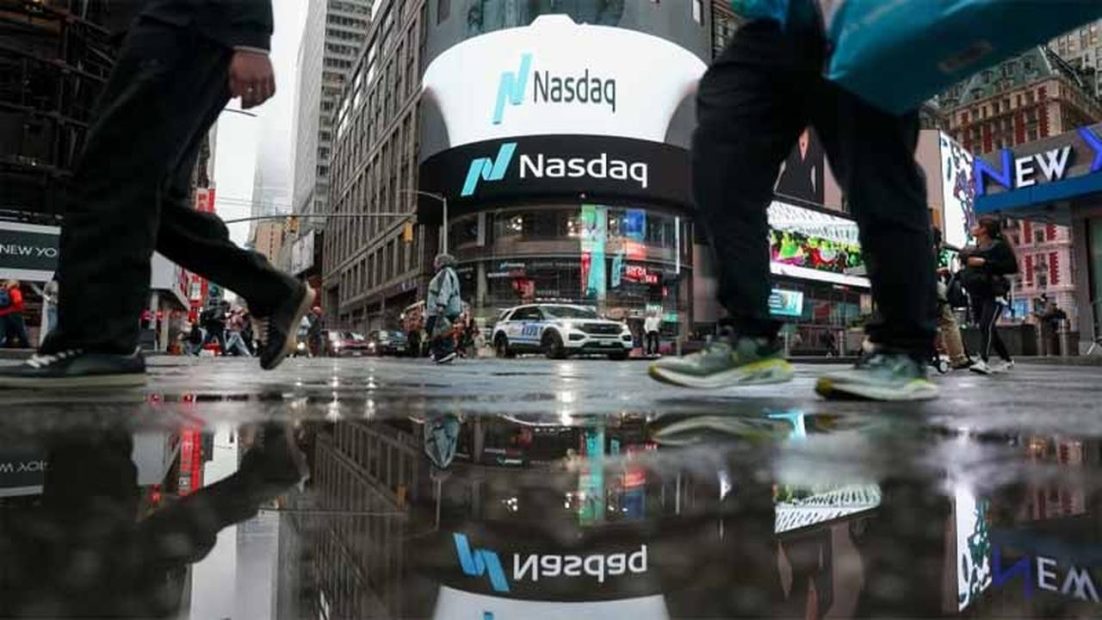
The US stock market suffered a major fall on Thursday (November 5). In just one day, the total market value of companies listed on the Nasdaq fell by about $2.5 trillion.
Heavy selling hit technology company shares because of concerns over excessive investment in artificial intelligence (AI) and possible new rules for the sector. The Democrats’ major success in the US midterm elections also increased investors’ concerns.
The fall on Wall Street also affected Asian markets. After trading began on Friday (November 6), South Korea’s main stock market index, the KOSPI, fell by 8.52 per cent at one point. Trading was stopped for 20 minutes to control market unrest.
On Thursday, the technology-focused Nasdaq fell by 5.52 per cent and entered correction territory. The index has dropped more than 10 per cent from its record high on October 6. This was its biggest single-day fall since US President Donald Trump announced global tariffs in April 2025.
On the same day, the S&P 500 fell by 4.36 per cent, while the Dow Jones dropped by 3.44 per cent.
The market had shown the opposite picture on Wednesday, after the midterm election results were announced. The Dow Jones rose by 1,569 points that day, while the Nasdaq gained 1.44 per cent. But on Thursday, the Dow Jones lost 1,833 points, wiping out all of the previous day’s gains.
One of the main reasons for the market fall was the victory of Democratic candidate Gina Hinojosa in the Texas governor’s election.
Texas is an important state for building AI infrastructure. Companies such as Google, Meta, Oracle and OpenAI have invested large amounts of money there. However, during her election campaign, Hinojosa promised to temporarily stop the construction of new data centres and remove some tax benefits for the sector. This raised concerns among investors about the future of AI infrastructure.
The fall also affected chipmakers and companies linked to AI infrastructure. On Thursday, Nvidia shares fell by 9.3 per cent. This wiped out all the company’s gains made this year.
The Philadelphia Semiconductor Index, which tracks major chipmakers, fell by 12.3 per cent. This was its biggest single-day fall in about six and a half years.
Shares of Elon Musk’s electric car company Tesla fell by nearly 11 per cent. Shares of CoreWeave and Nebius, which provide AI computing services, dropped by about 10 per cent and 15 per cent respectively.
Qualcomm shares also fell by 9.5 per cent after the company gave weaker-than-expected earnings and sales forecasts.
The VIX, an index that measures market fear and uncertainty, rose by nearly 70 per cent in one day. This was its biggest daily rise in about two years.
All 11 sectors of the S&P 500 recorded losses. As investors looked for safer investments, the yield on 10-year US Treasury bonds fell to 4.84 per cent, its lowest level in two months.
Ed Yardeni, president of Yardeni Research, said excessive investment and speculation in the AI sector needed to be reduced. Speaking to CNN, he said it would be better for the AI bubble to cool down slowly rather than burst.
On the other hand, Keith Lerner, chief investment officer at Truist Advisory Services, said the market’s instability could create opportunities for long-term investors.
Since their record highs on October 6, the Nasdaq and S&P 500 have fallen by about 12 per cent and 6 per cent respectively. The Dow Jones has dropped by about 5 per cent from its peak on August 5.
Excessive investment in AI, possible limits on data centre construction and concerns that companies may not earn the expected profits from their investments have increased uncertainty in the technology stock market.
Sources: CNN and Reuters