Who Is Responsible for the Climate Crisis?
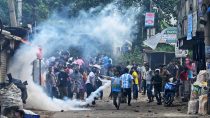
When a family in Bangladesh’s southern coastal region loses its home to river erosion or is forced to abandon a generations-old livelihood because of severe salinity, a fundamental question arises: Why are they paying the highest price for a crisis they did not create? Bangladesh, a riverine country highly vulnerable to climate change, contributes very little to global carbon emissions. Yet countries like Bangladesh are among those bearing the harshest impacts of global warming.
People in Khulna and Satkhira still remember Cyclone Aila in 2009. After embankments collapsed, saltwater flooded homes and farmland. Many people who once cultivated rice were forced to work as labourers on shrimp farms or migrate to cities. Even today, women in many areas have to walk long distances to collect drinking water. Studies have also linked saline water in coastal areas to health risks, particularly for pregnant women. These people have neither burned coal nor released industrial emissions. Yet they are bearing the full cost of the damage.
Since the beginning of the Industrial Revolution, developed countries have built their economies on coal, oil and other carbon-intensive energy sources. Now, developing and least developed countries in the Global South are paying the price for that growth. The United States and European Union countries have released enormous amounts of greenhouse gases into the atmosphere over the past 150 years. Bangladesh’s contribution is negligible in comparison.
The two sides also have vastly different financial capacities to deal with the damage. Wealthy countries have accumulated capital, technology and strong institutions. By contrast, climate-vulnerable countries have to start over after every flood and cyclone. Any discussion of the climate crisis remains incomplete without addressing historical responsibility. The wealthy world has benefited from carbon-intensive economic growth, and it is unethical to place the burden of the resulting disasters on the people who suffer the most.
Climate finance is regularly discussed at international forums. However, there is a significant gap between financial commitments and the amount actually received. According to the Organisation for Economic Co-operation and Development (OECD), the $100 billion annual climate finance target was exceeded in 2022. However, a large portion of that funding came in the form of loans rather than grants.
As a result, countries already suffering from climate disasters are being pushed into further debt simply to survive. They face the double burden of recovering from disaster-related losses while repaying high-interest loans. This places additional pressure on their economies.
There are also questions about transparency in climate finance accounting. In many cases, existing development assistance has been counted as climate finance. As a result, although the figures appear large on paper, little or no additional funding reaches the people affected by climate change.
At COP29, a new climate finance target of at least $300 billion annually by 2035 was agreed upon. However, it remains unclear how much of this funding will be provided as grants or on fair terms. The amount is also far below what developing countries had demanded. If climate finance comes in the form of loans or commercial investments, it ceases to be genuine assistance and can become another instrument of exploitation. Placing such debt burdens on climate-vulnerable countries cannot be considered fair cooperation.
A large share of global climate finance goes to projects aimed at reducing emissions. The reason is not difficult to understand. Investors can expect profits from projects such as renewable energy, with a reasonable prospect of recovering their investments. However, repairing embankments or ensuring access to safe drinking water offers little commercial return.
Yet these are precisely the areas where countries like Bangladesh need support the most. There is a severe shortage of funding for coastal embankments, safe drinking water, climate-resilient agriculture and local disaster management. For a country that contributes very little to global emissions, investing in protecting lives should be a greater priority than financing projects to reduce emissions.
Moreover, not all climate-related damage can be prevented through adaptation. River erosion can permanently destroy land, end agricultural activities and wipe out long-established settlements. Such losses are irreversible.
The consequences are not limited to coastal areas. People who lose their homes eventually move to slums in Dhaka and other major cities. There, they face low-paid work, overcrowded living conditions and an uncertain future. In this way, the effects of the climate crisis also place additional pressure on urban areas.
It is to address such irreversible losses that the decision was made to establish the Loss and Damage Fund under the United Nations framework. This was an acknowledgement of a long-standing demand by developing countries. However, the amount pledged to the fund remains far below actual needs. The process of accessing the money is also complicated. Administrative procedures often make it difficult to deliver assistance to the people who have suffered the most.
There is also a legal limitation that must be recognised. Decisions associated with the Paris Agreement state that the Loss and Damage Fund does not establish a basis for liability or compensation. Developed countries strongly maintain this position.
Therefore, Bangladesh and other vulnerable countries need to build their arguments around the principle of “common but differentiated responsibilities” under the United Nations Framework Convention on Climate Change (UNFCCC). According to this principle, countries with greater responsibility should play a greater role in addressing the crisis. On this basis, funding for climate-related losses and damage must be delivered directly and effectively. The scope of the fund should also be expanded to support the long-term rehabilitation of affected communities.
At COP31, Bangladesh must take a more specific and stronger position. Its first demand should be a clear implementation roadmap for the commitment to triple adaptation finance by 2035. Promises on paper will not repair coastal embankments.
Funding for adaptation and loss and damage should be entirely grant-based so that climate-vulnerable countries are not burdened with additional debt. Transparency in climate finance accounting is also essential to prevent existing development assistance from being presented as new climate funding.
The COP31 agenda includes reporting on the Loss and Damage Fund. Bangladesh should demand clear information on how much money has been pledged, how much has been disbursed and how much has actually reached affected people. Alongside large national projects, funding should also be delivered directly to local governments and marginalised communities. People living in coastal areas understand the risks facing their communities better than anyone else.
The moral strength of these demands will depend on putting our own house in order. Both those who provide climate finance and those who receive it must be held accountable. It should be clear where the money goes and who benefits from it. There must also be proper monitoring to ensure that funds allocated for the rehabilitation of climate-displaced people and the creation of alternative employment opportunities are used effectively.
Allegations of irregularities in embankment construction have existed for years. If international funding disappears through the same channels, Bangladesh’s demand for climate justice will lose credibility. Climate finance is not an act of charity by donors. Given the inequalities in emissions and economic power, it is a moral responsibility, and Bangladesh must also demand recognition of the legal responsibility involved.
Success should not be measured by the size of financial pledges alone. It should be measured by how fair the terms are and how effectively the lives and rights of coastal communities are protected. COP29 brought a $300 billion annual target, while the decision to establish the Loss and Damage Fund was made in 2023. Yet, each time, the announcements are substantial while the actual funding received remains limited. The greater a country’s responsibility, the greater its obligation should be. Developed countries must acknowledge their historical responsibility.
A family rebuilding its home on the eroded bank of a river wants to know just one thing from discussions in Anatolia: Is anyone truly taking responsibility?
Author: A student of the Department of Disaster Science and Management at Begum Rokeya University, Rangpur.