Women’s empowerment requires more than training: Bobby Hajjaj
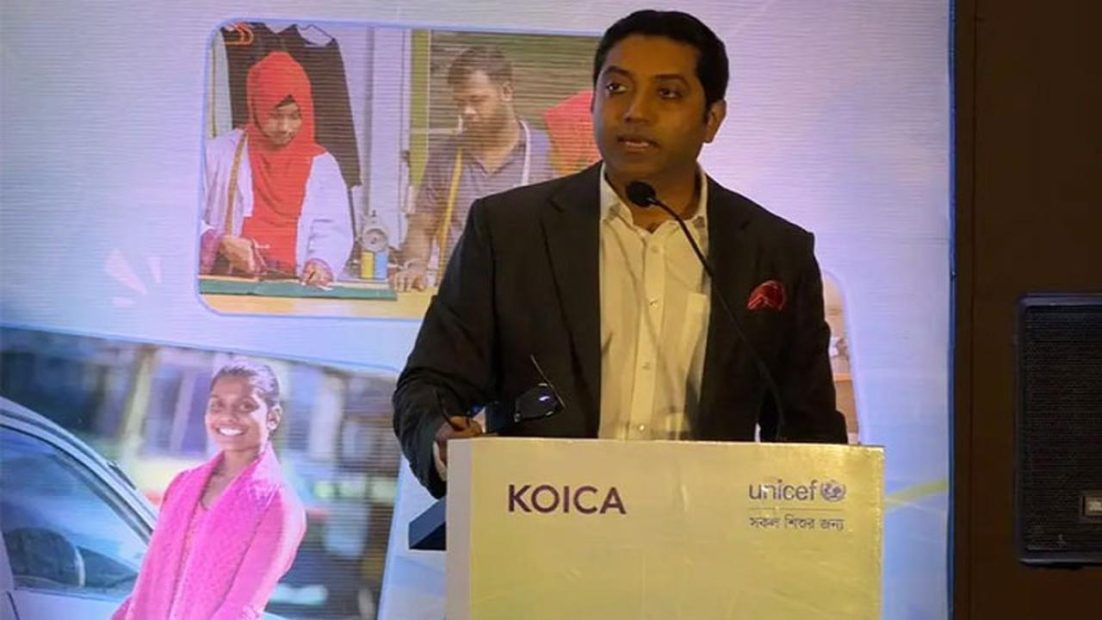
Women’s sustainable empowerment requires more than training and employment opportunities. Building their confidence, communication skills and awareness of their rights, alongside changing family and social attitudes, is equally important, State Minister for Primary and Mass Education Bobby Hajjaj said.
He stressed the need to involve families in empowerment initiatives, particularly for rural and economically disadvantaged women.
He made the remarks as the chief guest at the closing ceremony of the ‘Her Skills, Her Future’ project at the Sheraton Hotel in Banani, Dhaka, on Monday. The project was jointly implemented by the Korea International Cooperation Agency (KOICA) and UNICEF.
Mr Hajjaj said skills development programmes for out-of-school adolescent girls and young women must take Bangladesh’s social and economic realities into account.
Women cannot be viewed separately from their families, he said, adding that family involvement could help them develop their capabilities and achieve economic independence.
He said women’s empowerment should be addressed through integrated programmes that distinguish between personal, educational and economic empowerment.
Building women’s confidence, awareness of their rights and ability to make important life decisions is essential to helping them achieve economic self-reliance, he added.
Highlighting the importance of communication skills, Mr Hajjaj said women must be able to present their skills and potential effectively. The ability to communicate the value of their work, products or services can improve their employment prospects and help them establish themselves as entrepreneurs.
He said skills development programmes should therefore place greater emphasis on communication skills and confidence-building.
On preventing child marriage, Mr Hajjaj said concerns about family security, social pressure and economic uncertainty often led families to marry off girls at an early age.
He stressed the need to change family attitudes while taking these realities into account. Expanding opportunities for girls to pursue education, develop skills and achieve economic independence would strengthen their ability to make decisions about their futures, he added.
UNICEF Bangladesh Chief of Education Deepa Shankar chaired the event. UNICEF Bangladesh Acting Representative Gillian Mellsop and KOICA Bangladesh Country Director Jihoon Kim attended as special guests.