Port Protection Committee condemns decision to lease NCT and overflow yard for 15 years
Long-Term Lease of Chittagong Port’s NCT Raises Questions Over ‘Bangladesh First’ Policy
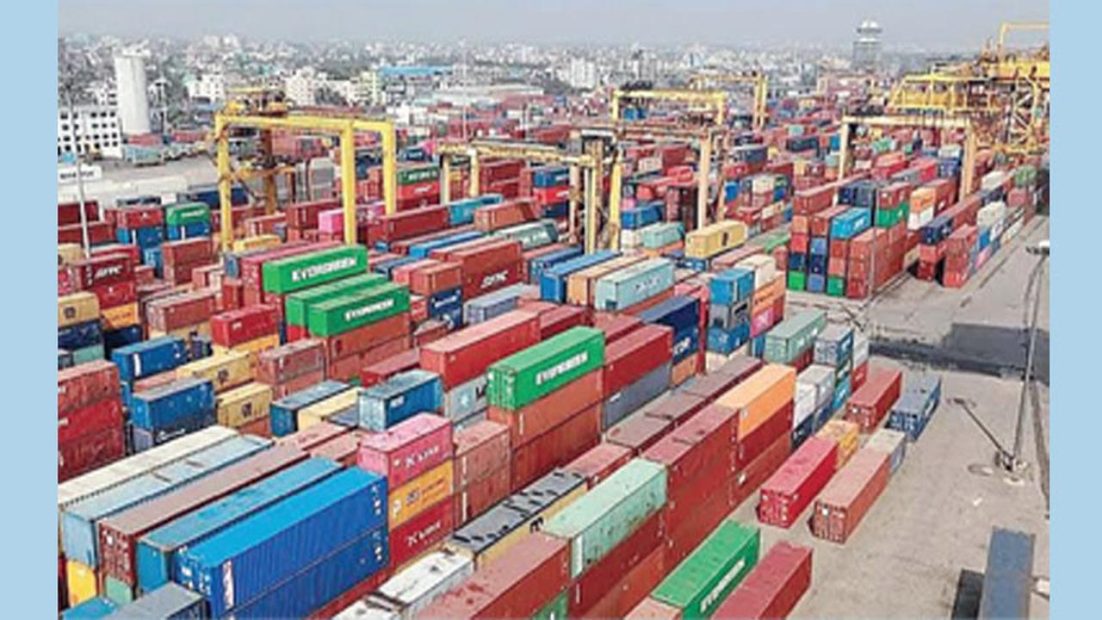
Chittagong Port Protection Committee Convener Engineer Delwar Majumder and Member Secretary Fazlul Kabir Mintu have strongly criticised and condemned the decision to lease the New Mooring Container Terminal (NCT), including the overflow yard, of Chittagong Port for 15 years under a long-term concession agreement.
In a statement issued on Thursday, they questioned how the government’s declared slogan, “Bangladesh First,” was reflected in the decision to hand over one of the country’s most important, established, operational and profitable container terminals under a 15-year concession agreement.
They said Chittagong Port is one of the country’s main gateways for the economy, foreign trade, imports and exports, and national economic activities. Therefore, decisions concerning its key infrastructure and operations cannot be treated merely as commercial or administrative matters. Such decisions are directly linked to national economic interests, revenue, employment, port management capacity, strategic security and long-term national interests.
The leaders said decisions on such an important and sensitive national issue require the highest level of transparency, accountability, public interest considerations and long-term economic assessment.
However, the fact that the issue was raised under the “miscellaneous” agenda instead of the main agenda has naturally raised questions among the public, they said. They demanded an explanation as to why a matter involving national assets and strategic port infrastructure was not presented and discussed in detail under the main agenda.
According to the statement, a concession agreement is a long-term management arrangement. Depending on its terms, it may give a private or foreign operator significant influence over the operation, revenue, investment, infrastructure management and commercial decisions of a terminal for an extended period.
Therefore, they said, every provision of the agreement, including its financial structure, revenue-sharing mechanism, investment commitments, risk allocation, employment provisions, security arrangements, and conditions for termination or renegotiation, should be made public and properly scrutinised.
The committee leaders said NCT has already been developed as an important part of the country’s port infrastructure. Before handing over a terminal built and operated with state investment under a long-term concession, the government should clarify whether it has assessed the potential for improving its capacity and revenue under state management.
They also called for the government to publish a comparative assessment showing how much financial benefit the state is expected to receive from the proposed concession and how much revenue could potentially be generated if the terminal were operated under its own management.
They further said there is no justification for portraying Chittagong Port’s capacity, technology, skilled workforce or domestic management structure as weak or ineffective in order to make a foreign operator appear indispensable. Instead, they said, domestic institutions and personnel can be strengthened through modern technology, skills development, automation, training and management reforms where necessary.
The leaders said their objective was not to oppose foreign investment or technology. However, they stressed that the state’s interests must receive the highest priority when managing strategic national infrastructure and allowing long-term participation by foreign companies.
They said any agreement that could limit state revenue, future investment opportunities, employment or the country’s decision-making independence would not be acceptable to the people.
They also said the decision to lease NCT for 15 years under a concession agreement is not consistent with public and national interests and has already generated widespread discussion and concern.
The leaders stressed that Chittagong Port is not merely an asset of Chattogram but a national asset of Bangladesh. As the country’s principal maritime gateway for almost all foreign trade, the port is directly connected to the national economy.
Therefore, they said, the impact of handing over any major facility of the port under a long-term concession would not be limited to the tenure of the current government but could continue under several future governments.
They called for national interests to be considered from a long-term perspective instead of making such decisions in haste for political or administrative reasons.
They said national resources, infrastructure and economic capacity should not be handed over to others. Rather, strengthening Bangladesh’s own capabilities should be a core objective of state policy.
They said the state’s long-term revenue and capacity could be increased by strengthening domestic capabilities, developing skilled personnel and ensuring the use of modern technology in the operation of important port infrastructure built through state investment.
The leaders said the 15-year concession of NCT would effectively mean handing over operational control of an important economic asset developed with state investment to another party for an extended period.
Before doing so, they said, all terms of the agreement should be made public, along with an independent economic and technical assessment, an analysis of potential revenue gains or losses, and an assessment of its national security and strategic implications.
They further said no agreement should be finalised hastily if it could create long-term financial liabilities, revenue losses or restrictions on future policy decisions. If necessary, they called for open national-level discussions and parliamentary review before signing the agreement.
The Port Protection Committee leaders placed several demands before the government regarding the NCT concession. They demanded that the full draft agreement and financial structure be made public, an independent economic and technical assessment be conducted, employment and rights of workers and employees be protected, and clear safeguards be ensured for national security and strategic interests.
They also called for consideration of Bangladesh’s own capacity and possible alternative management structures for operating NCT.
The leaders said the Port Protection Committee was not taking a position against any individual, institution or country. Rather, its position was in favour of Bangladesh’s national interests, state assets, port users, workers and employees, and the country’s future economic interests.
They said the government must present complete information to the public before making any decision regarding NCT and ensure the highest level of transparency and accountability concerning national interests.
They warned that any decision concerning the important infrastructure of Chittagong Port imposed without taking the people into consideration would not be acceptable. The committee said it would continue its position through peaceful and democratic programmes with public participation to protect national assets.
The leaders called on the government to immediately cancel the decision to grant the NCT concession, disclose all terms of the agreement, and refrain from finalising any agreement without a comprehensive assessment of the national interest.
Meanwhile, various workers’ and employees’ organisations and political parties, along with the Port Protection Committee, have been carrying out a sustained movement demanding cancellation of the decision to hand over NCT, a continuously profitable and sensitive key facility of Chittagong Port, to foreign company DP World under a long-term lease agreement.
As part of the movement, a day-long sit-in has been scheduled for October 5 at the main gate of Chittagong Port. Preparatory meetings are continuing to ensure the success of the programme.