PM’s Zero-tolerance Stance on Irregularities, Wrongdoing Brings Relief to Public
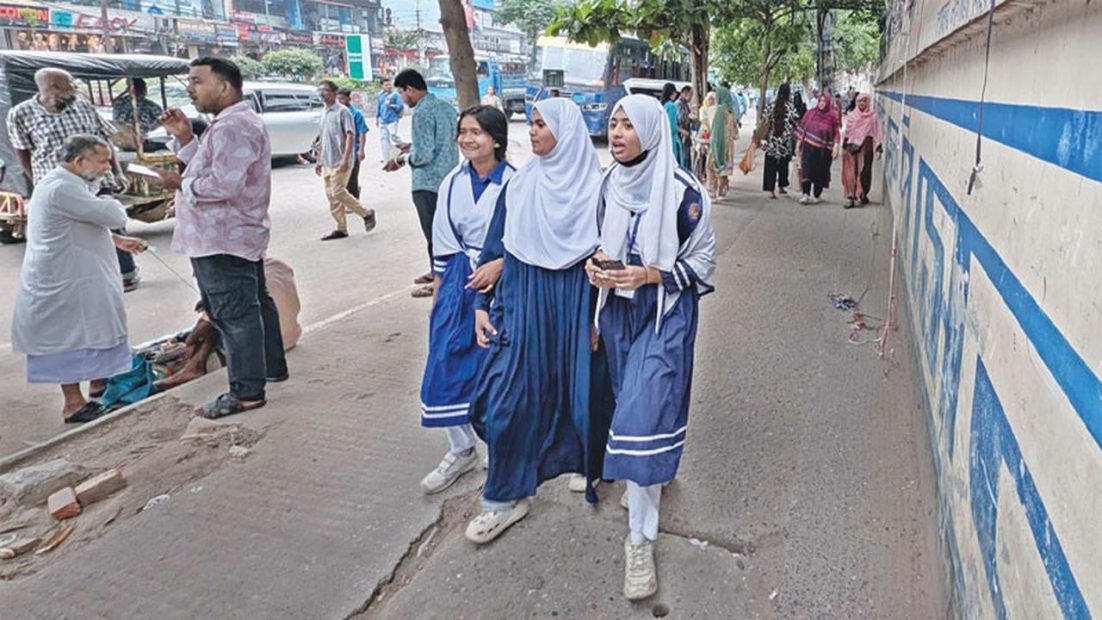
Long-standing problems such as extortion, illegal occupation, unauthorised structures and encroachment on footpaths have caused frustration and anger among people. However, recent government action and continued drives against such irregularities have started to bring relief in Dhaka and other areas.
The government’s action against alleged misconduct by political figures has also drawn attention. The decision to make BNP leader Ferdousi Ahmed Misti resign from the party has been seen as a message of a strict stance against wrongdoing. The government has also said that political identity will not protect anyone accused of extortion, violence or other crimes.
At the same time, concerns remain over whether the recent actions will be sustained. Some civil society groups have raised human rights concerns over the eviction of hawkers, while others have previously pointed to the difficulties faced by pedestrians because of occupied footpaths. This has created debate over how to balance the rights of hawkers with pedestrians’ right to safe and unobstructed movement.
People concerned with the situation say visible changes are taking place because of action against illegal occupation, extortion and crime. However, many fear that conditions could return to their previous state if the current drives are temporary. They are calling for regular enforcement, administrative accountability and long-term measures to keep roads and footpaths free from illegal occupation.
Allegations of extortion and illegal occupation
People across the country have expressed frustration over allegations of extortion, illegal occupation and violence involving members and supporters of the ruling party. Authorities have recently taken action in several cases. On September 24, the Radda MCH-FP Center in Mirpur, which provides maternal and child healthcare services, was reportedly vandalised and looted. The incident triggered widespread criticism. A day later, an alleged attack and vandalism took place at the New Guinea Properties housing project in the ECB area of Dhaka, including at the studio of content creator Salman Muqtadir.
The same day, there were allegations of an attempt to occupy a multi-storey building at Shyamoli Housing in Adabar. Several hundred people also allegedly entered a plot at Chand Udyan in Mohammadpur, where vandalism and looting were reported. Allegations were raised about the involvement of some local political leaders and activists in these incidents.
There has also been controversy surrounding Salman Muqtadir and alleged actions by several government agencies against a business establishment. The report contains allegations of interference and corruption involving officials, as well as claims concerning four diplomatic liquor warehouses owned by Sheikh Nur Islam, Salman Muqtadir’s father-in-law. Mr. Nur Islam is the owner of TOS Bond Private Limited, owned by Fu-Wang Company. The company has been operating under government regulations for years.
Recent arrests and disciplinary action
On Thursday night, a former Youth Dal leader allegedly injured a medicine businessman, identified as Mohammad Sohan, 35, with the butt of a firearm in Banglamotor, Dhaka. Mr. Sohan alleged that expelled Youth Dal leader Ferdous Ahmed Saimon stopped him with several associates. During an argument, Mr. Saimon allegedly struck him on the head with a pistol, causing a serious injury. He allegedly later fired two blank shots, creating panic in the area.
After local residents chased them, Mr. Ferdous and his associates reportedly entered a building. Hundreds of people gathered outside while law enforcement agencies surrounded the area. Mr. Ferdous Ahmed and two associates were later detained and taken to Tejgaon Industrial Area Police Station. According to local allegations, Mr. Ferdous had been involved in extortion in the area for a long time and had allegedly attacked people who refused to pay.
That same night in Sitakunda, Chattogram, allegations were raised against Mohammad Ismail Hossain, a former vice-president of the Chattogram North District Youth Dal, for assaulting a police officer in front of a police station. He was detained and later released into the custody of BNP leaders after signing an undertaking. He was subsequently expelled from the Youth Dal, according to reports.
On Wednesday night, the Department of Narcotics Control conducted raids at four bars in Dhaka. Deputy Director of the Dhaka Metro North office, Mohammad Rajiur Rahman, said raids were conducted simultaneously at several bars, including Fu-Wang Club, Ruchita, Blazer Klaus and Koyla in Lalmatia. Ferdousi Ahmed, a reserved-seat lawmaker, also resigned amid allegations of involvement in the Radda incident. Earlier on Wednesday night, the Dhaka North metropolitan committees of BNP and Youth Dal and the metropolitan West committee of Jatiyatabadi Chhatra Dal were dissolved. Fourteen members of BNP, Chhatra Dal, Swechchhasebak Dal and Sramik Dal at different levels were also expelled.
Home Minister Salahuddin Ahmed said on Wednesday that an investigation was underway into the Radda health centre incident and the involvement of the lawmaker. He said the investigation was impartial and that no one would be spared if involvement was established. Regarding the law-and-order situation across the country, Salahuddin Ahmed said those involved in extortion, terrorism, drugs, gambling or any other crime would face strict action regardless of their political identity.
Wing Commander M Z M Entekhab Chowdhury, director of SRB, told Inqilab, “Our main goal is to improve the quality of life of the people and ensure a fearless, safe and comfortable environment. We are always active in building a crime-free society. Our position against crime and extortion is very strict and uncompromising to protect public safety and build a safe society. Criminals are brought under the law without considering their political or social identity.”
Footpath eviction drives bring relief
Dhaka’s busy roads and footpaths have long been narrowed by hawkers, roadside shops, temporary structures and other illegal occupations. In recent weeks, Dhaka North City Corporation (DNCC) and Dhaka South City Corporation (DSCC) have intensified drives to remove illegal structures and occupations from roads and footpaths. Temporary shops, makeshift structures, roadside displays and other obstructions are being removed during these drives.
The removal of long-standing illegal structures has restored footpaths in several areas. City residents have welcomed the initiatives, saying pedestrians can move more easily where previously they had to walk through roads because footpaths were occupied. Residents also say regular enforcement could reduce traffic-related difficulties and accident risks. However, they stress that the sustainability of the current relief will depend on keeping the footpaths clear after eviction drives and maintaining regular monitoring.
Authorities need to ensure that illegal shops do not return after eviction. Regular local monitoring and continued action by law enforcement agencies are also considered necessary. Residents say the drives should not be limited to specific days or special occasions. In the past, some footpaths were reoccupied after remaining clear for only a short period following eviction drives. Experts therefore recommend combining regular enforcement with better pedestrian-friendly road and footpath management.
Mirpur resident Shahadat Hossain told Inqilab, “Hawkers have created a terrible situation by setting up shops on most of the footpaths in the capital. When shops are set up on footpaths, the space for pedestrians becomes narrow. In some areas, the entire footpath has been occupied. We have to walk along the roadside or on the main road. We face this problem constantly.”
Schoolteacher Belal Hossain, another resident of the area, said, “Recently, city corporation drives have been seen in different parts of the capital to remove illegal occupations from footpaths and roads. These drives are being conducted with the assistance of mobile courts, relevant departments and law enforcement agencies. The drives have made it easier for pedestrians to move around. In particular, people are relieved to see walking space restored in areas where footpaths were completely occupied. Therefore, importance should be given not only to eviction drives but also to regular monitoring afterward.”
DNCC Administrator Mohammad Shafiqul Islam Khan said the ongoing drive to free footpaths would continue. He said if anyone reoccupied a footpath after eviction, DNCC would conduct stricter operations with greater force.
“The footpaths designated for public movement will be kept open. There will be no concession regarding the reoccupation of footpaths,” he said. DSCC Administrator and freedom fighter Mohammad Abdus Salam told Inqilab, “There is no alternative to taking strict measures to ensure normal civic facilities and unhindered movement in Dhaka. Hawkers will not be allowed to conduct business on main roads or footpaths by causing extreme suffering to pedestrians. Disorderly activities will not be tolerated. Strict action will be taken immediately if illegal shops are set up.”
Professor Dr Adil Muhammad Khan, executive director of the Institute for Planning and Development (IPD) and an urban planner, told Inqilab, “Safe and unobstructed footpaths are important for pedestrians in the urban transport system. Along with clearing the footpaths, regular monitoring at the pedestrian level can be carried out. There should also be an effective system for citizens to report complaints.”
He said a long-term solution to Dhaka’s footpath and road occupation problem requires coordination among city corporations, traffic authorities, local administration and law enforcement agencies. Measures are also needed to stop extortion or the involvement of influential groups in controlling footpaths. The recent government and city corporation actions have brought visible relief to pedestrians and residents in several areas. However, maintaining that relief will depend on regular enforcement, monitoring and accountability rather than short-term eviction drives alone.