LPG Crisis Hits Kaliakair: Half of Earnings Spent on Gas, Kitchen Stoves Left Cold
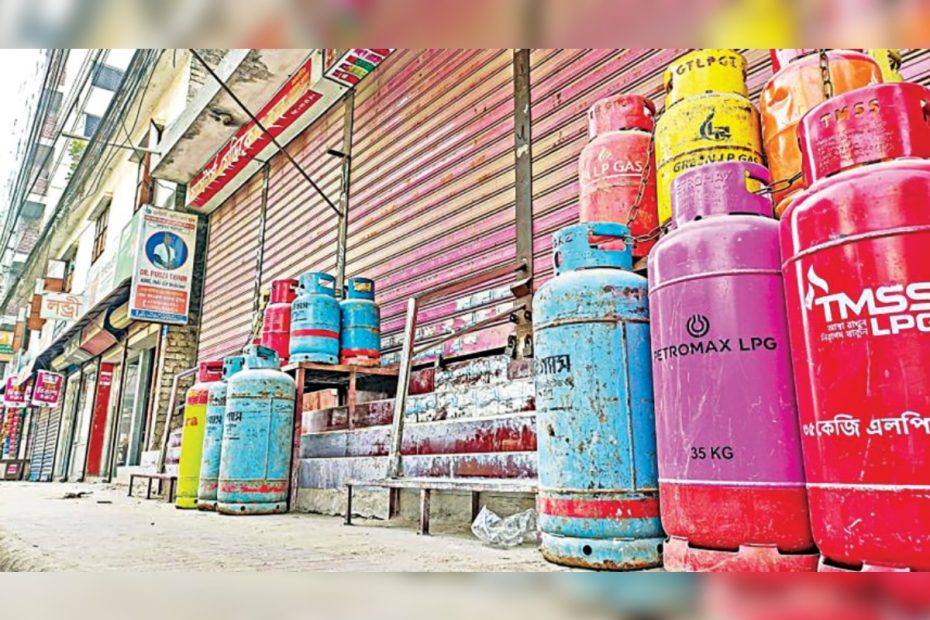
In Kaliakair, an industrial hub home to around 600,000 garment workers, the skyrocketing price of LPG gas has become the primary topic of local discussion. Consumers strongly allege that cylinders are unavailable at the official rates fixed by the Bangladesh Energy Regulatory Commission (BERC), leaving middle-income, low-income, and working-class populations in severe financial distress.
Spot visits on Saturday (October 3) to major retail markets across Kaliakair Bazaar, Chandra Trimoni, Hartakitala Amtala Mahr, Palli Bidyut, Mouchak, Safipur, Kalampur, and Fulbaria revealed widespread overcharging. Standard 12-kg LPG cylinders were selling for Tk 2,200 to Tk 2,300 across different shops, far exceeding the BERC-mandated price of Tk 1,728 for the current period by Tk 400 to Tk 500.
Residents voiced deep distress over the sharp increase in their daily household expenses. Siam Hossain, a garment worker in Chandra, shared, ‘I used to buy a cylinder for Tk 1,500 to Tk 1,600, but now they demand Tk 2,200 to Tk 2,300. Managing rent, gas, and groceries on a monthly salary of Tk 10,000 has become nearly impossible’. Similarly, Rahima Khatun, a homemaker from Mouchak, remarked, ‘The price spike has pushed up our household expenses; sometimes I even have to cook on someone else’s stove to feed my children.’
The financial strain spans auto-rickshaw drivers, small business operators, and student messes throughout the region. Abdul Latif, an auto-rickshaw driver in Safipur, noted that buying a single cylinder takes several days’ earnings, while Jainal Abedin, a tea stall owner in Kaliakair Bazaar, lamented, ‘Earlier I bought two cylinders for Tk 3,200, but now it costs Tk 4,400. I cannot raise tea prices accordingly, making it tough to run my business.’ Fatema Akter, a student sharing a mess in Chandra, added that individual mess contributions for gas jumped from Tk 300 to Tk 500.
Retail traders attribute the price hike to cost distortions occurring further up the supply chain. Trader Russel Hossain explained, ‘We buy at higher rates from dealers, so we have to sell at higher prices in addition to transport costs. If we got them at the government rate, we would sell them at that rate.’ Representatives from Mayer Doa Enterprise in Palli Bidyut echoed this stance, emphasizing that company and dealer-level markups force retailers to pass extra costs on to consumers.
Local authorities have pledged immediate enforcement to curb price gouging in the retail markets. Kaliakair Upazila Nirbahi Officer (UNO) A H M Fakhrul Hussain stated, ‘Selling above the BERC-determined price violates consumer rights laws. We will intensify market monitoring immediately, mandate price lists in every shop, and take strict legal action via mobile courts wherever overcharging is proved.’
Highlighting the plight of the working class, local leader Md. Saijuddin emphasized the urgency of intervention. He remarked, ‘Kaliakair is home to 600,000 garment workers, and I will not let anyone profit off the kitchen fires of the poor. I request immediate market drives, and if given the responsibility to serve, the municipality will set up dealer points and monitoring cells to guarantee fair LPG prices.’ Energy experts further stressed that consistent supply and routine local monitoring remain essential to enforce official prices effectively.