Vegetable Prices Hit Hard in Kaliakair, Placing a Heavy Burden on Buyers
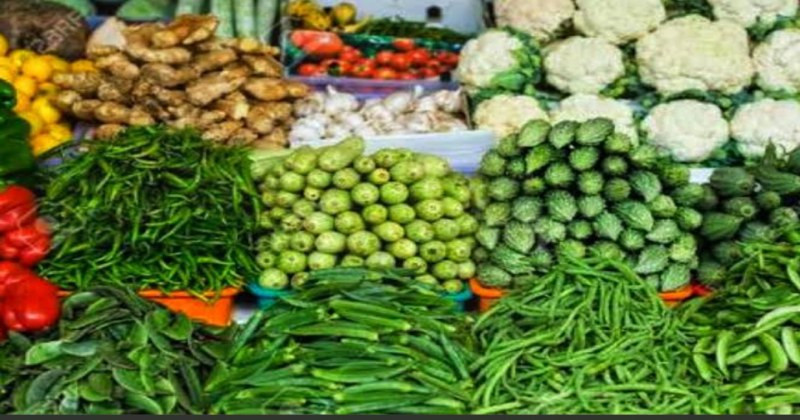
Prices of daily essentials have reached unprecedented levels across local markets in Kaliakair, an industrial sub-district in Gazipur, creating severe economic distress for residents. The kitchen market is virtually on fire as vegetable prices soar, offering no financial respite despite the fast-approaching early winter produce season. The steep price hikes have placed immense financial pressure on general consumers, particularly the area’s estimated 600,000 garment workers alongside low- and middle-income families who struggle daily to afford basic food items.
Traders attribute the surge in prices to rising fuel costs, which have directly escalated transportation and production expenses across the local supply chain. Conversely, aggrieved consumers argue that the price hikes are primarily driven by unscrupulous market manipulation and business syndicates taking advantage of inadequate government monitoring. A spot visit on Friday, October 2, across major hubs including Kaliakair Market, Chandra Trimor, Palli Bidyut, Mouchak, Safipur, Kalampur, and Fulbaria revealed sky-high price tags across nearly all kitchen staples, leaving retail buyers in utter dismay.
Most vegetables are currently retailing between BDT 60 and BDT 120 per kilogram, with early winter beans leading the surge at BDT 200 per kg. Eggplants are selling for BDT 80 to 120 per kg, small cauliflowers at BDT 160 each, carrots and tomatoes at BDT 120 per kg, and green chilies at BDT 120 per kg. Other everyday vegetables like bitter gourd, pointed gourd, cucumber, okra, cabbage, and taro arum range between BDT 60 and BDT 80 per kg. Meanwhile, potatoes sell between BDT 30 and 40 per kg, local onions at BDT 50 to 60, local ginger at BDT 160, and imported Chinese garlic up to BDT 180 per kg.
The protein market offers no relief, with poultry, meat, and fish prices remaining equally steep and largely unmanageable for working-class budgets. Broiler chicken is priced at BDT 180 per kg, Sonali chicken at BDT 280, layer chicken at BDT 360, and native chicken at BDT 570 per kg. Beef costs BDT 760 per kg, and mutton stands at BDT 1,000 per kg, while farm eggs sell at BDT 50 per four pieces. Fish markets are similarly strained; Hilsa prices remain extremely high, Rohu sells for BDT 300 to 350 per kg, Catla ranges from BDT 400 to 450, and small indigenous fish reach up to BDT 600 per kg.
The severe price hikes have triggered widespread anxiety among low-income workers, who find it nearly impossible to sustain their households on fixed monthly wages. Expressing deep despair, garment workers Abdus Salam and Mokles shared, ‘Every single day we have to worry about the price of one item or another. We earn a monthly salary of 10,000 taka, out of which house rent takes 4,000 taka. It is impossible to run a household on the remaining 6,000 taka. Buying necessary groceries exceeds our budget every time. One kg of beans costs 200 taka; is this total lawlessness? Going to the market brings us to tears.’
Homemakers and daily earners have voiced equal frustration over the lack of administrative monitoring and rapid erosion of their purchasing power. Rahima Khatun, a homemaker from Mouchak, noted, ‘Earlier, taking 500 taka to the market meant returning with a full bag. Now, even 1,000 taka isn’t enough for a single meal’s groceries. We have to think twice before giving an egg to a child.’ Auto-rickshaw driver Siam Hossain added, ‘Driving an auto all day gets me 600 taka. Should I buy rice, lentils, or vegetables? The price of everything is up. Does the government not see this market condition? There is no monitoring, no drives.’
On the supply side, retail vendors defend the price increases by citing heightened procurement and freight charges incurred from major production hubs. Md. Sahidul Islam, a local vegetable seller, explained, ‘Brother, we buy at higher prices, so we sell at higher prices. When the supply of winter vegetables increases, market prices might cool down. Daily prices fluctuate based on demand, supply, transportation costs, and general market conditions. Truck fares have increased due to the fuel price hike; bringing vegetables from Bogura or Jashore used to cost 8,000 taka per truck, but now it costs 12,000 taka.’
Addressing the crisis, local educationalist and social worker Dewan Mohammad Jasim Uddin strongly condemned administrative inaction and demanded immediate state intervention. He stated, ‘The fire in Kaliakair’s markets is not literal in the kitchen market; it is a fire burning in the stomachs of the poor. Our Kaliakair is a town of 600,000 garment workers who toil under the sun to keep our economy alive, yet today they cannot afford basic food. I issue a strict warning to this syndicate and strongly demand the Upazila Executive Officer and Deputy Commissioner to conduct mobile courts, enforce mandatory price list displays, and establish temporary fair-price markets immediately.’