Balance of power in world economy is slowly shifting to Asia: Rehman Sobhan
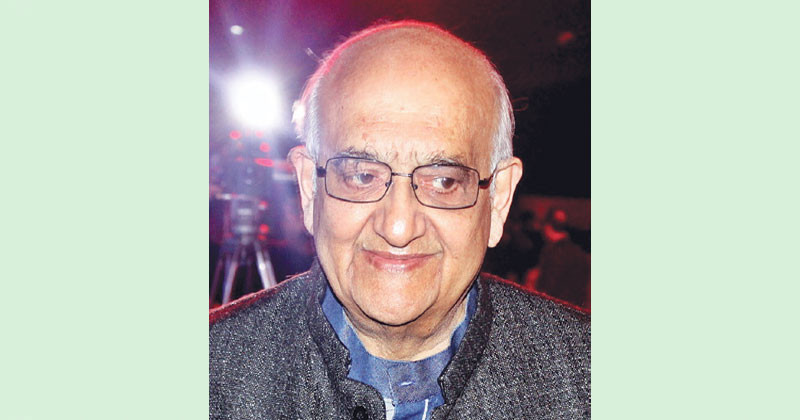
The balance of power in the world economy is slowly shifting to Asia. Economist Professor Rehman Sobhan said developed countries are taking steps like market intervention and tariffs to stop this change, but these steps cannot last. He spoke yesterday at a session of the fifth Bay of Bengal Conversation at Pan Pacific Sonargaon Hotel in Dhaka. The theme of the three day event was “Fragments, Frontiers, Futures: Navigating Power, Technology and Trust in a World Rewritten”.
Professor Sobhan said the main feature of the new international economic order is the shift of power and influence to Asia. Asia’s strength in competing in goods trade has built up a large economic surplus in the region. So Asia no longer has to depend only on the West for aid or direct foreign investment. Trade patterns have also changed. Today, China is the main trade partner of 70 out of 120 countries in the world. China also leads in technology, including artificial intelligence and the publication of research papers.
He said that for the first time in human history, developed countries are trying to challenge this change through intervention. He said the “weaponisation of the economy” can be seen, as the United States and some European countries use their markets as a strategic asset. But he said these steps cannot stop the change in the balance of the world economy. China has already passed the United States in PPP terms, and will pass it in nominal GDP in the future too.
On what Bangladesh should do, he said the most important task is to strengthen value chains across the world. Bangladesh has a limited export market, but its main sources of imports and capital are in Asia. He said Bangladesh must use the chances offered by neighbouring economies like China and India. He said Bangladesh’s real strategic value lies on land. The Padma and Jamuna bridges are building links between South East Asia, South Asia and Europe. If China India ties stay stable, Bangladesh can play an important role.
Retired Major General Mr. A N M Muniruzzaman, president of the Bangladesh Institute of Peace and Security Studies, also spoke at the session. He said Bangladesh wants to keep the Bay of Bengal a neutral and peaceful region, free from any outside military intervention. He said Bangladesh can play an important role in easing tension between India and China. If a land route or corridor is built from China’s Yunnan province to South Asia, both countries will gain in regional trade and connectivity. He added that Bangladesh is also playing a leading role in tackling climate change, which helps India and China too.