
Bangladesh Takes a New Approach to Ganges Water-Sharing Deal
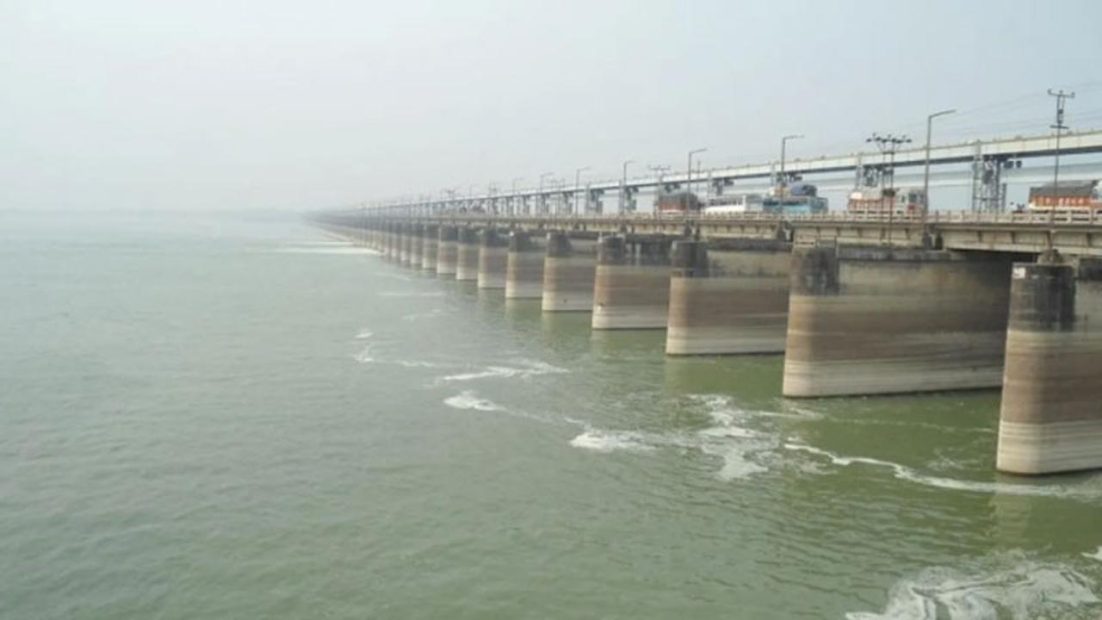
Most of Bangladesh’s rivers are now facing a serious crisis. The Farakka Barrage has severely reduced the flow of the rivers, threatening agriculture, livelihoods, food security and the environment. The diversion of Ganges water during the dry season has disrupted life in southwestern Bangladesh. As a result, the country faces major losses in agriculture, fisheries, forestry, industry, navigation, the environment and water supply.
A joint study by the United Nations Environment Programme and the University of Hamburg found that the withdrawal of Ganges water causes Bangladesh an estimated annual direct loss of around $3 billion. The indirect losses are believed to be much higher.
Against this backdrop, the 30-year Ganges Water Sharing Treaty signed in 1996 will expire on December 12 this year. Since the treaty does not contain any provision for automatic renewal, Bangladesh and India will have to negotiate a new arrangement. Political and diplomatic efforts are already underway over whether to renew the existing treaty or sign a new one.
Bangladesh is taking a new approach to the Ganges water-sharing issue. The government has already made its position clear. Instead of simply renewing the existing treaty, Bangladesh is seeking a new agreement that guarantees a minimum flow of water and includes a “guarantee clause”.
Bangladesh’s priorities include the changing condition of the river, climate change and its right to a fair share of the water. It has also called for Nepal, as an upstream country, to be included in the negotiations so that the shortage of water during the dry season can be addressed in a sustainable way.
Technical discussions at the government level have begun through the Joint Rivers Commission of Bangladesh and India. Water experts have also proposed a short-term understanding before a long-term treaty, followed later by a tripartite agreement involving Nepal.
At the same time, the state of Bihar has created new domestic political pressure on New Delhi. Leaders in Bihar have claimed that the previous agreement has contributed to shortages of irrigation and drinking water in the state. India’s central government and Foreign Minister S Jaishankar have assured Bihar that its interests will be taken into consideration. This is also expected to influence the new negotiations.
The Bangladesh government, however, has made it clear that the country’s national interests and security will be the main basis of any future Ganges water-sharing agreement. Bangladesh is not seeking any favour. As a downstream country sharing an international river, it wants its fair share of the water.
Water Resources Minister Shahid Uddin Chowdhury Anee said Bangladesh wants a new agreement with India on Ganges water sharing rather than simply renewing the existing one. He said the new agreement should include a guarantee clause and protect Bangladesh’s interests.
Foreign Affairs State Minister Humayun Kabir said Bangladesh would make a decision on the future of the Ganges water-sharing agreement with India only after ensuring the best possible protection of its national interests and security. “We will work to ensure what is best for Bangladesh’s national interests and security,” he said.
The Ganges Water Sharing Treaty was signed between Bangladesh and India on December 12, 1996. It mainly regulates the sharing of water during the dry season, from January 1 to May 31, at India’s Farakka point. Article 12 of the treaty states that it will remain in force for 30 years and may be renewed later based on mutual consent between the two countries. This means the treaty will not be automatically extended. Bangladesh and India will have to reach a new agreement through negotiations and, if necessary, set revised terms.
Under the existing treaty, the water flowing through Farakka is divided every 10 days. If the flow is 70,000 cubic feet per second or less, Bangladesh and India receive equal shares. If the flow is between 70,000 and 75,000 cubic feet per second, Bangladesh receives 35,000 cubic feet per second and India gets the remaining water. If the flow is 75,000 cubic feet per second or more, India receives 40,000 cubic feet per second and Bangladesh gets the remainder.
The treaty also provides for both countries to receive 35,000 cubic feet per second on a rotational basis during three specific 10-day periods between March 1 and May 10. A joint committee consisting of an equal number of representatives from Bangladesh and India is responsible for monitoring water flows at Farakka and the Hardinge Bridge and submitting reports to the two governments. The treaty also provides a mechanism for resolving disputes, beginning with the joint committee, followed by the Joint Rivers Commission and, finally, urgent discussions between the two governments.
However, three decades of experience have shown that the existing treaty has several major weaknesses. The most important question is whether Bangladesh is guaranteed a minimum amount of water throughout the dry season. Many people generally believe that Bangladesh is guaranteed at least 35,000 cubic feet per second under the treaty. In reality, the situation is more complicated.
Although the treaty provides for Bangladesh to receive 35,000 cubic feet per second during certain 10-day periods on a rotational basis, it does not guarantee an uninterrupted and unconditional minimum flow throughout the entire dry season. If the total flow at Farakka falls below 50,000 cubic feet per second during any 10-day period, the two governments are required to adjust the distribution through emergency consultations. However, the treaty does not clearly state how much water must be supplied to Bangladesh, what will happen if negotiations fail or how Bangladesh will be compensated for any losses.
Another major weakness is that the existing water-sharing schedule is based on the average flow recorded over 40 years, from 1949 to 1988. The Ganges basin and the wider world have changed significantly since then. Water flows, upstream water use, irrigation demand, urbanisation, agriculture and dependence on groundwater have all changed.
Climate change has also made rainfall increasingly irregular. Some years experience prolonged drought, while others see excessive rainfall and flooding within a short period. Experts argue that it is no longer reasonable to determine present and future water security using average figures from several decades ago.
Experts say that calculating water availability only from the amount reaching Farakka hides how much water has been withdrawn upstream, how many projects have affected the flow and what the river’s natural flow could have been.
The Ganges does not begin at Farakka. Therefore, they argue, a new agreement should consider the flow of the entire river basin, upstream water use, the combined impact of dams and barrages, and the needs of downstream communities.
Experts also say the water-sharing agreement should no longer focus only on the division of water. A river is not simply a matter of water volume. River sediment, navigation, fisheries, biodiversity, agriculture, groundwater recharge and people’s livelihoods are all connected to river flow.
In southwestern Bangladesh, inadequate freshwater flow increases salinity, damages agriculture and drinking water sources, and threatens the ecosystem of the Sundarbans. Therefore, the new Ganges water-sharing agreement should give serious consideration to environmental flows, the freshwater needs of the Sundarbans, the revival of distributaries of the Padma, salinity control and the protection of fisheries.
The Ganges issue is not simply a negotiation between Bangladesh and India over the division of water. It concerns the lives, agriculture, food security, environment and future security of millions of people. Experts believe the problem should therefore be resolved on the basis of fairness, transparency and mutual accountability.
Renowned environmentalist and water expert Professor Dr Ainun Nishat said the 1996 treaty may have been important in the context of its time. However, the climate, environmental and water security challenges of 2026 are very different from those of 1996. “Bangladesh should not focus only on extending the old treaty. It should acknowledge the limitations of the past and work toward a better agreement,” he said.
He said the new Ganges agreement should consider not only water sharing but also the health of the river, agriculture, the environment, the rights of downstream communities and the security of future generations.
“Bangladesh must make it clear that we are not seeking any favour regarding Ganges water. Bangladesh wants its fair share as a downstream partner of an international river,” he said.










