Humayun Kabir Sends Clear Message on US, Europe and India
From Airbus to Water Rights, Bangladesh Stands Firm on Its Interests
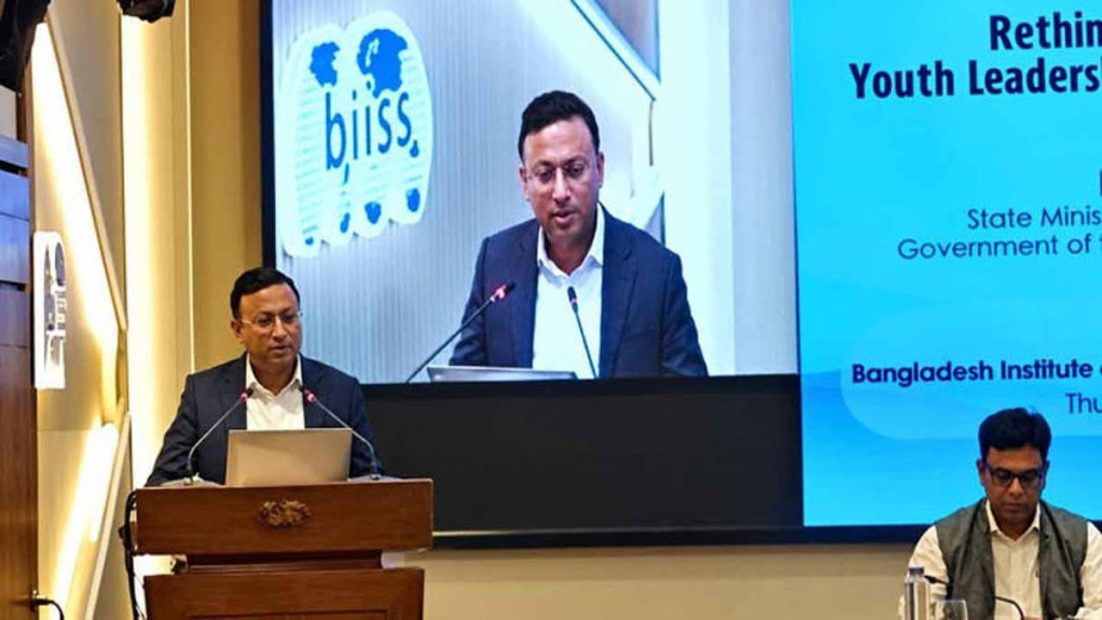
Bangladesh has conveyed that it will advance relations with international partners based on its own interests and needs. From decisions on aircraft purchases to securing a fair share of water from shared rivers with neighbouring India, the government’s position in both cases has focused on national interests, business considerations and discussions based on international law. Foreign Affairs State Minister Humayun Kabir has also made clear that Bangladesh does not make decisions under pressure from any country or to please another state.
Speaking at a signing ceremony for the purchase of 10 aircraft from European manufacturer Airbus for Biman Bangladesh Airlines, the State Minister for Foreign Affairs said the agreement was not made to please European ambassadors. He said the decision was taken considering the needs of the country’s aviation sector and business realities. His remarks made clear that Bangladesh wants to work with different partners according to its needs rather than depend on any single country in international trade.
At a programme held yesterday, Humayun Kabir also criticised some remarks made by French Ambassador to Bangladesh Jean-Marc Séré-Charlet. He said Bangladesh’s relations with the United States, as well as any commercial decisions involving the country, were matters for Bangladesh to decide. Similarly, Bangladesh’s relations with Europe would be determined based on its own interests and needs. In his words, developing the country is Bangladesh’s responsibility, and wherever there are needs and opportunities, the government will work with the relevant partners.
Various remarks by European diplomats had earlier sparked diplomatic and political discussions over the decision to purchase Airbus aircraft. At a programme organised by the Diplomatic Correspondents Association, Bangladesh (DCAB) on September 22, the French ambassador had described the Airbus purchase as important for Bangladesh’s long-term partnership with Europe. He had also called the issue a good test for the current government. Shortly afterwards, the announcement of the purchase of Airbus aircraft for Biman Bangladesh Airlines was made.
However, the Bangladesh government has maintained from the outset that the decision was not the result of any geopolitical calculation. It said the decision to purchase the aircraft was based on passenger demand, the future of the aviation business and fleet requirements. The State Minister for Foreign Affairs has reinforced the same position in his remarks. He said a government elected by the people would not sign any agreement that was not in the country’s interest. If necessary, Bangladesh would do business with Airbus, just as it would with Boeing or any other company in the world.
This has further clarified Bangladesh’s position of making its own decisions in international trade and diplomacy, according to those concerned. Following the decision to purchase 25 Boeing aircraft from the United States, the initiative to purchase another 10 aircraft from European manufacturer Airbus is being viewed as part of this diversified commercial relationship. Rather than limiting relations with one country while strengthening ties with another, the government is pursuing a policy of working with multiple partners according to its needs and interests.
In this regard, the State Minister for Foreign Affairs also described the French ambassador as a good friend of Bangladesh. At the same time, he cautioned against conveying any perception or message about Bangladesh that does not correspond with the actual situation. According to him, the key considerations behind Bangladesh’s commercial decisions are the country’s needs, business rationale and the interests of its people.
Another aspect of the government’s position on relations with international partners has emerged over the issue of water sharing with India. Humayun Kabir said discussions with India would continue to secure Bangladesh’s fair share of water from shared rivers. Speaking at a seminar organised by the Bangladesh Institute of International and Strategic Studies on Thursday, he said the government would work to secure Bangladesh’s legitimate share through international law and diplomatic engagement.
Reiterating Bangladesh’s position on its share of water, Humayun Kabir said Bangladesh was willing to engage with India on water sharing and that necessary initiatives had been taken. He also expressed hope that a response would be received very soon. In his view, the ongoing discussions could also pave the way for renewing water-sharing agreements in the future.
However, he also said the water-sharing issue could not be resolved through Bangladesh’s unilateral efforts alone. Cooperation and commitment from the neighbouring country at the same level are necessary in this regard. In other words, Bangladesh wants to move towards a sustainable solution to important issues such as water management and the flow of shared rivers through mutual cooperation, international law and diplomatic negotiations.
The government’s statements on securing a fair share of water from India and maintaining commercial relations with the United States and Europe reflect a common policy, namely that Bangladesh’s decisions in international relations will be based on its national needs and interests. Closer relations with one particular state are not an alternative to relations with other partners; rather, Bangladesh’s goal is to maintain effective relations with all sides according to its needs.
At the Airbus agreement-signing ceremony, European diplomats also expressed expectations for long-term trade and economic partnership with Bangladesh. Their interest in supporting Bangladesh after its graduation from the LDC category and further expanding commercial relations also emerged. As a result, the agreement in the aviation sector is being viewed not merely as an aircraft purchase but also in the context of broader economic partnership opportunities.
The State Minister for Foreign Affairs also conveyed a positive message about the prospects for future cooperation. He expressed hope that the mutual goodwill of the people of Bangladesh and the European Union would further advance the partnership between the two sides and create more business opportunities between Bangladesh and Europe in the future.