
Ganges Water Treaty Before December, Padma Barrage Work by March: Water Resources Minister
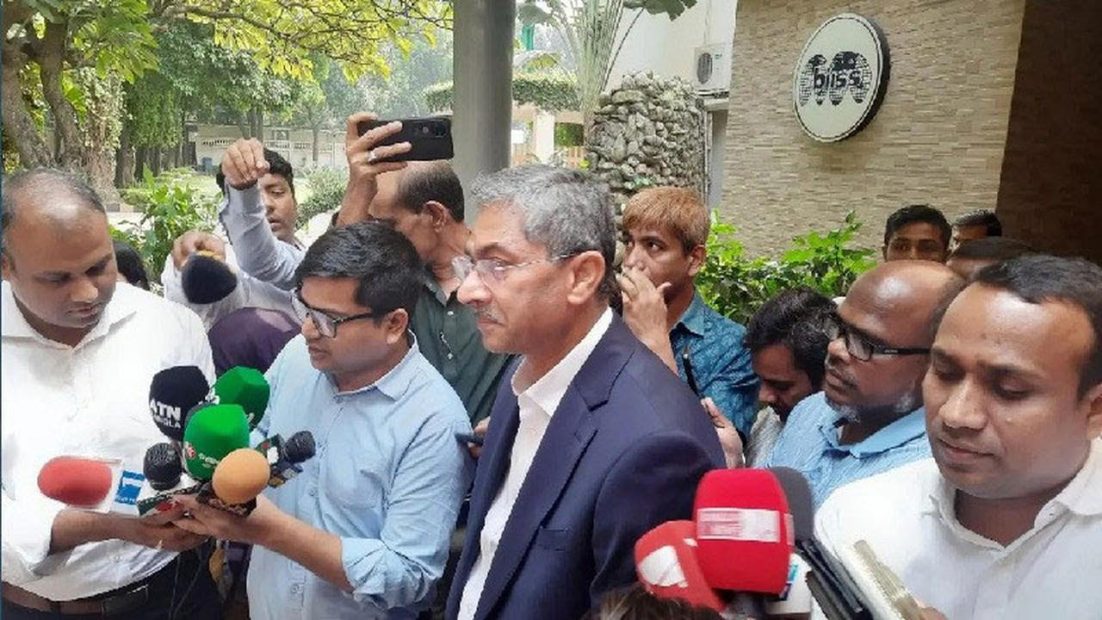
Water Resources Minister Shahiduddin Chowdhury Anee has expressed hope that a new Ganges Water Treaty with India will be concluded before December this year. He made the remarks while speaking to journalists after a seminar titled “Rethinking the Future of Water: Youth Leadership, Justice and Cooperation,” organised by the Bangladesh Institute of International and Strategic Studies (BIISS) in Dhaka on Thursday.
Shahiduddin Chowdhury Anee said the main priority in the Ganges treaty would be to restore the “guarantee clause” similar to that in the 1977 agreement. He said work on the Padma Barrage would become visible by January, February or March next year. The government also wants to begin the main work on the Teesta Multipurpose Project next year after completing its feasibility study.
He described the Padma Barrage and Teesta Master Plan as highly important mega projects and “mastermind projects” for Bangladesh, saying people in one-third of the country’s total area would benefit from them.
“The Padma Barrage project has been approved by ECNEC to make the work visible. We hope the work will become visible at some point in January, February or March next year,” he said.
Regarding the Teesta Master Plan, the minister said it was another major challenge. “It is a fast-flowing river. The people of that region have been living with this challenge for a long time because of the way upstream water from India flows into the downstream areas,” he said.
He said numerous seminars had been held and were still being organised on the proposed master plan. “We have spoken and held meetings with experts from BUET and assigned them responsibilities. We have also spoken with many local and international experts. Very soon, we have to undertake its feasibility study. Based on the study, we will begin the project work,” he said.
“We expect it will take some time to complete. Special attention is being given to completing everything by 2027 so that the main work can begin,” he added.
Regarding the Ganges Water Treaty, the minister said everyone was eager to see progress as the 30-year agreement would expire on December 12, 2026. “We have to conclude a new agreement before that. Accordingly, both Bangladesh and India are working continuously through the Joint Rivers Commission (JRC). Based on the meetings, we are hopeful that the agreement will be concluded before December 12,” he said.
Earlier in the morning, the Water Resources Minister attended the opening ceremony of BUTEX-ITET Dye-Chem Expo-2026 at Bangladesh University of Textiles in Tejgaon, Dhaka, as the chief guest.
Speaking there, he said the textile industry uses a very large amount of water while groundwater levels are declining day by day. “Therefore, we need to focus on increasing the use of surface water instead of groundwater,” he said.
Referring to the BUTEX-ITET Dye-Chem Expo, he expressed hope that it would help advance innovation, strengthen cooperation between industry and academia, and inspire the next generation of textile professionals.
He said Shaheed President Ziaur Rahman had played an important role in the development of the textile industry. “At present, the textile industry is making a significant contribution to Bangladesh’s economy. The textile university is producing hundreds of professionals whose demand exists both at home and abroad,” he said.
BUTEX Vice-Chancellor Professor Dr Engineer Md Julhas Uddin presided over the opening ceremony. ITET President Engineer Enayet Hossain and ITET Secretary General Engineer Hafizur Rahman attended the event as special guests. Professor Dr Tania Akter, Professor Dr Rasheda Begum and others also spoke at the event.










