
US Suspends Indian IT Firms from Green Card Programme
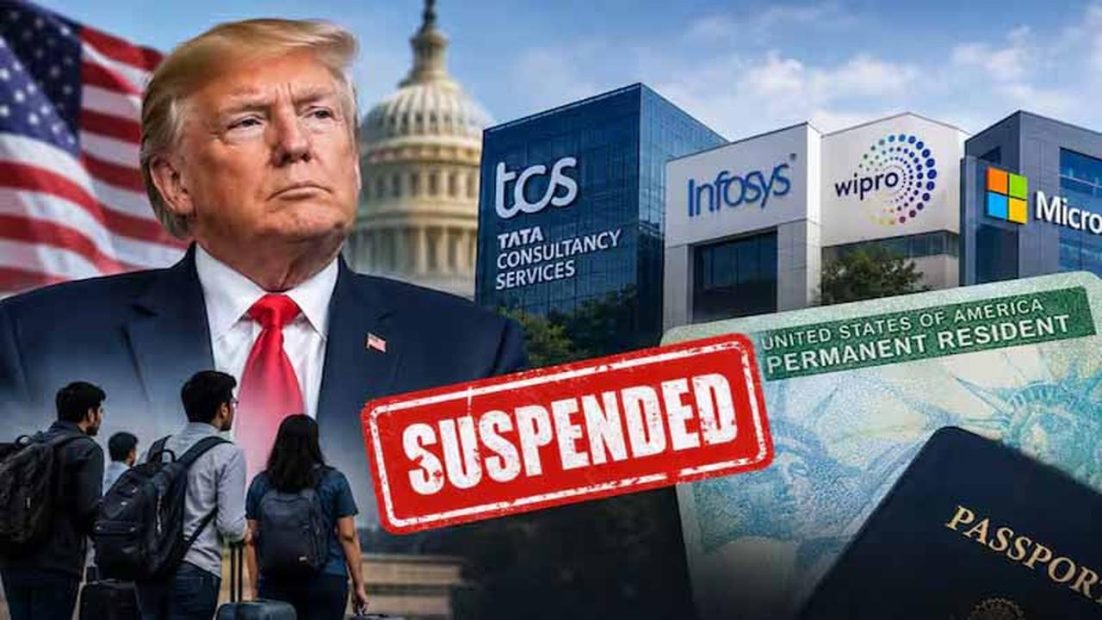
Several leading Indian information technology companies have faced a major obstacle in the process of obtaining US green cards. The administration of US President Donald Trump has temporarily suspended eight technology companies from the Permanent Labour Certification (PERM) programme. The companies on the list include Cognizant, Infosys, Tata, Wipro, HCL, Capgemini, Microsoft and Adobe.
US Labour Secretary Keith Sonderling announced the decision on Thursday, October 8. US Vice President JD Vance was also present. The administration has accused the companies of abusing various foreign worker hiring programmes, thereby undermining employment opportunities for American workers.
Sonderling said no new permanent labour certification applications would be accepted from the companies concerned. Processing of previously submitted applications would also be suspended. According to figures he provided, the companies have filed applications for around three million foreign workers since 2009. During this period, they received approval for more than 230,000 H-1B visas and obtained over 100,000 permanent labour certifications.
The Permanent Labour Certification programme is a key step towards obtaining employment-based green cards in the United States. It allows employers to proceed with applications for permanent residence for foreign workers. However, a company’s suspension from the programme does not mean that all its foreign employees’ H-1B visas have been cancelled.
JD Vance has specifically criticised Microsoft. He alleged that the company received approval for a large number of H-1B visas even after laying off around 6,000 American workers in 2025. According to him, Microsoft submitted approximately 3,682 permanent labour certification applications during the same period, around 1,000 of which were for positions related to work performed by American employees who had been laid off.
JD Vance alleged that some companies were bringing in foreign workers without making adequate efforts to recruit American workers. In his view, abuse of the H-1B programme was undermining local workers’ wages and employment opportunities. However, statements from all the companies concerned were not available regarding these allegations.
The H-1B visa allows US employers to recruit foreign workers with specialised skills. Indian IT professionals have long been among the programme’s largest beneficiaries. As a result, the suspension of Indian technology companies from the PERM programme could affect the processing of their employees’ applications for permanent residence in the United States.
India’s IT industry association NASSCOM said immigration and the international mobility of skilled workers were separate issues. According to the association, the H-1B programme has played an important role in addressing the shortage of skilled workers in the United States. It also maintained that Indian technology companies had increased local hiring in the country and strengthened their domestic workforce.
NASSCOM further said Indian technology companies work with major US corporations, supporting their innovation and business growth. The association argued that restrictions related to immigration should distinguish between the mobility of skilled workers and applications for permanent residence.
Meanwhile, JD Vance has also accused universities over certain visa programmes used to recruit foreign workers. He alleged that some universities were putting pressure on the wages of American graduate students and researchers by hiring foreign researchers and students.
Sources: Reuters, The Indian Express.










