
Pakistan Govt Imposes Governor’s Rule in Pakhtun Province as Old Fears Resurface
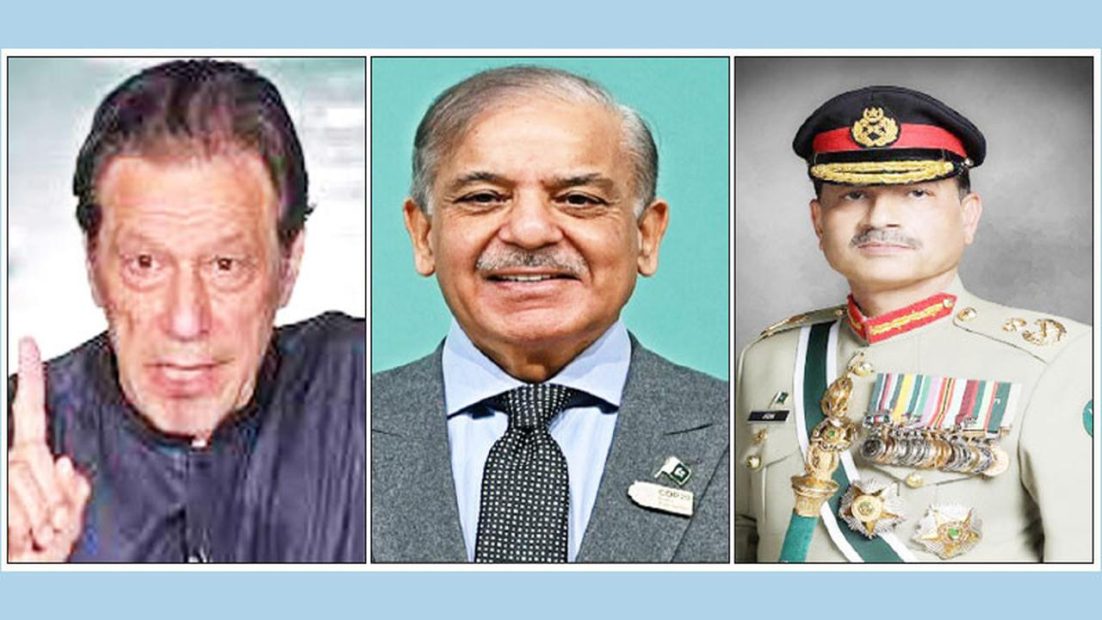
I usually submit this column by 10 pm on Sunday, and it is published in Inqilab on Tuesday. I have followed this practice for the past 37 years. Last Sunday morning, I planned to write about political reconciliation in Bangladesh. A familiar face had suddenly started making a great deal of noise about the issue. There is nothing wrong with holding a seminar on the Bay of Bengal.
But why has the question of reconciliation suddenly emerged in discussions about the Bay of Bengal Conversation? What are its proponents trying to say or achieve? It is not difficult for an informed person to understand that, by using such grand terms, they actually want to rehabilitate the Awami League. But reconciliation is not that simple, nor is the rehabilitation of the Awami League.
However, a report published on Sunday afternoon by Dawn, Pakistan’s oldest and one of its most respected English-language newspapers, changed my plans. The report said that emergency rule had been imposed in Pashtun Province under Article 232 of Pakistan’s Constitution, followed by governor’s rule under Article 234.
Pakhtun Province, formerly known as the North-West Frontier Province, is one of Pakistan’s four provinces. It was the only province governed by the Pakistan Tehreek-e-Insaf (PTI), the party of internationally acclaimed cricketer-turned-politician Imran Khan.
Following the imposition of governor’s rule, the provincial cabinet was dissolved. Chief Minister Sohail Afridi lost his position, and a chief secretary was appointed to run the administration under the governor’s direction. Dr Mohammad Fakhr-e-Alam was appointed chief secretary. The governor, Mr. Kundi, was appointed by the federal government.
The report left me stunned. I wondered whether democracy would ever be allowed to flourish in Pakistan. Constitutional governance has repeatedly failed to function properly in the country, and democracy has never been allowed to take firm root. This failure created the conditions that ultimately led to the country’s breakup.
The greatest tragedy in Pakistan’s history was the separation of its eastern wing, which became independent Bangladesh. I had hoped that Pakistan’s ruling establishment would learn from this historic disaster. But the latest developments suggest that it may have learned little.
Pakistan cannot build its reputation through foreign policy achievements alone. It must also establish good governance at home. In July 1971, US Secretary of State Henry Kissinger secretly visited China through the diplomatic efforts of Pakistan’s military ruler, General Yahya Khan. In return, the United States supported Pakistan during Bangladesh’s Liberation War. Yet support from both the United States and China could not prevent Pakistan from breaking apart because the overwhelming majority of people in East Pakistan had turned against the country’s rulers.
Field Marshal Asim Munir may gain international recognition for mediating between the United States and Iran over the conflict in the Middle East, but Pakistan’s internal situation remains unstable. He must pay attention to domestic challenges as well as foreign affairs.
I repeatedly refer to Asim Munir rather than Prime Minister Shehbaz Sharif because I have had the opportunity to visit Pakistan and Kashmir five times. During those visits, I spoke with several prominent figures, including former army chief General Aslam Beg, Gohar Ayub, son of former President General Ayub Khan and former speaker of Pakistan’s National Assembly, and former Prime Minister Benazir Bhutto. These experiences gave me an understanding of the Pakistani mindset.
Experienced political observers can clearly see what they regard as attempts to destabilise at least two of Pakistan’s provinces. While Field Marshal Munir is engaged in efforts to promote peace in the Middle East, particularly in Saudi Arabia, Yemen and Iran, Balochistan, Pakistan’s largest province by area, continues to face severe unrest and bloodshed. The author alleges that India is supporting the Balochistan Liberation Army (BLA) with shelter, money and weapons to fuel instability.
Meanwhile, the Tehreek-e-Taliban Pakistan (TTP) is carrying out armed attacks in Pakhtun Province. The author alleges that the Taliban government in Afghanistan is supporting the group. Pakistan’s air force has bombed TTP bases, while its army has launched operations against the BLA.
Political Discontent and Imran Khan’s Imprisonment
I would not attach so much importance to the armed attacks by the BLA and the TTP if the Pakistani people were satisfied with Shehbaz Sharif’s government. However, the alleged involvement of India and the Afghan government in supporting these groups cannot be ignored.
Various international organisations have reported that Imran Khan’s party won the previous elections in Punjab, Pakhtun Province and the National Assembly. According to these accounts, military and civilian officials interfered and altered the results, while Imran Khan and other PTI leaders were imprisoned.
Until recently, Imran Khan was widely regarded as Pakistan’s most popular political leader. Yet democracy was once again denied an opportunity to develop, as the military did not allow him to return to power. While serving as prime minister, Imran Khan wanted General Faiz Hameed to become army chief. The author alleges that Donald Lu, then a US assistant secretary of state, helped bring down Imran Khan’s government with the assistance of former army chief General Qamar Javed Bajwa.
After becoming prime minister, Shehbaz Sharif appointed Asim Munir as army chief. Since then, Imran Khan, whom the author describes as Pakistan’s most popular political leader, has remained imprisoned.
Pakistan’s Long History of Political and Constitutional Crises
I have said before, and I maintain, that democracy has never been allowed to flourish fully in Pakistan. Pakistan became independent on August 14, 1947, one day before India. India adopted its Constitution in 1950, while Pakistan did not adopt its first Constitution until 1956. Until then, the country was governed under the Government of India Act of 1935, introduced during British rule.
During this period, Sindh Chief Minister M. A. Khuhro was removed from office, and Governor-General Ghulam Muhammad dismissed Prime Minister Khawaja Nazimuddin. In the 1954 elections in East Bengal, the United Front won a landslide victory. However, in May that year, Chief Minister A. K. Fazlul Huq, popularly known as Sher-e-Bangla, was dismissed and governor’s rule was imposed under Section 92-A of the Government of India Act. Major General Iskander Mirza was appointed governor of East Bengal, which became East Pakistan after the adoption of Pakistan’s Constitution in 1956.
Governor-General Ghulam Muhammad also dissolved Pakistan’s first Constituent Assembly. Although Pakistan finally adopted a Constitution in 1956, General Ayub Khan imposed martial law in 1958 and abolished the Constitution and the National Assembly. Near the end of Ayub Khan’s rule, mass uprisings broke out in both East and West Pakistan. Ayub Khan fell from power, but authority did not pass into the hands of the people. General Yahya Khan took power by imposing another period of martial law. His rule ended with the separation of East Pakistan and the emergence of independent Bangladesh.
India followed a different path. Since the early years after independence, it has held regular elections under its Constitution. The country has 28 states and eight union territories, with considerable linguistic and cultural diversity. Nevertheless, constitutional government has continued, and the country has never come under military rule.
According to political analysts, Hindu religion has been a major factor in maintaining India’s national unity despite its diverse regional identities. The author also points to the legacy of the Indus Valley Civilisation, which dates back approximately 3,500 years, as part of the historical background to that unity.
Governor’s Rule Revives Memories of East Pakistan
Against this historical background, governor’s rule has now been imposed in the only one of Pakistan’s four provinces that had an opposition-led government. There is a Bengali proverb: “A burnt child dreads the sight of fire.” The imposition of emergency and governor’s rule in Pakhtun Province repeatedly brings this proverb to mind.
Late on Sunday night, at around 9:15 pm, I saw another report in the online edition of Dawn stating that troops had been deployed to assist the civilian administration. One important statement deserves mention here. On November 5, 2022, Imran Khan said: “What happened in East Pakistan? The military took action against the party which won the elections.”
On May 18, 2023, Imran Khan was arrested. He has remained in prison since then. Just before his arrest, he warned: “Pakistan could face an East Pakistan-like situation”. The warning carries a serious historical message. In 1971, the refusal to respect the electoral mandate of East Pakistan’s majority party helped drive the country towards disintegration.
Through the July uprising, the people of Bangladesh ended what the author describes as Sheikh Hasina’s subservient rule towards foreign powers and defended the country’s democracy and sovereignty. Pakistan must not forget that, in the author’s view, India wants to undermine Pakistan’s existence. Its military and civilian leadership should therefore avoid taking steps that could lead the country into a trap set by its adversaries.
Email: journalist15@gmail.com










