Air France at risk after following Israeli order that bars crew from Muslim majority countries
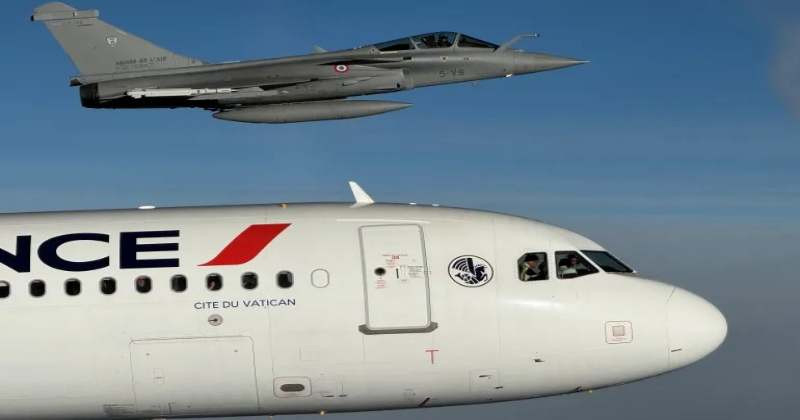
Air France has confirmed that it follows Israel’s new rule on the nationality of flight crew. The rule applies to flights that land in Israel or cross its airspace. Experts warn that this disputed policy could expose the French airline to anti discrimination lawsuits.
Israeli media and the French investigative outlet Mediapart reported the new rule. It lists 31 Muslim majority countries, including Algeria, Tunisia, Iran, Oman, Saudi Arabia, Pakistan and Niger. Citizens of these countries can no longer fly or work as crew in Israeli airspace.
Air France gave Al Jazeera a statement on the matter. It said that, like every other airline, it must follow the entry rules of the countries it serves. These rules cover both passengers and staff.
Israel’s N12 broadcaster reported that Israel’s Ministry of Transport and Road Safety gave the order to foreign airlines on 1 October. The order says pilots and cabin crew on flights in Israeli airspace must not hold citizenship, including dual citizenship, of any country that has no diplomatic ties with Israel.
On 30 September, a flydubai flight from Dubai to Tel Aviv faced a serious incident. UAE and Israeli authorities allege that an Omani co pilot attacked the captain. They say he tried to hijack the plane and crash it at Ben Gurion Airport. Israel issued the new order one day after that event, and the injured Indian pilot is still in hospital.
Air France told Al Jazeera that it has informed the crew members on Tel Aviv flights about the new Israeli rule.
Many airlines may feel the effect
Dozens of airlines that fly to, from or over Israel could feel the effect of this order. Al Jazeera asked Israel’s transport ministry for comment. The ministry had not replied when this report was written.
Al Jazeera also contacted 15 major international airlines that fly to Israel. It asked whether they received the order and whether they changed their crew hiring. Smartwings, the largest airline in the Czech Republic, confirmed that it received the order. It said the order does not affect its work right now, but it will follow it.
Smartwings spokesperson Ms. Vladimira Dufkova told Al Jazeera that the airline received the order from Israeli authorities in September. She said the airline reviewed it with care and follows the rules. She added that the order has not changed how it runs flights or assigns duties to staff.
United Airlines said only that it has “nothing to say” on the matter. It did not confirm whether it received the order or took any action.
An internal Air France letter, which Mediapart obtained, warns pilots and crew about the order. It says that if they fail to follow it, both Air France and the staff member could face punishment. Al Jazeera could not check the letter on its own.
A “discriminatory approach”
Ms. Clara Gandon, an anti discrimination law expert based in Paris, spoke to Al Jazeera. She said that if the report is true, the rule would put Air France in conflict with French labour law. She asked whether an airline can ignore its duty to its own staff just to follow another country’s security rules.
Ms. Gandon said the order rests on a group wide idea that is deeply discriminatory. She said it treats every citizen of these 31 countries, most of them Arab or Muslim majority, as a possible security risk. She added that by accepting the order, Air France commits direct discriminatory harassment.
She cited Article L1132 1 of the French labour code. It bans any discrimination in hiring, pay or discipline based on real or assumed nationality. She said that removing a worker from a flight because he or she is Algerian, Tunisian, Iranian or from another listed country is direct discrimination, even if the pay stays the same.
She added that because the listed countries are mostly Arab and Muslim majority, the step also discriminates by origin and, in an indirect way, by religion.
Ms. Gandon explained that French law allows different treatment in some cases. These include a real job need, a fair link to the nature of the work, or a legitimate aim. She said nationality is not a skill needed to fly a plane. She noted that Air France lets the same pilots and crew fly on all other routes, which shows the company itself does not see them as a security risk.
In her view, Air France has no sound legal reason for this policy. She said the airline wants to keep its business and hold on to the Israeli market, but money can never make discrimination legal. She added that security is Israel’s goal, not the company’s.
She cited a 2017 ruling of the Court of Justice of the European Union. She said a protected trait cannot become a job requirement overnight because a third party wants it. She said the right way to deal with security worries is to assess each person one by one. French aviation security already does this, and it should not rest on nationality alone.
Airspace sovereignty and national law
Whether Israel’s rule creates discrimination under French law is a separate question from a state’s power to control its own airspace and land. Analysts point to international civil aviation law. Under Article 1 of the 1944 Chicago Convention, every state has full control over its airspace. Under Article 33, states recognise the licences of each other’s crew.
Mr. Vincent Correia, a professor of air law at McGill University in Canada, pointed to Article 13 of the Chicago Convention. It lets any state apply its entry rules to passengers and crew on its land. He told Al Jazeera that crew on international routes must pass immigration and customs. He said a state can therefore ban crew of certain nationalities from entering its territory.
Mr. Correia said pilots and crew from countries without ties to Israel were already barred from landing there. The new rule mainly affects dual citizens. He said this may be why airlines such as Air France feel forced to accept it.
Ms. Gandon said a state’s power to refuse entry does not free airlines from their own national anti discrimination and labour laws. She said Air France may point to airspace sovereignty, but that does not change the fact that its step is deeply discriminatory.
She said Air France had other options. It could have paused the route under these terms. It could also have challenged the order through the French government, the French civil aviation authority (DGAC) or the European Union. The DGAC had not answered Al Jazeera’s questions when this report was written.
As a result, the French flag carrier could face legal trouble at home. Affected staff could demand damages, and trade unions could also take legal action. Ms. Gandon said French law may treat this kind of discrimination as a crime. The penalty could be up to three years in prison and a fine of up to 45,000 euros ($50,300).
Data protection law also applies. It says the information collected from staff must be directly linked to their work. A list of citizens from 31 countries could expose the ethnic identity of workers, which would break personal data protection law.
Mediapart reported that Air France first thought of asking its staff to share this information on their own. The crew union Alter told management not to do so. In a notice to its members, the union said this would be discrimination based on nationality. Al Jazeera also tried to reach Alter, but it received no comment.
The full effect of Israel’s policy on other airlines is still unclear. Mr. Correia warned that it could set a bad example for the selection of international crew. He said it could make normal air travel harder in the future.
He said the world already faces a pilot shortage, so airlines will face extra pressure when they plan flights to Israel. He added that if other countries also start picking crew by nationality, the whole system will become impossible to manage.