
PTI Launches Legal Challenge Against Federal Rule in Khyber Pakhtunkhwa
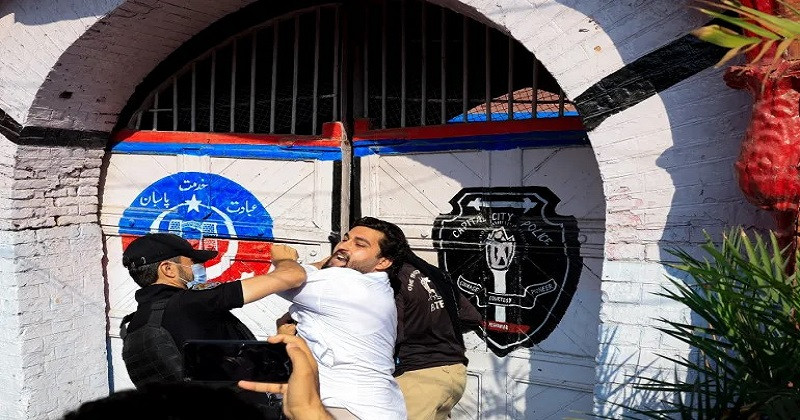
Pakistan Tehreek e Insaf (PTI), the party of jailed former prime minister Mr. Imran Khan, has decided to challenge the federal government’s emergency rule in Khyber Pakhtunkhwa in court. The centre took control of the northwest province earlier this week. PTI had ruled the province for a long time.
PTI central information secretary Mr. Sheikh Waqas Akram told Al Jazeera that the party will go to court today. The decision suspends civil rights and puts the province under emergency law and governor’s rule. A legal team led by PTI secretary general Mr. Salman Akram Raja has already prepared a writ petition. The party has not confirmed whether it will file in the Supreme Court or the newly formed Federal Constitutional Court.
The move came while PTI was holding a delayed “Islamabad Long March” to demand Mr. Imran Khan’s release. The federal government’s harsh step has raised political heat again. Mr. Imran Khan has been in jail for more than three years.
Yesterday, Interior Minister Mr. Mohsin Naqvi defended the step. He said central rule was needed to deal with “terrorism” in the province, which shares a border with Afghanistan. Speaking at a press conference in Peshawar, he said no war can be won until the local government takes charge and leads from the front, no matter how many resources are provided.
Earlier this week, President Mr. Asif Ali Zardari issued an ordinance that imposed emergency and governor’s rule. This suspended the PTI led provincial government. The party has held power in the province since 2013.
Minister of State for Interior Mr. Talal Chaudhry confirmed that the sacked chief minister, Mr. Sohail Afridi, and some members of his cabinet were taken into preventive custody. Mr. Afridi himself was leading the long march for Mr. Imran Khan’s release. PTI said its movement will not stop even though top leaders are in custody. Mr. Waqas Akram said, “Our long march has not ended, but a historic crackdown has begun against the party.”
The central government’s argument
The notification signed on Sunday said the provincial government “failed to show the will, ownership and necessary action to face the threat of terrorism.” Ms. Asiya Riaz, joint director of Pildat, an independent political analysis group in Pakistan, spoke to Al Jazeera. She said the federal position is very clear. After the cabinet meeting, the government said the provincial government kept a deliberate distance from the fight against terrorism, which she called a constitutional ground for emergency rule.
Last month, Mr. Ikhtiar Wali Khan, political adviser to Prime Minister Mr. Shehbaz Sharif and a leader of the ruling PML N, released a 15 page white paper. It explained why such action was needed. The paper raised questions about rising deaths of police officers, the lack of staff and equipment in the Counter Terrorism Department, and the priorities of the provincial budget.
PTI leader Mr. Waqas Akram rejected these claims as baseless. He said the PTI provincial government gave 183 crore rupees ($6.6 million) from its own funds to the families of more than 900 soldiers, police and paramilitary members killed in fights with armed groups. He said no other province made such a contribution.
What really happened at the negotiating table?
At a press conference in Islamabad on Sunday, Mr. Mohsin Naqvi said the central government held talks with PTI about the sit in the party had called in support of Mr. Imran Khan. He said, “We have no objection to the sit in. Continue it as long as you like. Our only worry is terrorism, and we wanted to see you on the same platform on this issue.”
PTI leader and former provincial finance minister Mr. Taimur Jhagra gave a different account of the talks. He said the talks were about Mr. Imran Khan’s proper medical treatment and meeting rights, as ordered by the Supreme Court. He called it very ridiculous how this suddenly turned into a talk about counter terrorism plans.
Mr. Naqvi claimed that PTI agreed in the talks that an emergency could be declared in 12 districts of Khyber Pakhtunkhwa. Mr. Waqas Akram fully rejected this claim. He said PTI did not agree because ordinary people would have paid the price of a military operation.
Information Minister Mr. Attaullah Tarar raised the tone at the press conference. He alleged that the sacked PTI government was responsible for the deaths of thousands of people in Khyber Pakhtunkhwa. He also said Mr. Sohail Afridi’s government was working hand in hand with the TTP (Pakistani Taliban) and the Afghan Taliban. No public evidence has been found to support this claim.
Security or political motive?
According to the government white paper, 122 police officers died in the province in the first six months of 2024. In the same period of the year before, the number was 63. Data from the Centre for Research and Security Studies (CRSS) shows that 556 people died in violence in Khyber Pakhtunkhwa between July and September. This is much higher than the 475 deaths in the previous three months. Balochistan suffered the most violence, where deaths rose by 213 percent to 829.
The government names security as the main reason, but analysts say there are other reasons. Islamabad based political analyst Mr. Zaigham Khan said political, administrative and security factors are all at work behind the decision.
Mr. Ali Erkam, who has watched the situation in Khyber Pakhtunkhwa for a long time, disagreed. He said this has nothing to do with security. He called it a political move dressed up as an administrative need.
Mr. Taimur Jhagra believes the centre thought PTI would collapse if it took control of the province. He said people across the country still see Mr. Imran Khan as their leader.
Imran’s party under pressure
PTI’s biggest worry now is the detention of its leaders and the legal fight. Mr. Waqas Akram said no one can be reached. He said nobody in the party has any contact with the sacked chief minister. Even so, PTI’s support in the province and across the country is still quite strong.
Interior Minister Mr. Naqvi warned that success against terrorism will not come overnight and that harder times lie ahead. Analyst Mr. Ali Erkam said the central government should now be judged by the same standard used to judge PTI.
He said, “People will now watch whether the security situation in the area really improves. They will see whether people get basic civic services. They will also see whether the promised revenue reaches the province properly.”










