Resin Industry’s Untapped Potential: Production Stands at Just 200 Metric Tonnes Against Demand for 10,000 Tonnes
Musa Mia, from Chapainawabganj
Resin is in demand, it has many uses, and the country’s only resin research centre works on it. Yet resin, once known as a cash crop, now has very low production. The country needs about 10,000 metric tons of resin every year, but farmers produce only 200 metric tons. Despite this huge potential, Bangladesh still waits to recognise resin officially as an agricultural product.
Researchers say many countries give resin high value for its trade and production. They say Bangladesh must also treat this promising crop as an agricultural product and bring it under farm development programmes. Resin once grew across wide areas of Chapainawabganj and Rajshahi. It gave farmers a cash crop and a source of income. The country’s only resin research centre also stands in Chapainawabganj.
Over time, resin farming shrank and now remains in only one or two villages. Climate change, rising heat, pesticide use on other crops, and a lack of planned farming have hurt the sector. Farmers also get little technical help, and the research centre has too few staff. Researchers now press harder for resin to win recognition as an agricultural product.
They say recognition will give officials more chances to plan resin farming under agricultural extension. Farmers will find it easier to get training, technical help and new production methods. Research results will also reach the field more easily. This can bring the fading cash crop back to the farms.
Resin is a natural material that many industries use. Makers use it in varnish, paint, cosmetics, medicine and electrical equipment. So resin matters beyond farming and the village economy. It also supplies raw material to industry, supports trade, and creates jobs for farmers.
In many countries, resin production and trade form an important part of the economy. This has brought the place of Bangladesh in the resin sector, and its need for official recognition, back into discussion. Researchers say the country should act fast, given the many uses of resin and its market demand. They want the government to recognise resin as an agricultural product soon.
Mr. Arghyapal, a scientific officer at the Chapainawabganj Resin Research Centre, spoke to Inqilab. He said Chapainawabganj and Rajshahi were once famous for resin farming. Now resin grows naturally in parts of Bagerhat, Gopalganj, Khulna and Satkhira in the south. Resin is an important commercial crop, but its production falls every day.
He said recognition as an agricultural product would give a chance to bring the lost crop back to the fields. He said the biggest economic strength of resin is its huge demand. Researchers say the country needs about 10,000 metric tons a year, but local farms produce only 200 metric tons. That means local production meets only about 2 percent of demand.
He said this gap shows both the unused potential of resin and the crisis in production. He said bad weather and careless use of pesticides on other crops are big challenges. He said research, farmer training and wider use of production methods can solve these problems. He added that resin also goes into ship bottom coatings and varnish in some industrial processes.
If farms grow more resin, farmers will earn more and local industry will get more raw material. Local production is small against huge demand, so the need for a clear plan is plain. Mr. Arghyapal said resin has many uses and real economic value. He said the country produces far less than it needs, so officials must give resin special attention and plan to spread its farming.
Resin production depends on the resin insect and its host plants. Heat, moisture and weather patterns play a big role in this system. But climate change is raising temperatures and changing normal weather. This creates new problems for resin farmers.
Researchers need to study how rising heat in Chapainawabganj affects resin production. Too much heat and weather change can harm the life cycle, breeding and output of the resin insect. But field data and scientific research must show how big these effects are. Mr. Arghyapal said resin grows very well at 35 to 40 degrees.
He said heat and weather matter greatly for resin. He said researchers must study how climate change affects resin. He said scientists must work on production methods and host plants that can adjust to future weather. If farmers cannot adjust production to climate change, the risk to resin farming will grow.
So officials must not only raise production but also invent methods that can face weather change. Chapainawabganj means mango. Mango orchards cover wide areas of the district, and farmers also grow many other crops there. Farmers use many pesticides and insecticides to fight crop diseases, and these chemicals may put resin at risk.
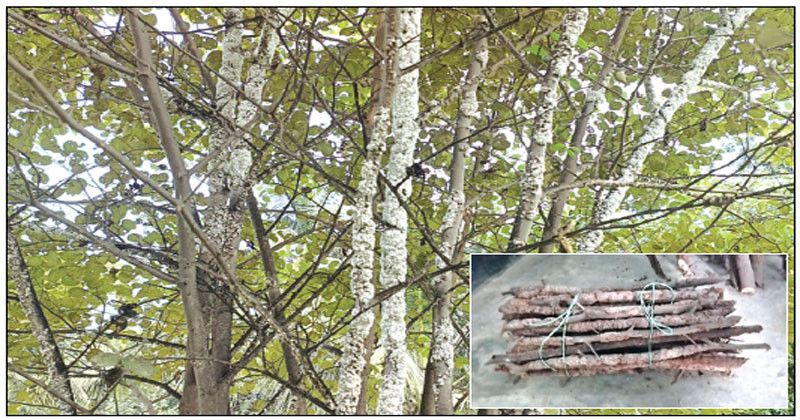
The resin insect is a living organic material. When farmers spray pesticides near host plants, the insects find it harder to survive and breed. Resin farms often sit next to mango orchards or other crop land. So farmers need to think about the type and timing of pesticide use.