
River Erosion Ravages Barguna, Residents Grapple with Mounting Crisis
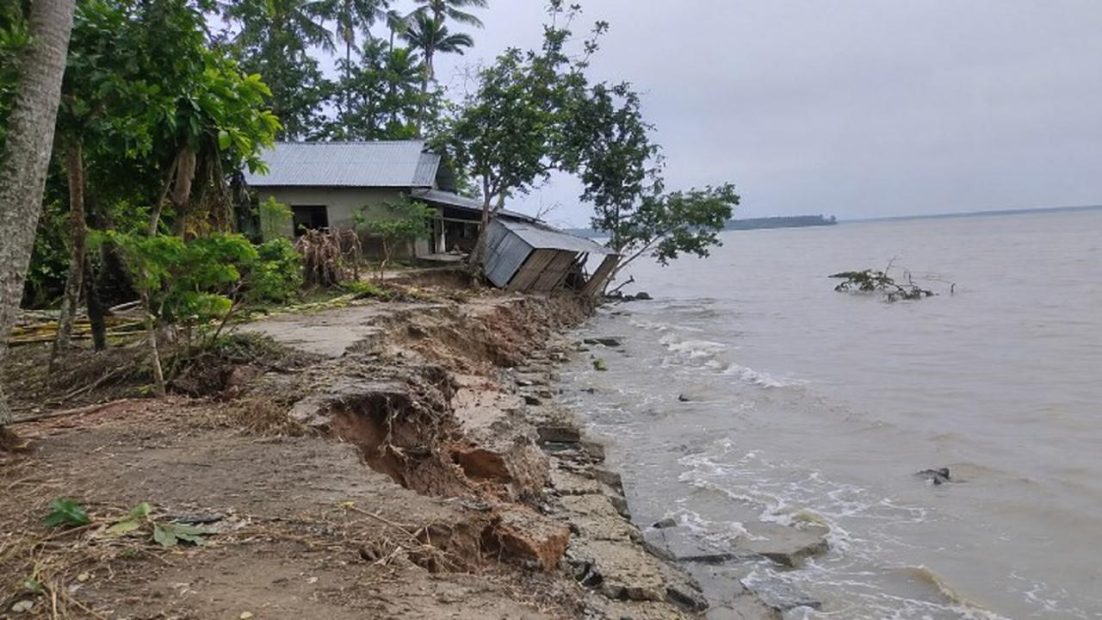
River erosion, cyclones, tidal surges, salinity and shortages of safe drinking water are threatening coastal Barguna as climate change disrupts livelihoods, damages infrastructure and pushes vulnerable families into financial uncertainty.
The district’s economy largely depends on agriculture, fishing and natural resources. However, rising sea levels, increasing salinity, irregular rainfall and extreme weather are making life increasingly difficult for communities living along the Bishkhali, Payra and Baleshwar rivers.
River erosion is forcing many people to lose their homes and farmland. Concerns over erosion and embankment safety persist in Taltali, Patharghata, Amtali, Betagi, Bamna and Barguna Sadar. Last May, cracks and soil subsidence developed in part of an embankment along the Payra River in Tentulbaria, under Nishanbaria Union in Taltali, raising concerns about nearby villages.
Hazrat Ali Howlader, a resident of Barguna town, lost his homestead to river erosion and now lives in a dilapidated house on government-owned khas land.
“I once had my own home and a stable household. I never imagined that I would have to leave my ancestral land and live somewhere else like this. After losing everything to river erosion, I could never return to my previous circumstances,” he said.
The losses extend beyond homes and land, leaving families without savings, stable livelihoods and the resources needed to rebuild their lives. Many become indebted while paying for relocation and new housing.
Salinity is another major concern, making safe drinking water difficult to obtain in some coastal areas. Saline water in ponds, canals and groundwater forces residents to travel long distances to collect drinking water, increasing the burden on women and children.
Zarina Begum, a resident of Char Duani in Patharghata, said collecting safe water for cooking, drinking and her children consumed considerable time and effort.
“Water from nearby sources is not safe to drink everywhere, so I have to collect it from distant places. If our area had a reliable supply of safe drinking water, we would not have to suffer so much,” she said.
Rainwater harvesting, reliable drinking water sources and regular water-quality testing are essential to ease the crisis and reduce the risk of waterborne diseases.
Agriculture is also suffering from salinity, excessive rainfall, drought and waterlogging. Cyclones and tidal surges damage crops, seedbeds, ponds and livestock, while rising costs of fertilisers, seeds, irrigation and labour add to farmers’ difficulties.
Abdul Karim, a farmer in Taltali, said adverse weather and salinity had made it increasingly difficult to achieve expected crop yields.
“When crops are damaged by salinity, irregular rainfall and excessive waterlogging, we cannot recover our investment. We then have to borrow money to support our families. We have land, but it no longer generates the income it once did,” he said.
Expanding salt-tolerant crops, testing soil salinity, conserving rainwater, improving drainage and providing affordable agricultural loans and disaster assistance are among the measures needed to support farmers.
Fishermen are also facing uncertainty. Adverse weather and cyclone warnings can prevent them from going to sea, while damage to boats and nets increases the cost of resuming work. However, changes in fish availability and fishermen’s earnings also depend on factors such as overfishing, fishing restrictions, market prices and operating costs.
Md Nazrul Islam, imam of Baro Lobongola Jame Mosque in Barguna Sadar, said he had noticed changes in familiar seasonal patterns.
“Sometimes extreme heat lasts for a long time, sometimes rain comes at unusual times, and winter no longer seems to arrive when expected. The natural rhythm seems to be becoming irregular,” he said.
Climate-related challenges also affect health, education and access to essential services. Contaminated water increases disease risks, extreme heat threatens outdoor workers, and damaged roads disrupt students’ journeys to school and patients’ access to healthcare. Repeated disasters further strain household budgets, forcing families to make difficult choices about food, education and medical expenses.
Monir Hossain Kamal, general secretary of the District Committee for the Protection of Citizens’ Rights, stressed the need to ensure safe drinking water, protect embankments, address navigability problems in waterways, tackle salinity, rehabilitate displaced people and strengthen public services.
Long-term measures for Barguna include building and repairing sustainable embankments, identifying erosion-prone areas, protecting safe water sources, expanding climate-resilient agriculture and strengthening disaster shelters and rehabilitation programmes. Transparency and accountability in project implementation, along with greater attention to local communities’ needs, are also essential.
Although coastal residents bear a disproportionate share of climate change’s consequences, they are not solely responsible for the crisis. Without coordinated and sustained action to protect Barguna’s people and their livelihoods, the challenges facing the coastal district are likely to deepen.










