
Government plans accomplishing Teesta Master Plan with its own funds
Rafiq Muhammad
The government has decided to carry out a multipurpose project centered on the Teesta River for the development of Bangladesh. The Teesta Master Plan will play an important role in economic growth and in fighting climate change. The project will not only secure water. It will also bring big progress in agriculture, industry, transport and power. About 20 million people in North Bengal will see their lives improve if the project is completed.
The government has first estimated the likely cost at Tk 12,000 to 13,000 crore. The Water Resources Ministry has sent the proposal to the Planning Commission. It may be passed at any time at a meeting of ECNEC. The present government is firmly committed to the plan.
Prime Minister Mr. Tarique Rahman said in a speech to the budget session of Parliament in June that the plan would be carried out at any cost. He said it is for the water rights and livelihood of the people of the northern region. Not only the Prime Minister, but also the Water Resources Minister, the State Minister and others involved show the same firm will.
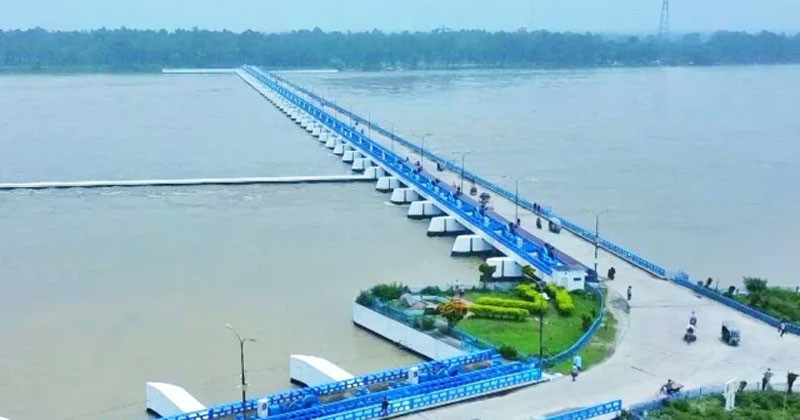
Water Resources Minister Mr. Md. Shahiduddin Chowdhury Annie said the government will surely carry out the Teesta Master Plan. He said the lives, livelihood, farming, environment and economic interests of people in the Teesta basin will get top priority. He said the government led by Prime Minister Mr. Tarique Rahman works with the interest of the country and its people first. He said work on the Teesta Barrage will begin next year.
But the government has not yet made a final choice on how to fund the project. It is still undecided between foreign funds and its own money. At one time it was said the government wanted to carry out the plan with financial and technical help from China. China has shown interest from the start. It is ready to give loans on easy terms and technical help. Its expert team has also done a feasibility study.
Earlier, local media citing diplomatic sources reported that Bangladesh had asked China for a loan of about $550 million. The reports said China was positive about the loan. Mr. Yao Wen, then the Chinese ambassador to Bangladesh, said China wanted to join the project at the request of the government and with the national interest in mind. But the government has now moved away from this China focused thinking.
The government is now looking at regional and geopolitical angles and moving toward multilateral cooperation. The Netherlands has now shown deep interest in the plan after China. The Dutch government has offered to help with the feasibility study and the work itself. It has offered technical help and expert knowledge. Bangladesh has welcomed this interest.
The topic came up at a meeting held recently at the Prime Minister’s Office in the Secretariat. A high level Dutch team led by Mr. Sjoerd Sjoerdsma, the Dutch minister for foreign trade and development cooperation, took part. After the meeting, Deputy Press Secretary Mr. Shahadat Swadhin said Mr. Tarique Rahman warmly welcomed the Dutch interest.
In late August, a team led by US Ambassador Mr. Brent T. Christensen visited the Teesta Barrage area. The ambassador looked at the present state of the river, the loss of depth for boats and the real work of the irrigation project. He later held a short talk with local officials of the Water Development Board at the barrage point. He tried to learn in detail about water management, river repair and the effect of dry season water shortage on local farmers.
His sudden visit has started fresh talk in political circles. India had also shown interest in the project earlier. The Teesta lies close to the Siliguri Corridor, also called the Chicken’s Neck, a very sensitive route for India. For this reason Delhi has long had security and strategic worries about any Chinese role in the project. India once said it wanted to take part, but it is not directly joining any formal funding or final work now.
State Minister for Water Resources Mr. Farhad Hossain Azad said the Teesta Master Plan will surely go ahead. He said the government is thinking of multilateral cooperation for it. He said two experts from China, two from the Netherlands, one from Malaysia and several from Bangladesh are already working as consultants. He said the plan will go to the DPP stage next month.
He said the government is also thinking of using its own money. He said the government is about to build the Padma Barrage with its own funds at a cost of Tk 35,000 crore. He asked why the government could not fund the Teesta plan of Tk 12,000 to 13,000 crore itself if it can do that. He said the government hopes the Prime Minister will open the Teesta Master Plan next October.
Experts say the Teesta project must stay free from the harmful effects of geopolitics. They say the country’s interest cannot be given up because one country objects. They say the government must put the national interest first. They also want it to use local strength and global experience to carry out the project.
Well known environmentalist and water expert Professor Dr. Ainun Nishat said many geopolitical calculations are visible around the Teesta. He said the government must weigh them and decide with the country’s interest first. He said it is not only about structures or dredging. He said diplomatic efforts must also go on side by side to win a fair share of Teesta water from India, to control floods in the rainy season and to end water shortage in the dry season.










