Agargaon to Become Home to Bangladesh Secretariat
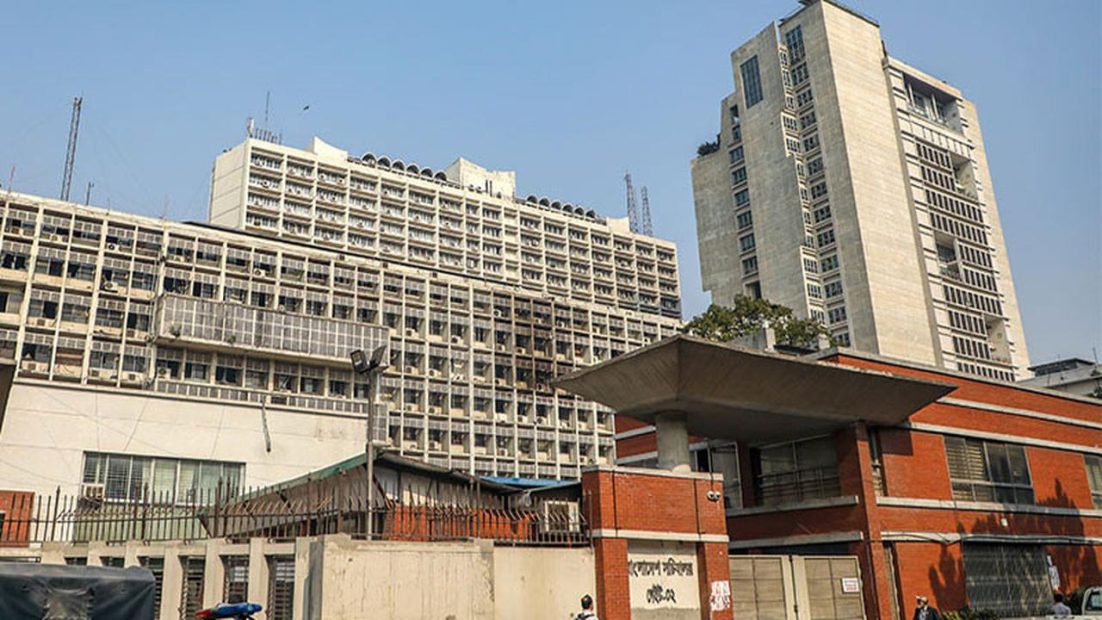
The government has approved in principle a proposal to relocate the Bangladesh Secretariat to the former trade fair grounds in Sher-e-Bangla Nagar, Agargaon, Dhaka, in line with American architect Louis I. Kahn’s master plan for the National Parliament Complex and its surrounding area.
The proposed design aims to preserve the architectural heritage and environmental integrity of the Parliament Complex while maintaining open spaces. Around 30 per cent of the project area will be allocated to greenery and water bodies.
The Cabinet also approved the draft Special Solar Power Installation Ordinance, 2026, and a proposal to rename the Ministry of Women and Children Affairs as the Ministry of Women and Children.
The decisions were taken at a Cabinet meeting chaired by Prime Minister Tarique Rahman at the Secretariat on Sunday afternoon. Cabinet Secretary Nasimul Gani disclosed the decisions at a press briefing at the Information Department.
The Ministry of Housing and Public Works proposed relocating the Secretariat to Sher-e-Bangla Nagar. The existing complex covers 17.57 acres and has 13 buildings, eight of which were constructed before independence.
Buildings 1, 2, 3 and 8 were built between 1937 and 1939, while Building 5 was constructed in 1947. These structures were not designed to withstand earthquakes. Their continued use by important government ministries and divisions poses risks, as Dhaka is in an earthquake-prone zone.
The buildings also lack adequate office space and toilet facilities, affecting working conditions. The Secretariat currently has around 18.76 lakh square feet of office space. At least another 10 lakh square feet is needed to meet the growing needs of ministries and accommodate offices located outside the complex.
The project was presented at an Executive Committee of the National Economic Council (ECNEC) meeting on April 26 but was returned without approval. Prime Minister Mr. Tarique Rahman later directed the Ministry of Housing and Public Works and the Department of Architecture to examine the proposed relocation.
The Department of Architecture subsequently prepared a conceptual design based on Louis I. Kahn’s master plan.
The proposed complex will cover around 31.58 acres and provide approximately 33.16 lakh square feet of space. It will comprise 14 12-storey buildings with three basement levels and parking for 3,800 vehicles, including 200 above-ground spaces. The complex will also have a mosque, two multipurpose halls with a capacity of 350 people each, a cafeteria and a post office.
Solar power ordinance
The Cabinet approved the draft Special Solar Power Installation Ordinance, 2026, subject to vetting by the Legislative and Parliamentary Affairs Division.
The Power Division said the government had formulated the National Renewable Energy Development Strategy 2026–2030 to reduce dependence on imported fossil fuels, lower electricity subsidies, strengthen energy security and achieve the Sustainable Development Goals.
The government aims to install 3,000–4,000 megawatts of rooftop solar capacity before next summer and has announced incentives to support the target.
Government, semi-government, autonomous and local government institutions, as well as state-owned companies, have been instructed to install rooftop solar systems financed by investors under the operating expenditure (OPEX) model. Institutions with their own revenue sources may also install systems under the capital expenditure (CAPEX) model, taking future income into account.
However, existing laws lack specific provisions on long-term electricity pricing, electricity-sharing arrangements as rooftop rent and maintenance under the OPEX model. The Public Procurement Act, 2006, the Invest Bangladesh Act, 2026, and the Electricity Act, 2018, also lack specific provisions for rooftop solar services provided under the CAPEX model.
The proposed ordinance seeks to address these gaps and establish a clearer legal framework for rooftop solar installations.
Bangladesh to join Rotterdam Convention
The Cabinet also approved Bangladesh’s accession to the Rotterdam Convention on the Prior Informed Consent Procedure for Certain Hazardous Chemicals and Pesticides in International Trade.
According to the Ministry of Environment, Forest and Climate Change, the convention was adopted on September 10, 1998, and entered into force on February 24, 2004. It has 167 member countries. Bangladesh and Bhutan are the only SAARC countries yet to join.
Accession would strengthen Bangladesh’s capacity to manage hazardous chemicals, help attract foreign funding for chemical management projects, support database development and improve chemical tracking. It would also allow the country to participate in prior informed consent decisions on chemicals listed in Annex III and promote shared responsibility between importing and exporting countries.
Under Article 14, Bangladesh would be able to exchange scientific, technical, economic and legal information on hazardous chemicals and pesticides with other member states. Article 16 would provide opportunities for technical assistance from the Rotterdam Convention Secretariat.
The Cabinet also approved the proposal to rename the Ministry of Women and Children Affairs as the Ministry of Women and Children.