Poet Farrukh Ahmad’s 47th Death Anniversary Today
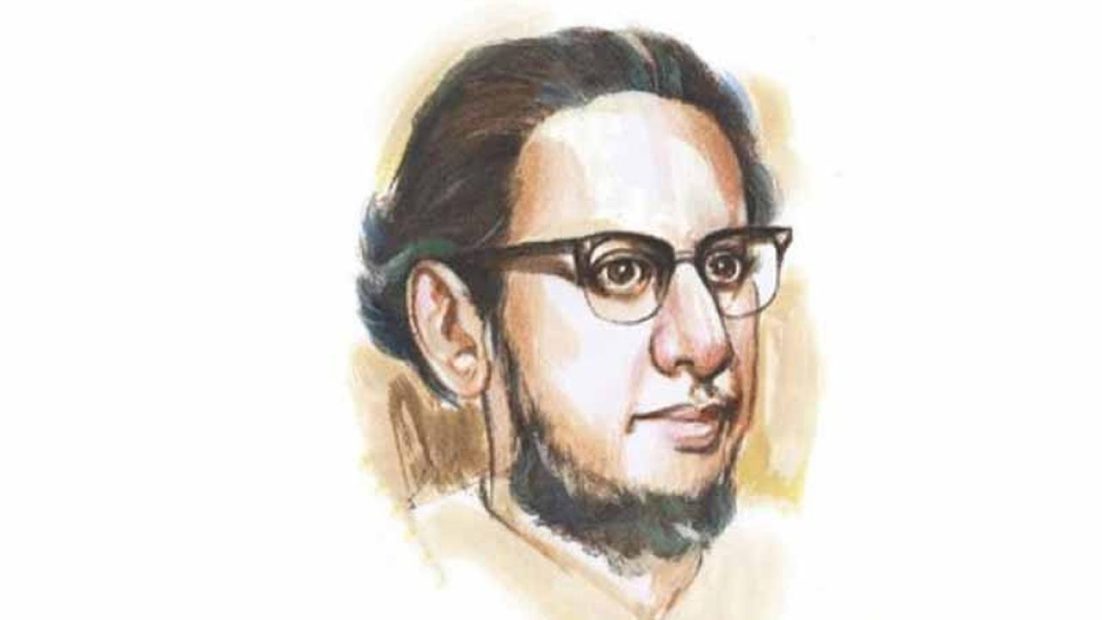
Today marks the 47th death anniversary of Farrukh Ahmad, a leading poet of the Bengali Muslim renaissance, widely known as the poet of the Muslim renaissance. He died at Eskaton Garden in Dhaka on October 19, 1974. He was born on June 10, 1918, in Majhail village of Magura district.
His poetry inspired the revival of the declining Muslim society of Bengal at the time. He was deeply affected by the suffering of famine-stricken people, their cries of anguish and the tragic consequences of starvation. Contemporary crises, a decaying social reality and the brutality of communalism also troubled him. These contradictions inspired his literary pursuits.
Farrukh Ahmad was one of the finest poets of modern Bengali literature. Although his poetry drew on Islamic thought, his technique, choice of words and imagery had distinctive qualities. His works also reflected many of the artistic features of modern poetry.
He wrote numerous popular and enduring poems, including the famous lines from Panjeree: “How much longer until dawn, O Panjeree? / Is your sky still filled with clouds? / Have the stars and crescent yet to awaken?”
His father was Syed Hatem Ali, and his mother was Begum Rowshan Akhtar. He began his education at the village primary school before moving to Kolkata, where he enrolled at Taltala Model Middle English School. He later attended the renowned Ballygunge Government High School. At the time, poet Golam Mostofa was the school’s headmaster and greatly encouraged Farrukh’s early poetic development.
In 1937, Farrukh passed the matriculation examination in the first division from Khulna District School. He passed the Intermediate examination from Ripon College in Kolkata in 1939. In 1941, he enrolled at Scottish Church College and City College in Kolkata, initially studying philosophy before pursuing English honours. However, he could not complete his degree for various reasons.
He began his professional career in 1943 at the Inspector General of Prisons office. In 1944, he worked in the Civil Supplies Department, followed by a job at a firm in Jalpaiguri in 1946. In 1945, he served as acting editor of the monthly magazine Mohammadi.
After moving from Kolkata to Dhaka in 1948, he joined Dhaka Radio. He worked there as a regular staff artist until 1972 and also hosted the children’s programme Chhotoder Khelaghar.
In his early youth, Farrukh was a follower of M. N. Roy, the prominent Indian communist. However, the poet, who had inherited Islamic values and traditions, later became deeply engaged in religious thought. Islamic socialism became a prominent theme in his poetry.
Farrukh Ahmad’s literary works are considered a valuable contribution to the Bengali language and world literature. Philosophically, he was a humanist who remained uncompromising in matters of principle. His thoughts and ideals reflected the hopes and aspirations of the country’s wider population. His poetry was rich in humanist ideas while also displaying a strong sense of humour and aesthetic appreciation.
Farrukh is recognised in the history of Bengali literature as an exceptional and widely celebrated poet. Early in his literary career, Abu Rushd wrote about him in the magazine Saugat: “Farrukh Ahmad is a romantic poet, meaning that his outlook is not grounded in a sense of reality. His poetry unreservedly celebrates beauty, while an attraction to the distant is another of its defining features. Nevertheless, he is undoubtedly modern.”
Many prominent critics and writers have also offered their assessments of Farrukh Ahmad’s work.
Despite being a modern and creative poet associated with humanism and national awakening, Farrukh never forgot his identity. Throughout his long literary career, he remained committed to highlighting his Bengali Muslim identity in his poetry and other writings.
His first and finest poetry collection, Sat Sagorer Majhi, was published in 1944. His other notable works include Azad Kor Pakistan (1946), Sirajam Munira (1952), Noufel O Hatem (1961), Muhurter Kobita (1963), Hatem Tai (1966), Pakhir Basa (1965), Horofer Chhora (1968), Notun Lekha (1969), Chhorar Asor (1970), Naya Jamat (1950), He Bonno Swapnera (1976), Iqbaler Nirbachito Kobita (1980), Chiriyakhana (1980), Kafela (1980), Habeda Marur Kahini (1981), Sindabad (1983), Kissa Kahini (1984), Phuler Jalsa (1984), Tasbir Nama (1986), Mahfil (1987), Farrukh Ahmad’s Stories (1990), Oitihashik Anoitihashik Kabya (1991) and Dilruba (1994), among others.