
Hilsa Catch Falls by 263 Tonnes in Barguna as Illegal Nets, Trawling Threaten Future
Jahangir Kabir Mridha, from Barguna
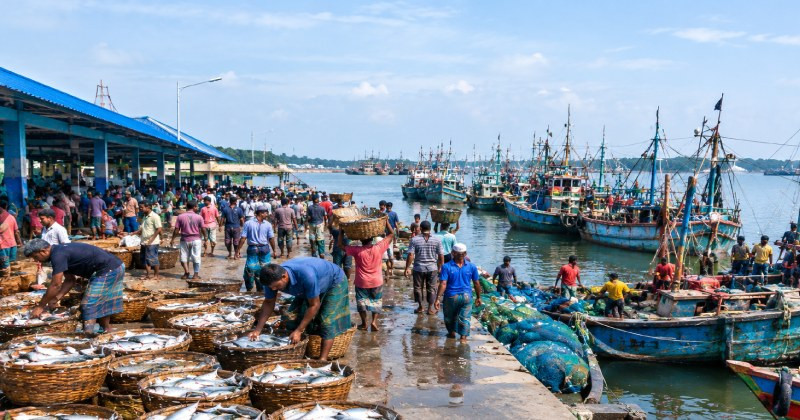
Fishing bans at sea, one after another, and special drives to protect hilsa breeding have not given the expected benefit. Coastal fishers say illegal and harmful nets and indiscriminate trawling still put the breeding and growth of fish at risk, because nobody acts strongly against them. The numbers at Patharghata Fish Landing Centre in Barguna point to this effect. Hilsa landing there has dropped by more than 263 tons over the last three seasons.
The cost of fishing is rising, but fishers and trawler owners do not get enough fish. As a result, they are losing money.
According to Patharghata Fish Landing Centre, the hilsa landing was 893.28 metric tons in the 2024 to 2025 season. It fell to 799.09 metric tons in the 2025 to 2026 season. In the latest 2026 to 2027 season, the landing was 630.24 metric tons until September. Compared with the first season, the landing has fallen by 263.04 metric tons so far this season, which is about 29.43 percent.
Fishers say the ban on fishing for fixed periods to protect hilsa is important. But they say the benefit of the work will not come if nobody controls harmful nets and trawling in the time outside the ban. They allege that harmful nets such as the Ghop net, Behundi net and Chorgora net catch fish of many sizes. When people catch fish fry and small hilsa, those fish cannot grow up and take part in breeding in the future.
Mr. Mostafizur Rahman, a fisher from Patharghata, said bans alone cannot raise the production of fish. He said the authorities must stop the use of the Ghop net, Behundi net and Chorgora net. They must also take strong action against trawling trawlers. He alleged that these nets catch small fish and many other kinds of fish without any care. So the sea no longer gives as much fish as before.
Fishers and trawler owners also see trawling as a matter of worry. They allege that the pressure on sea fish resources will grow if nobody properly controls the nets used for trawling, the size of the net holes, the depth of fishing and the way of fishing.
Mr. Chowdhury Golam Mostafa, president of the Barguna District Trawler Owners Association, said people catch hilsa fry of one or two inches in size without any care with fine mesh nets after the breeding time ends. If this killing of fry goes on, the natural growth of the hilsa population must suffer.
Mr. Abul Kalam Azad, a fisher from Patharghata Sadar Union, said that in the past, when the sea gave more fish, the market price stayed low, but fishers could still sell the fish and recover the cost of a trip. Now the catch is small, so it is often hard to pay for fuel, workers’ wages and other costs. This cuts the income of fishers and raises the risk of loss.
Mr. Alamgir Hossain, a fisher from Padma village, also demanded effective steps to stop harmful nets. He said the authorities must keep fishing closed during the ban, and they must also watch more strongly against illegal nets and fishing that breaks the rules at other times.
To raise hilsa breeding and production, the government has set a ban of 58 days on fishing in the sea from mid April. It has also set a ban of 22 days in October to protect mother hilsa during breeding. It restricts fishing from the start of November until the end of June to protect jatka. The aim of these steps is safe breeding of hilsa, protection of fry and more production. But fishers say it will be hard to get the full benefit of the bans if the steps to control harmful nets and fishing against the rules do not work well enough.
The numbers for other fish at Patharghata Fish Landing Centre also go up and down. In the 2024 to 2025 season, the landing of other fish was 366.03 metric tons. It fell to 230.39 metric tons in the 2025 to 2026 season. In the current season, the landing of other fish was 411.32 metric tons until September. So the landing numbers alone cannot show the full condition of sea fish resources.
Sources at the landing centre say the revenue from fishing has also fallen. In the 2024 to 2025 season, the centre collected toll of Tk 1 crore 10 lakh 83 thousand 75. It fell to Tk 95 lakh 32 thousand 532 in the 2025 to 2026 season. In the current season, the centre has collected Tk 88 lakh 7 thousand 570 until September.
The fishers demand that the authorities take several steps along with the ban to protect hilsa. They want the authorities to seize illegal and harmful nets, stop the killing of fry, enforce the rules for trawling strictly and take steady action against those who break the rules. They say there is no promise that nets will fill with fish after the ban ends if nobody makes the place good for breeding and growth of fish.
So the falling hilsa landing numbers at Patharghata do not only show lower income for fishers. They also show the need for a deeper review of how well the work to protect fish resources is going. Only a joint effort can bring real change and protect the future of hilsa. This effort needs strong watch against illegal nets and fishing against the rules, management based on scientific data and protection of the livelihood of fishers.










