Bangladesh Advances Towards Self-Sufficiency in Onion Production
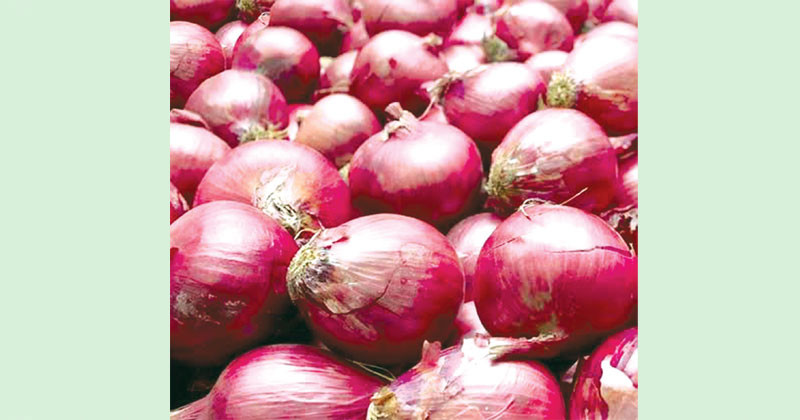
Bangladesh has made big progress in onion production. Over the last three fiscal years, output has grown by about 12 lakh metric tonnes. According to the Department of Agricultural Extension, the country produced 39 lakh 11 thousand 200 metric tonnes in the 2023 to 2024 fiscal year. Production rose to 44 lakh 48 thousand 700 metric tonnes in the 2024 to 2025 fiscal year. In the latest 2025 to 2026 fiscal year, it reached 50 lakh 90 thousand 900 metric tonnes. This steady growth has strengthened the hope of meeting the country’s onion demand from local production.
With output rising, the government is now focusing on controlling imports to protect farmers. More local onions in the market have created room to depend less on imports. People involved in the sector say this stance has brought relief to farmers. Still, ensuring onions at affordable prices for consumers all year, and keeping fair prices for farmers, remains a big challenge.
Agriculture sector experts say production numbers alone cannot show whether the country is self sufficient. Total national demand, use for seeds and other purposes, storage losses and seasonal supply must also count. Prices often crash during the harvest season and then climb when supply drops later. If the country can control this pattern, both farmers and consumers will enjoy the benefits of local production.
Production up by about 12 lakh tonnes in three years
An analysis of the Department of Agricultural Extension figures shows that onion production rose by 5 lakh 37 thousand 500 metric tonnes in the 2024 to 2025 fiscal year compared with the year before. The next year, it rose by another 6 lakh 42 thousand 200 metric tonnes. So over two years, production grew by 11 lakh 79 thousand 700 metric tonnes. In percentage terms, this is a rise of about 30 percent.
This growth points to the importance of onion in farming and a rise in the country’s production capacity. Better farming methods, farmers’ experience, suitable varieties and wider cultivation may have played a part. However, finding the exact reasons needs a study of cultivated land, yield per hectare and production by region.
People in Bangladesh need onion all year round. It is one of the main cooking ingredients, so even a small shortfall in supply affects prices. In the past, the country had to rely on imports when local supply fell. Now higher production has created a chance to reduce that reliance.
Scope to cut imports, attention to farmers’ interests
Available data show that Bangladesh imported 5 lakh 97 thousand 730 metric tonnes of onion in the 2023 to 2024 fiscal year. Imports fell to 4 lakh 73 thousand 116 metric tonnes in the 2024 to 2025 fiscal year. For the 2025 to 2026 fiscal year, the reported import figure is 86 thousand 368 metric tonnes. However, it must be confirmed whether this last number covers the full year or only a part of it. The trend of falling imports is clear. If local production keeps growing, the country will need fewer onions from abroad. This can save foreign currency and open a market for local farmers’ produce.
However, to carry out any decision to stop or limit imports, the government must balance market demand and supply. If local supply drops, prices may rise. If too much supply during the harvest season pushes prices below production cost, farmers suffer losses. So when setting import policy, the government must give weight to both fair prices for farmers and the buying power of consumers.
Focus on storage, stock at about 8 lakh 78 thousand tonnes
Along with higher production, the government has taken steps to raise storage capacity. Available data show that the stored stock of this year’s onion stood at 8 lakh 78 thousand 274 metric tonnes until a few days ago. This stock figure can play an important role in managing supply. However, it needs to be made clear which government, private and farmer level stocks it includes, and how long the onions will stay usable.
A major problem with onion is rotting and weight loss during storage. If traditional methods fail to provide proper air flow, a large amount of onion can spoil. As a result, even with high production, the market may face a shortage later in the season.
To tackle this, the government has started giving air flow machines to farmers. Under the incentive programme, it gave out 4 thousand air flow machines in the 2024 to 2025 fiscal year. In the 2025 to 2026 fiscal year, it gave 4 thousand in the first phase and 15 thousand in the second, a total of 19 thousand machines. Another 3 thousand 700 machines went out under a separate programme. In all, the government distributed 22 thousand 700 air flow machines in the 2025 to 2026 fiscal year.
If this storage effort succeeds, farmers will not have to sell onions at low prices right after harvest. If stored onions reach the market in a planned way, the country can reduce later supply gaps and unusual price rises.
Nearly 1.5 lakh farmers get incentives
The government also runs a programme to give farmers incentives to grow more onion. Available data show that it brought 1 lakh 41 thousand 900 farmers under the incentive programme in the 2025 to 2026 fiscal year. Data on the number of farmers for the 2026 to 2027 fiscal year are not yet available.
Such support is important for cutting farmers’ production costs and encouraging them to farm. But incentives alone are not enough. Farmers also need good quality seeds, timely fertiliser and irrigation, disease control, fair prices and easy loans. If prices fall at harvest time, farmers may quit growing onion next season. That is why the country needs an effective market system.
Agriculture Secretary Mr. Md. Selim Khan said the Ministry of Agriculture and the Department of Agricultural Extension are working together to carry out the Prime Minister’s directive on making the country self sufficient in onion. “Our aim is to raise onion production, meet domestic demand from local output and reduce dependence on imports,” he said. To help farmers plant on time, the government is supplying quality seeds, giving technical advice and offering different incentives. It is also stressing modern production technology and encouraging farmers to raise yields.
Mr. Selim Khan said storing the harvested onion properly is just as important as growing more. Because of weak storage systems, a part of the harvest often spoils. This hurts farmers and also puts pressure on market supply. To address this, the government is working to raise storage capacity and is spreading the modern air flow machine method of storing onion.
He said the government plans to give more air flow machines to farmers in future. This will keep onions fresh for a long time and keep market supply normal after the season ends. The Ministry of Agriculture is also helping to raise summer onion production. If the country grows onion outside the usual season, it will be easier to keep supply steady all year and cut reliance on imports. The government is giving farmers the support they need, promoting better varieties and improving production and storage systems.
“Our goal is not only to raise onion production,” Mr. Selim Khan said. “We want to make sure the harvest is used well, give farmers a chance to get fair prices and keep onion supply normal for consumers all year. If we carry out these steps well, we can slowly reach self sufficiency in onion and cut import dependence by a large margin.”
The benefits of self sufficiency must reach farmers’ homes
Bangladesh’s progress in onion production is clearly encouraging. Production has risen by about 30 percent in three fiscal years, and imports have fallen. New storage technology and incentives for farmers give the country a chance to make this progress last. But higher production does not guarantee higher income for farmers. If prices drop when onions come out of the field, farmers may face losses. If storage stays weak, a shortage may hit the market a few months later. So the government must manage production, storage, marketing and imports together.
Experts say the government should publish reliable data on onion production and stock regularly. It should expand storage facilities at the farmer level and watch the supply situation in wholesale and retail markets. It must also ensure fair prices that cover farmers’ production costs. Higher local production has given Bangladesh a real chance to cut import dependence. Now the country must turn this progress into long term success. Farmers must get fair prices, consumers must be able to buy onion at affordable prices, and stored onion must not go to waste. If the country meets these three goals, people will enjoy the real benefits of self sufficiency in onion.