Why Are People Protesting in the Streets of France?
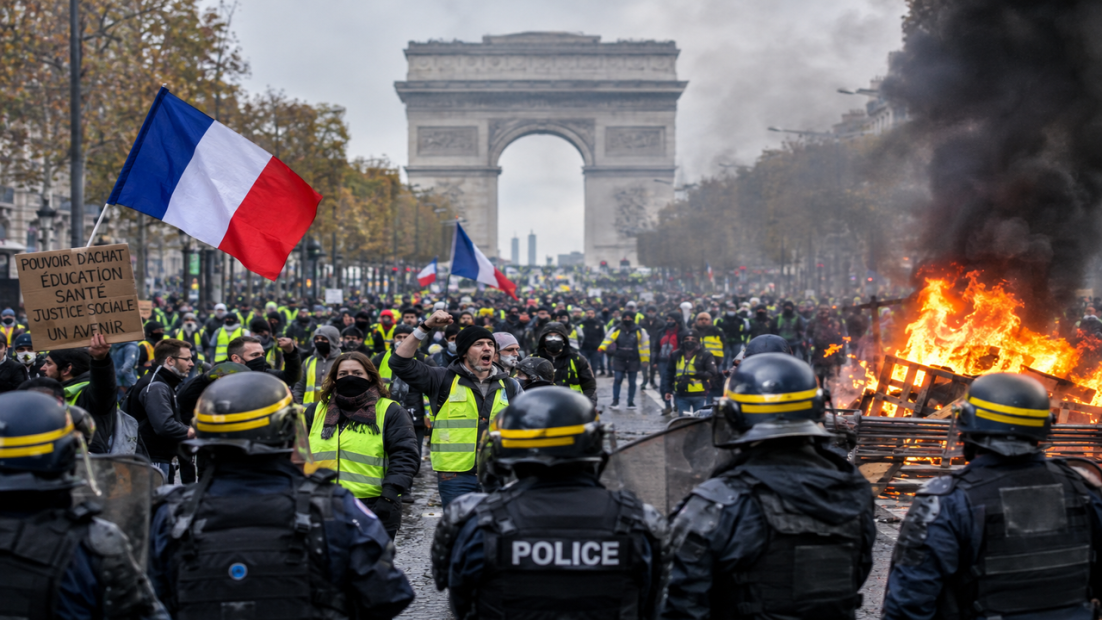
The unrest spreading across the streets of France cannot be explained only by figures on clashes, arson, looting and arrests. Public anger over the rising cost of living, high fuel prices, teacher shortages, deteriorating infrastructure and the quality of public services has gradually developed into a broader movement.
According to media reports, around 550,000 people took part in the protests on October 17, 2026, according to the French government. The General Confederation of Labour (CGT) put the figure at around 800,000. At least 1,200 people were arrested, and 150 police officers were injured in clashes.
These figures show the scale of the protests, but they do not fully reveal the depth of the underlying crisis. The main question is why so many people are taking to the streets in France, one of Europe’s wealthiest democracies. Why is student anger becoming linked to wider social discontent? And why is the conflict between the government and the public growing instead of easing?
To understand a society’s future, we must look at its young people. When young people become concerned about educational conditions, future employment and the cost of living, their concerns cannot simply be dismissed as temporary dissatisfaction.
The latest protests in France began in several high schools in the northern suburbs of Paris. Students’ anger over teacher shortages and deteriorating school facilities gradually expanded to include questions about public spending, social inequality and living standards. In other words, a movement that began over educational conditions has grown into a debate about the state’s priorities and the distribution of resources.
Education is not merely a public service; it is one of the main routes to social mobility. The idea that every child should be able to build a future through quality education, regardless of family income, lies at the heart of the modern welfare state. However, teacher shortages, weak infrastructure and widening inequalities undermine the credibility of that promise.
Young people then begin to question not only problems in the classroom but also how seriously the state takes their future. Such questions must be answered through practical policies, not political speeches. Another important factor behind France’s current unrest is the cost of living. Rising prices for food, fuel, housing and everyday essentials do not affect all social groups equally. Higher-income people may be able to absorb additional expenses, but the same price increases can lower the living standards of low- and middle-income families.
The pressure is particularly severe for young people, students, low-paid workers and financially insecure households. When the gap between income and expenditure continues to widen, people begin to feel deprived. This sense of deprivation is not always expressed directly in political terms. It may emerge as anger, protest or distrust of state institutions.
One point needs to be made clear: economic hardship does not inevitably lead to violence. Under similar circumstances, some people protest peacefully, others do not join demonstrations, and some individuals engage in vandalism and looting. It is therefore unfair to blame all protesters for violence. At the same time, economic discontent cannot be used to justify violent acts.
However, while condemning violence, the government also has a responsibility to understand the social and economic roots of public anger. Street protests have a long history in France. Labour movements, student demonstrations and struggles for social rights are important parts of the country’s democratic culture. The presence of people wearing yellow safety vests during the recent protests has also revived memories of the earlier Yellow Vest movement.
This tradition reminds us that citizens in a democracy are not merely voters. They are also critics of state policies, advocates of change and active participants in public life. However, the right to protest is not the same as a right to commit violence. Attacking government buildings, looting shops, setting cars on fire or endangering the lives and property of ordinary people cannot be considered part of democratic rights. Such acts harm innocent citizens and risk pushing the legitimate demands of a movement into the background.
The government therefore has two responsibilities. It must protect the right to peaceful protest while taking lawful action against violence and crime. At the same time, law enforcement must be restrained, proportionate, accountable and impartial. Attacks on police officers are unacceptable, but unnecessary use of force can also undermine public trust in the state.
The success of law enforcement cannot be measured simply by the number of people arrested. True success means ensuring public safety, preventing violence and making progress towards resolving the crisis. The political significance of France’s unrest lies in the way different forms of social discontent are converging into a broader crisis of governance. Poor educational conditions, the cost of living and inequality may be separate problems, but people can see them as parts of a single question: Is the state giving sufficient priority to the needs of ordinary citizens?
Media reports have noted that political divisions and economic pressures have increased towards the end of President Emmanuel Macron’s term. Efforts to reduce public debt have failed to reassure investors, while government borrowing has continued to rise.
This presents the government with a difficult policy choice. It must control public debt and maintain economic stability while continuing to invest in education, public services and social protection. If spending cuts deprive ordinary people of essential services, efforts to impose fiscal discipline may themselves intensify political unrest.
However, it would be an oversimplification to blame every aspect of the crisis on a single government or leader. Economic conditions, global price pressures, long-term policy decisions and social changes may all play a role. But during a crisis, a major test of political leadership is how the government listens to the public, sets priorities and explains its policies.
If protests by young people are viewed only as indiscipline or defiance of authority, an important part of the problem will be overlooked. The expectations, communication styles and forms of political participation of the younger generation may differ from those of previous generations. Young people want rapid change, demand explanations for government decisions and are willing to speak out when they feel uncertain about their future.
However, it would also be wrong to assume that every demand made by young people is equally realistic or that everyone taking part in a protest has the same motives. Ideological differences, anger, opportunistic activities and criminal acts can coexist within a movement. The government must therefore understand the nature of the protests and distinguish between different types of conduct before deciding how to respond.
It is essential to improve educational conditions, recruit enough teachers, upgrade school infrastructure and create effective pathways from education to employment. The government must also focus on expanding job opportunities and providing effective social protection for families under pressure from the rising cost of living. Above all, it should identify and address problems before protests begin rather than waiting until unrest breaks out to restore order.
First, the concerns of young people must be taken seriously. Neglecting worries about educational quality, employment, living costs and the future can turn them into broader public discontent.
Second, the right to protest and public safety must receive equal attention. Unnecessarily suppressing peaceful demonstrations can deepen distrust, while failing to act against violence and vandalism can endanger ordinary people.
Third, the success of government policies should not be judged solely by economic indicators. Their impact on people’s daily lives also matters. Are education and healthcare improving? Are new employment opportunities being created? These questions are equally important.
Fourth, communication between the government and citizens must remain open. Effective channels for hearing complaints, transparency in decision-making and a willingness to correct flawed policies can strengthen public trust.
The scenes of arson and clashes on the streets of France are deeply concerning. Ending violence and ensuring public safety are immediate responsibilities of the government. However, a lasting solution will be difficult if the authorities ignore the legitimate social demands underlying the protests.
A state’s strength lies not only in its police, administration or power to enforce the law. It also lies in its ability to earn public trust, ensure social justice and give people confidence in their future.
France therefore faces two parallel tasks: controlling violence and taking practical steps to address the causes of public discontent. Without the first, public safety will suffer. Without the second, similar unrest may return.
The author is a publisher and columnist.