Suleiman’s impoverished father struggles to keep hope alive as trial remains stalled and most accused secure bail
Muslim Youth Tortured, Stripped of Fingernails and Lynched in India; Family Still Awaits Justice
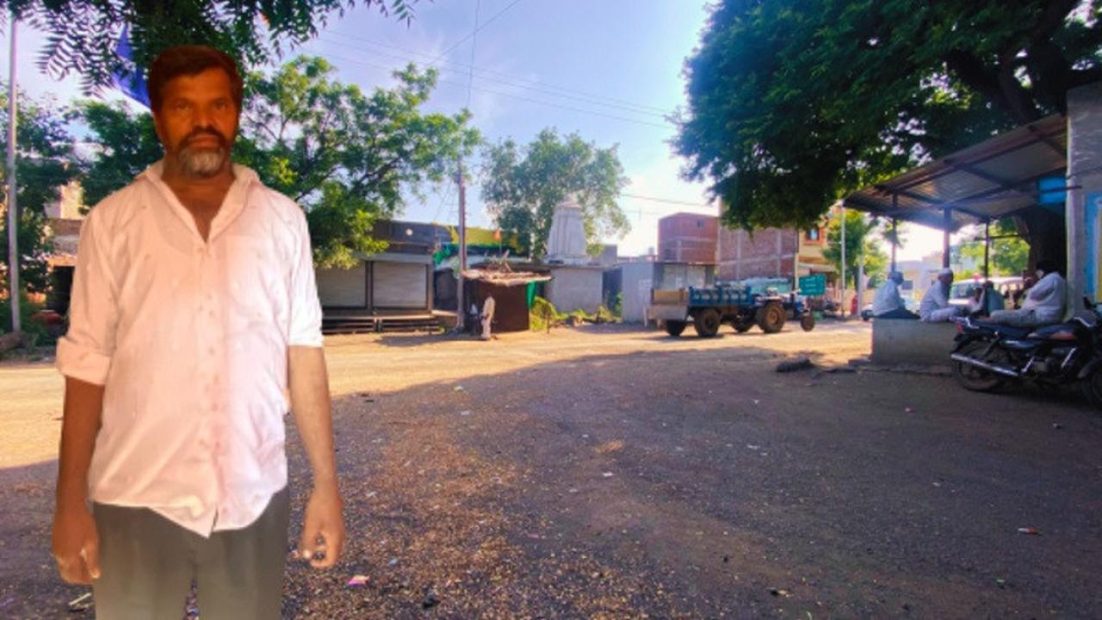
A year after the brutal killing of his son, Rahim Khan, a farmer who barely makes ends meet from cultivating his land, finds it increasingly difficult to pursue justice through the courts. His only remaining asset is a fading hope that those responsible for his son’s death will be brought to justice.
“You have to keep hoping. What else do we have?” he said with a sigh.
On August 11, 2025, 20-year-old Suleiman Pathan was lynched in Maharashtra’s Jalgaon district after meeting a Hindu female friend at a café. Of the 10 accused, seven have secured bail and one remains absconding. The prime accused was granted bail within just 90 days, while the trial itself has yet to begin.
“It feels like they are succeeding at everything, while we can only watch,” Suleiman’s brother-in-law, Mehboob Khan, told investigative news portal Article 14.
As the family struggles to overcome the trauma of Suleiman’s brutal killing, prolonged legal proceedings have further eroded its remaining hopes.
Brutal torture along a 20-kilometre journey
On the day of the incident, a group of armed men allegedly dragged Suleiman out of a café and forced him into a van bound for his village, Betawad Khurd, about 20 kilometres away.
The van stopped repeatedly along the way. At each stop, the attackers pulled the 20-year-old out and beat him with iron rods, wooden sticks and fists.
The torture continued after the group reached the village. Suleiman was found with almost no clothes on, his fingernails and toenails pulled out, and blood flowing from his ears. He was writhing in agony.
According to Article 14, the mob tortured him for five hours.
When the family rushed to rescue him after receiving information from a villager, the mob threatened to sexually assault the women in the family. Eventually, Suleiman died with his head resting in the arms of his family, after asking for some water.
“They tortured Suleiman terribly before killing him,” Mehboob said.
Allegations of police negligence and irregularities
Although the family identified 17 people allegedly involved in the attack, police named only 11 in the chargesheet. The family alleged that police refused to include several people who had been seen assaulting Suleiman.
“Police told us to bring evidence against the accused,” Rahim said.
The family questioned how they could be expected to gather evidence against the accused themselves.
In the landmark 2018 case of Tehseen S. Poonawalla v. Union of India, the Supreme Court directed that lynching cases be handled by fast-track courts with day-to-day hearings and that trials be completed within six months of the court taking cognisance of the chargesheet.
However, more than a year after Suleiman’s killing, charges have yet to be framed, and the case has not been transferred to a fast-track court. According to records of the Jalgaon district court, 48 hearings have taken place so far without charges being framed.
One accused after another secures bail
In his complaint filed in 2025, Rahim named Abhishek Rajput, 22, Ranjan Matade, 48, Aditya Devre, Sojwal Teli, Krishna Teli and around 10 to 12 others. The FIR included allegations of assault, kidnapping and rioting.
However, on November 11, 2025, just three months after the killing, four accused were released on bail. The judicial magistrate granted them bail after Jamner police failed to submit the chargesheet within 90 days.
In May 2026, the prime accused, Rishikesh Teli, was granted bail after the court reportedly observed that CCTV footage showed no “criminal activity” on his part.
In August 2026, the Aurangabad bench of the Bombay High Court granted bail to another accused, Nitin Patil, who was a cousin of Suleiman’s female friend.
The family fears that the release of most of the accused could weaken the case.
“What if they pressure witnesses into changing their statements now? We have left the village, but the witnesses still have to live there,” Rahim said.
Those he considered his own were among the alleged attackers
Fearing further violence after the attack, Suleiman’s family left their 150-year-old ancestral home in Betawad Khurd in November 2025.
The village has a predominantly Hindu population, with only four Muslim families, but there had been no major communal clashes in the past.
In 2024, Suleiman had led various activities of the local Ganesh Mandal, from the Chandi Tola procession to selecting the idol. He had even turned down a job offer from his brother-in-law to remain in the village and pursue his dream of becoming a police officer.
All his friends were Hindu, and his family often joked that Suleiman was practically Hindu himself.
That remark now causes the family particular anguish, as at least three members of the alleged attacking group were among his closest friends.
“They were part of his everyday life. Suleiman trusted them more than he trusted himself and called them ‘jaan’,” his brother-in-law said.
Family hits a legal wall
The family’s efforts continue to be frustrated by what it describes as a lack of police commitment and repeated court hearings without a verdict.
In November 2025, the Maharashtra government appealed against the bail granted to four accused. However, the Jalgaon court dismissed the appeal, allowing their bail to stand.
The family also demanded the application of stricter laws, including the Maharashtra Control of Organised Crime Act, 1999 (MCOCA), but alleged that police did not heed their request.
Fifteen hearings have taken place on the family’s writ petition, yet no final judgment has been delivered.
“The most painful thing is that there is no one willing to listen to us,” Mehboob Khan said. “Whatever we do, we keep hitting a wall. It has become difficult to tell who is on our side and who is against us.”
The family’s struggle has also become financially overwhelming. Rahim’s meagre agricultural income is barely enough to sustain the household, let alone fund a prolonged and expensive legal battle.
“It feels as though we work day and night just to pay the legal expenses,” Mr. Mehboob said.
Despite mounting debts and financial hardship, the family has vowed to continue fighting for justice for Suleiman.