Inani Underground Gas Fire: BAPEX Investigates Cause and Potential Risks
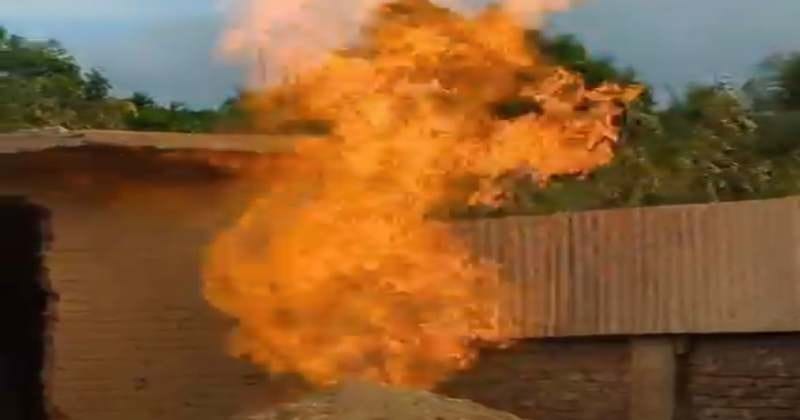
Following a gas seepage and subsequent fire caused by deep tube well drilling in Inani, Ukhiya Upazila, Cox’s Bazar, preliminary geological assessments highlight the urgent need for detailed testing to evaluate the nature, reserve volume, and potential risks of the gas. S. M. Nafifun Arham, Manager (Geology) and head of the geological survey team at Bangladesh Petroleum Exploration and Production Company Limited (BAPEX), stated that the situation likely arose because the drilling reached close to a subterranean gas layer at a depth of approximately 1,000 feet, altering underground pressure balance and prompting high-pressure gas to escape.
Expert findings suggest that gas migrated to the surface over several days through subterranean micro-fractures, major fissures, or geological fault lines before ascending through the tube well’s borehole. Although nearby electrical poles and residential settlements suggest an external spark ignited the gas, the precise cause of the fire remains unconfirmed. Based on flame color and smoke patterns, Mr. Arham noted that higher hydrocarbons might be present; however, he emphasized that definitive chemical composition, physical properties, and reserve volumes can only be confirmed after laboratory analysis of gas samples collected from the site.
The expert cautioned that because gas pressure is not currently being artificially controlled, the overall risk could escalate if the gas attempts to escape through other vulnerable underground layers. Uncontrolled dispersion poses severe hazards to surrounding communities. To mitigate immediate risks and prevent potential disasters, the BAPEX team underscored the critical importance of evaluating whether gas has spread to nearby areas, while taking urgent precautionary measures to control the site and secure the environment until final test results yield a comprehensive risk profile.
To ensure public safety, officials emphasized that it is imperative to evacuate residents to a safe distance and immediately disconnect electricity within the high-risk zone. In the presence of escaping gas, electrical sparks, or any open ignition sources, extreme danger exists. The primary objective remains ensuring the safety of residents and minimizing accident risks following the incident near the Chhota Inani Bridge area, with conclusions regarding gas reserves, composition, and long-term hazards pending complete BAPEX laboratory test results.