Concerns Over the Collapse of Cox’s Bazar’s Tourism Industry
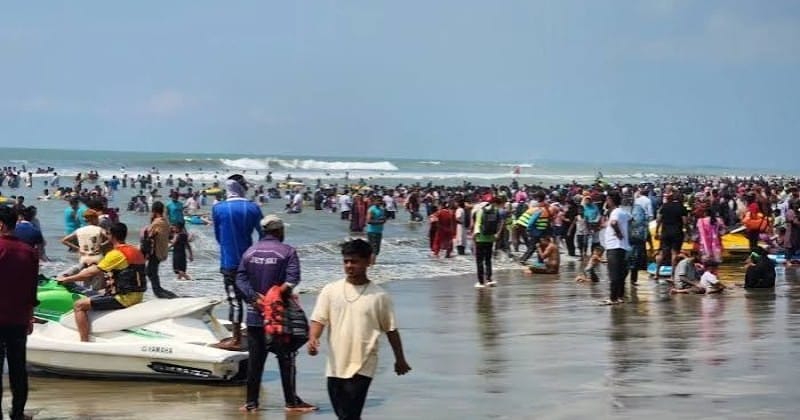
Following Saint Martin’s, Sajek, and Bandarban, growing concerns have now emerged over tourism and investment in Cox’s Bazar. Recent drive-by evictions and resort demolitions along the Marine Drive area by relevant authorities have raised serious questions about the future of the local hospitality sector. Tourism entrepreneurs express deep grievance over severe financial losses, noting that their long-term investments and livelihoods face acute uncertainty. They argue that the absence of clear policies subjects them to ongoing investment complexities, leaving investors to bear the burden of systemic planning deficiencies.
Addressing these eviction drives, Member of Parliament for the Cox’s Bazar-3 constituency, Lutfur Rahman Kajal, demanded an immediate halt to all demolition operations. He urged authorities to suspend evictions until an elected government formulates a clear, dedicated policy to safeguard the tourism industry. Emphasizing the need for administrative fairness, he remarked, ‘Decisions must be taken by balancing tourism development, investment security, and environmental protection.’ He maintained that while environmental conservation remains vital, drastic measures should not be executed without thoroughly evaluating existing laws, structural approvals, and investor perspectives.
The lawmaker further highlighted that business owners should not single-handedly carry the consequences of past policy inconsistencies and regulatory gaps. He asserted that any enforcement action must carefully weigh the ground realities of private investment alongside statutory rights. Cox’s Bazar stands as one of Bangladesh’s premier travel destinations, sustaining thousands of local livelihoods across hotels, resorts, transport, and small businesses. Stakeholders warn that conducting sudden evictions without transparent procedures heightens investor panic, threatening the economic stability of the entire region.
While unplanned coastal commercialization undeniably poses risks to fragile beach ecosystems, industry observers stress that sustainable growth requires a balanced approach. Authorities conducting the drives maintain that these interventions are strictly aimed at removing illegal structures and restoring discipline along the Marine Drive. However, stakeholders urge the government to maintain strict transparency in structural approvals, verify property legality fairly, and grant affected owners an official opportunity to present their defense before ordering physical demolitions.
Ultimately, achieving long-term sustainability in Cox’s Bazar depends on aligning environmental enforcement with clear, realistic investment guidelines. Local business communities emphasize that preserving public lands and protecting coastal ecology must go hand in hand with protecting private capital. Formulating a comprehensive tourism protection policy will prove essential to restoring investor confidence, mitigating financial risks, and ensuring that future economic development in Bangladesh’s primary seaside resort town proceeds in an orderly, legal, and environmentally responsible manner.