Hasina and Yunus Visits Yielded No Immediate Gains
Securing Expected Japanese Investment Remains a Challenge
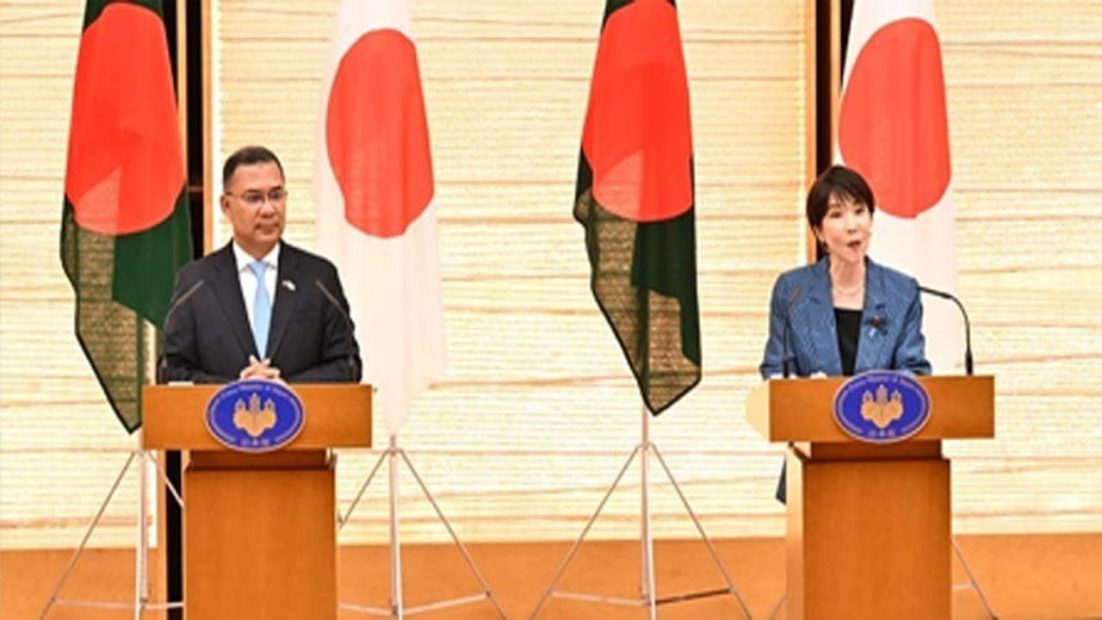
Japan, the Land of the Rising Sun, is a development partner of Bangladesh. Relations between the two countries have long centred on development cooperation, infrastructure construction and trade. During the tenures of former Prime Minister Sheikh Hasina and the head of the interim government, Dr Muhammad Yunus, Bangladesh signed several agreements, loan deals and memorandums of understanding with Japan. However, the benefits of these initiatives did not materialise at the same pace. Some projects experienced prolonged delays, while others faced administrative and financial complications.
Prime Minister Tarique Rahman’s recent visit to Japan has opened up an opportunity to take Bangladesh’s economic diplomacy to a new level, with potential private investment, employment generation, technology transfer and industrialisation among the key objectives. However, attracting the expected investment from Japan remains a challenge. Economists and geopolitical analysts say learning from past experiences will be crucial to turning this opportunity into tangible success.
During Sheikh Hasina’s visit to Japan in April 2023, relations between the two countries were elevated to a strategic partnership. Japanese financing for various infrastructure projects, including the Matarbari deep-sea port and the Chattogram-Cox’s Bazar highway, played an important role in Bangladesh’s development plans. However, alongside large-scale financing and diplomatic announcements, questions arose over project costs, timelines and implementation quality.
A report published in November 2025 highlighted design problems, cost disputes and implementation delays in six major Japan International Cooperation Agency (JICA)-funded projects in Bangladesh. Several projects, including the Matarbari power plant, the third terminal of Hazrat Shahjalal International Airport and Dhaka’s metro rail system, faced such complications. This indicates that agreements and financing commitments alone did not guarantee the timely delivery of project benefits.
Dr Zahid Hossain, former lead economist at the World Bank’s Dhaka office, has also stressed the need for caution regarding the costs of Japanese-funded projects. He said that while there were no questions about the competence of Japanese companies, concerns remained over the costs of some projects. The reasons for those costs and responsibility for them were not entirely clear. Maintaining strong Bangladesh-Japan relations while ensuring cost control and accountability is therefore essential.
Dr Muhammad Yunus’s visit to Japan in 2025 also secured substantial financial assistance. Loan and grant agreements worth $418 million for economic reforms and climate resilience, $641 million for upgrading the Joydebpur-Ishwardi railway line, and $4.2 million for scholarship programmes were signed. The total package was valued at $1.063 billion.
However, a substantial portion of this financing consisted of loans for specific projects rather than immediate grants. As the railway project was scheduled to become operational by June 2030, its full benefits could not be expected immediately after the visit.
Concerns were also raised over the progress of Japanese-funded projects during the Yunus administration. A report published by The Financial Express in October 2025 said several major Japanese projects and investment plans had stalled because of political changes, financing uncertainty and incomplete negotiations. This suggested that although the interim government maintained good relations with Japan, political uncertainty and administrative limitations prevented all initiatives from moving forward quickly.
However, it would not be appropriate to place all the blame for these delays on the Yunus administration, as some project-related problems had originated during the previous Awami League government.
PM Tarique Rahman’s recent visit has further highlighted the importance of economic diplomacy. Following his meeting with Japanese Prime Minister Sanae Takaichi on October 27, a joint statement from the two countries outlined expectations of $6.33 billion in potential Japanese private-sector investment in Bangladesh over the next five years, with the prospect of creating around 200,000 jobs.
Japan has also expressed interest in sending a business delegation to Bangladesh soon. However, the $6.33 billion figure represents projected investment, not funds already invested in the country. If realised, these investments could make a significant contribution to industrialisation, technology transfer and employment generation.
Before Tarique Rahman’s visit, Kazuaki Kataoka, Bangladesh representative of the Japan External Trade Organization (JETRO), said in an interview that political stability following the formation of a new government had increased Japanese companies’ interest in investing in Bangladesh.
According to Kataoka, major Japanese companies and executives were becoming interested in assessing the Bangladeshi market and conducting feasibility studies for potential investments.
His remarks are significant for Bangladesh because foreign investment depends on more than meetings with heads of government or the signing of agreements. Investor confidence, policy continuity and a stable, long-term business environment are equally important.
During his visit, Tarique Rahman highlighted investment opportunities in Bangladesh’s energy, automobile manufacturing, technology, high-speed rail, logistics and agro-processing sectors to Japanese business leaders.
At the Bangladesh-Japan Economic Forum organised by JETRO, he also acknowledged investors’ concerns. According to his remarks, Japanese companies consider reliable energy supplies, efficient infrastructure and a predictable tariff and tax regime essential conditions for investment. He pledged to address these obstacles.
If these commitments are implemented, Bangladesh could reduce the prolonged delays and administrative complications that affected earlier projects.
Akihiko Tanaka, president of JICA, also emphasised the importance of strong institutions and improved governance in attracting investment to Bangladesh. He said bureaucratic procedures and recent political changes had delayed several major infrastructure projects. However, he rejected the suggestion that there were fundamental disagreements between JICA and the Bangladesh government.
Economic analysts note that six cooperation documents were signed at the government level during Tarique Rahman’s visit to Japan. These included memorandums of understanding on improving the business environment, agriculture, skills development, and cooperation in fisheries and livestock; a letter of intent on climate cooperation; and a grant agreement of up to $13.42 million for coastal security.
In addition, commitments were made for two loan projects worth a total of $295 million to improve the investment environment and support development at the upazila level. Another 17 memorandums of understanding were signed in the private sector.
Although these agreements increase the prospects for investment and cooperation, their actual value will depend on implementation.
The implementation of the Bangladesh-Japan Economic Partnership Agreement (EPA) could also create new opportunities. According to Dr Mustafizur Rahman, distinguished fellow at the Centre for Policy Dialogue (CPD), the agreement should not be assessed solely in terms of trade in goods, as it also has implications for services, investment and technology.
He said Bangladesh must strengthen its production capacity, diversify exports and improve competitiveness to fully benefit from tariff concessions.
In other words, domestic industries must also be prepared if the opportunities created by Tarique Rahman’s visit are to be transformed into long-term economic success.