Seat-Hogging on CU Shuttle Train Forces Early Boarders to Stand
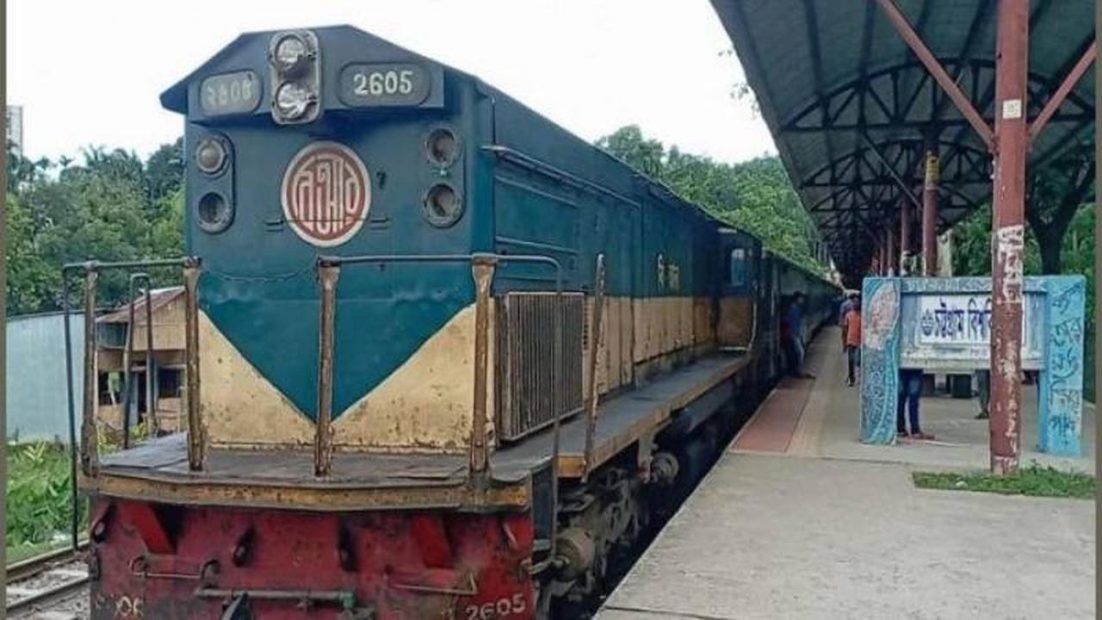
The shuttle train is one of the main means of transport for students of Chittagong University (CU) travelling between the city and campus. Thousands of students use the train every day. However, the practice of reserving seats for others has become a source of frustration for many passengers.
Some students occupy several seats, keeping places not only for themselves but also for their friends. As a result, many students who board earlier are forced to stand because they cannot find a seat. Those affected view this long-standing practice as an unhealthy culture.
During a visit to the campus-bound shuttle at around 8:30pm on October 27, this correspondent found some students reserving multiple seats after boarding at the city’s Battali Station. They placed bags, umbrellas and other belongings on the seats. However, many of the students for whom the seats were reserved were expected to board at the next station, Sholoshahar. Although the seats remained vacant between Battali and Sholoshahar, other passengers were not allowed to use them.
Arguments and disputes frequently break out among students over the practice. Some who reserve seats claim it is an established convention, arguing that those who board first can keep seats for others as they wish. However, the university administration says there is no such rule on the shuttle train. As a result, many students face inconvenience because of an unwritten convention.
Arifur Rahman, a regular shuttle passenger, said, “Sometimes there are empty seats, but I cannot sit because someone says they have reserved them for another person. What kind of culture is this? They even claim it is a rule. This practice should end.”
University Proctor Professor Dr Md Kamrul Hossain said, “There is no rule for reserving seats on the shuttle. Whoever boards first gets to sit first. If any student goes too far, they can inform me, and I will take appropriate action.”
Those concerned believe that awareness and mutual cooperation are essential to ending such irregularities and intolerance over seating on this important mode of transport. Ensuring that students who board first have the right to a seat could significantly reduce disputes and inconvenience.