A new formula for the caretaker government
Rintu Anwar
After decades of thorny political journeys, changes in power and countless bloody street struggles, Bangladesh’s politics now stands at an unexpected and historic turning point. The July and August mass uprising of students and people came from a deep wish for a democratic, accountable, equal and balanced state. The final institutional form of that wish depends mainly on reform of our constitution in quality and structure. The recent meetings of the Special Committee on Constitution Amendment, held in the Cabinet room of the Parliament building, are bringing out proposals and ideas. They are causing heated talk in political, legal and intellectual circles.
As a long time news worker, I have seen many cuts and changes to Bangladesh’s constitution. Rulers mostly used them as tools to grab power and to give legal cover to a longer rule. But the outline of structural change in this round of talks could bring a historic and lasting change to our fragile state structure. This holds only if people carry it out with political honesty and with real agreement among stakeholders. The committee chair and Home Minister Mr. Salahuddin Ahmed led this long exchange of views. The committee invited constitutional experts, senior Supreme Court lawyers and university law professors, and 44 of them attended and shared their thoughtful views.
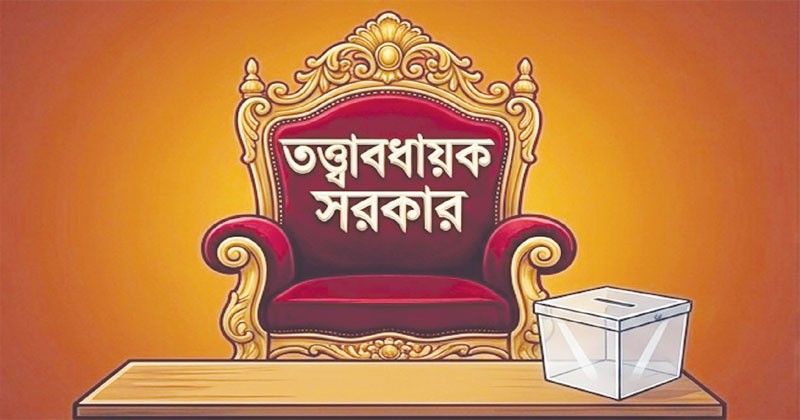
When one studies the main points of the talks, it is clear that a big canvas of state reform is taking shape. But the road to carrying it out is by no means smooth. The biggest cancer, or long running disease, in our political crisis is the total lack of trust in the election time government system. Because of mutual distrust, a free and fair election under a party government has become an illusion in this country. To end this crisis, the committee meeting heard a very creative, institutional and long term proposal. It is to create an “upper house” in the constitution and to form the election time or caretaker government from within that upper house.
The talks put forward a specific idea that Bangladesh could form an upper house of 105 members. The way of forming it would be very balanced. Fifty members would be chosen in proportion to the seats in the lower house of parliament. Another 50 members would be chosen in proportion to the votes that political parties get in the national election. The President would directly nominate people to the remaining five seats. These would be wise people from any party or none, who have made great contributions to art, literature, culture, science or national life.
Experts believe this two house system would ensure political representation of capable people in society. They also believe it would set up a fine balance between the President’s sole power and the Prime Minister’s absolute power. The upper house would help not only in passing laws but also in filling the gap of power at election time. A proposal came to give the Speaker of the upper house the status of Vice President by virtue of office. When the lower house is dissolved or a government’s term ends, this Speaker would take charge as head of the election time caretaker government.
A second idea also came up. The government and opposition would agree on a Speaker. That Speaker would then lead an election time government and, with both sides’ consent, appoint the other advisers from the upper house. In my long experience in journalism, this looks like a very fine and balanced proposal. Suppose the upper house has a six year term and the lower house has a four year term. Then even when the government’s term ends and the lower house is dissolved, an elected chamber of the state will always remain. So the state will never fall into a vacuum without people’s representatives.
But I have one clear warning and one piece of advice. In our political culture, a big fear is that this upper house may become a rehabilitation centre for older or controversial politicians who lost the main election. The proposal to ensure representation of the 64 districts and of various small ethnic groups is very welcome. The upper house must truly be a “House of Elders”, a gathering of wise people. It must work as a strong safeguard, a kind of “check and balance”, against any rash, emotional or anti public law that the lower house may rush through.
The past history of the caretaker system shows that its biggest weakness and dispute was dragging in the last retired Chief Justice as its head. That one rule left the whole Supreme Court and the judiciary badly politicised. We saw the open partisan push over raising the retirement age of judges, and it pushed people’s trust in the justice system to the bottom. In this committee meeting, the talks wisely moved toward keeping the judiciary fully outside the election time government process. This is without doubt a relief and a historic step. The court is the last shelter of ordinary people, and no one should draw it into the sharing of political power.
The proposal also drops the last option of the President to find a head for the election time government. It would instead make the upper house or its Speaker the head, on the basis of full political agreement. If people carry this out without bias, they can bring back the lost purity and neutrality of the judiciary for good. But keeping the judiciary out of the caretaker government will not by itself make the independence of the judiciary one hundred percent sure. Under Article 116 of our constitution, the power to control, transfer and promote lower court judges in effect sits with the Law Ministry. This is the biggest barrier to the independence of the judiciary.
That power must be handed fully to the Supreme Court. The committee talked at length about setting up a separate Supreme Court Secretariat for the judiciary. The present government has also made a political promise on this. The biggest demand of the time is to turn it quickly and correctly into law. The committee chair said the ordinance issued on this under the interim government had some faults, so it was not made into law. But he said the government has not backed away from its promise to set up the secretariat.
There is no specific law on appointing Supreme Court judges. For decades we have seen a festival of appointments on party grounds. To stop this, a clear law on appointing judges also came up as a must. Dr. Asif Nazrul, the former law adviser, stressed finishing two tasks quickly. They are the law on appointing judges and setting up the Supreme Court Secretariat.
Another big flaw in our parliamentary structure is that members of parliament lack an independent voice. Elected members go to parliament and are forced to act mainly as a “rubber stamp” for the party chief. The main cause is the disputed Article 70 of the constitution. Because of this one article, no member can vote by conscience or by the interest of local people if it goes against the party decision. This article has killed democratic practice and set up a kind of “prime ministerial dictatorship”.
A strong proposal came to the committee not to scrap Article 70 fully but to limit it to four specific areas. These are constitution amendments, money bills, votes of confidence or no confidence in the government, and urgent matters of war or national security. On any other ordinary law or public debate, members of parliament could give their views and vote freely. As a long time news worker, I believe this is the surest cure to make parliamentary democracy lively and strong. It would not threaten the stability of the government, and members could grow their independent voice in making ordinary laws.
I have a personal suggestion here. If a member votes against the party, the member’s seat should not end directly. The party should only hold the power to expel the member from the party. The power to cancel a seat in parliament would be better placed with the people or with the Election Commission. The meeting also brought some fine proposals on decentralising power and strengthening constitutional institutions. In our present structure, one person holds the posts of party head, government head and leader of parliament together.
The special committee talked about not letting one person hold all three posts, which could be a very effective step to prevent autocracy. A proposal also came to give the Anti-Corruption Commission (ACC) and the Human Rights Commission direct constitutional status instead of leaving them as mere statutory bodies. The talks also outlined a “Statutory Constitutional Board” to form neutral selection committees for appointments to constitutional bodies. If this works, every body from the Election Commission to the ACC can stand tall and work free from government influence.
To make parliament accountable, there is also a proposal to give the opposition the chair of key standing committees. These include the Public Accounts Committee and the Public Undertakings Committee. They also include sensitive committees such as those on the Home and Foreign ministries. This would bring a huge positive change to parliamentary culture, and the July National Charter also mentions it. It would help ensure transparency in government spending and accountability in administration. Under Article 76, parliamentary committees have the power to summon anyone.
But no government has so far made a law that makes it compulsory to appear before them. The committee chair has said that a plan to make such a law exists, which could be a historic step. Yet amid all these fine, timely and theoretical talks, one big gap stands out and makes me worry about our political future. That gap is the total absence of the main opposition party from this special committee. The opposition has kept itself out of the committee because it holds a “note of dissent” on some points of the July National Charter.
Home Minister and committee chair Mr. Salahuddin Ahmed has repeatedly asked the opposition to come to the meeting and share its views. He has said the committee will surely consider any proposal to ease their objections. He made clear that if the opposition wants to ease its dissent on any point, it must tell the committee by coming to it. But constitutional reform is not an ordinary legal process or a one party manifesto. It is the highest political contract of the state. A constitution written without the active participation and consent of the big opposition party will surely face a crisis of political legitimacy in the future.
The government should not stop at formal invitations. It should take political initiative and create an atmosphere for talks, and bring the opposition to this table. No constitutional reform lasts or stays stable without an inclusive process. Our past history is very bitter, and it keeps us from becoming too hopeful. We have not forgotten the farce of 2011. The committee on constitution amendment then, led by the late co-chair Mr. Suranjit Sengupta, talked with all sides. It reached agreement to keep the caretaker government system, and the committee members themselves favoured it.
But after a single closed door meeting with the then Prime Minister, the whole decision turned upside down overnight. They scrapped the caretaker system fully and planted the seed of a longer one party autocratic rule. Several constitutional experts reminded the meeting of this very fear, and strongly. People have been cheated before despite high hopes. So this time they expect the constitution to be far more advanced and people friendly than before. The government has assured people that it has no one party autocratic tendency and no naked attempt to extend power illegally. So it says there is no fear of repeating the dark days of 2011.
Author: Journalist and columnist