November 7, 1975: Power Shift, State Crisis and Ziaur Rahman’s Leadership
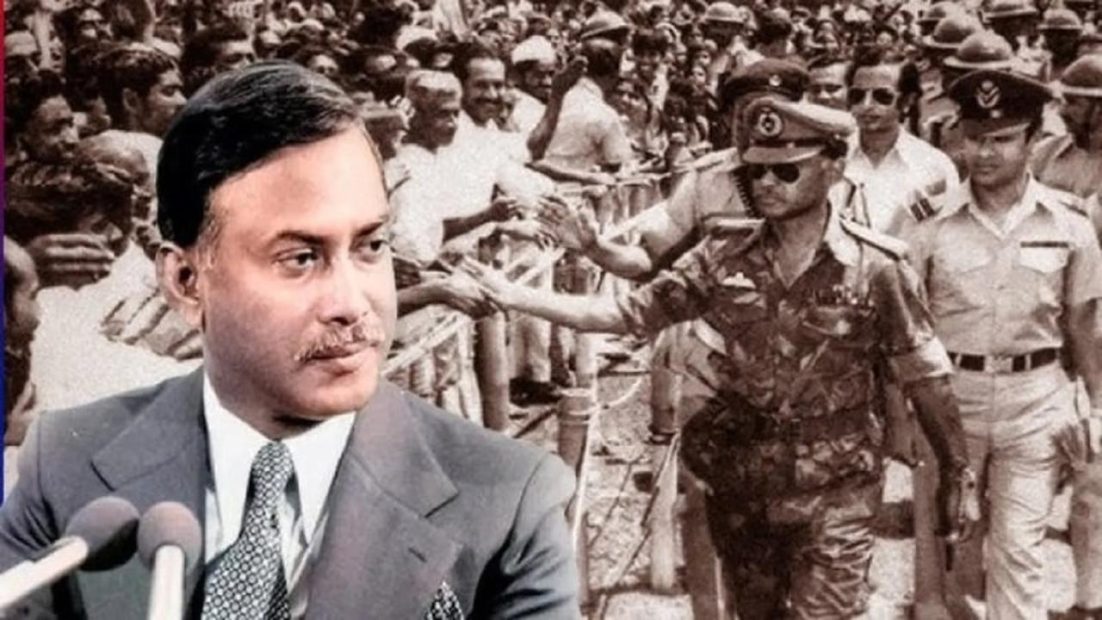
Some days in Bangladesh’s history cannot be viewed simply as political events, military coups or changes of power. Their impact goes far beyond that, shaping the country’s political direction, military structure and national identity. November 7, 1975, was one such day.
The day is known as National Revolution and Solidarity Day, especially in the political tradition of the Bangladesh Nationalist Party. However, other political and historical accounts describe it as a soldiers’ uprising, military coup and violent change in power. Despite these different views, one fact remains clear: November 7 changed the course of state power in Bangladesh and brought Ziaur Rahman to the centre of national leadership.
Crisis After Independence
After independence in 1971, Bangladesh faced the difficult task of rebuilding its war-damaged economy, creating institutions, restoring law and order and meeting public expectations. The country soon faced serious problems, including the 1974 famine, food shortages, inflation, administrative weakness, corruption allegations and political violence.
There were allegations of repression and human rights violations linked to the Rakkhi Bahini. At the same time, the revolutionary politics of the Jatiya Samajtantrik Dal (JSD) and the armed activities of its Gono Bahini increased political conflict.
The Fourth Amendment to the Constitution in January 1975 and the introduction of the BAKSAL-based one-party system brought major changes to the country’s political structure. The assassination of Sheikh Mujibur Rahman on August 15, the rise of Khondaker Mostaq Ahmed and divisions within the army pushed the country into a deeper crisis.
Within only four years of independence, the legitimacy of state power, military discipline and the country’s political future had become uncertain.
November 3 Coup
On November 3, 1975, a section of the army led by Brigadier Khaled Mosharraf staged a coup. A Bir Uttam and important sector commander during the Liberation War, Mosharraf said the move was aimed at reducing the influence of officers involved in the August 15 killings and restoring discipline in the army.
Major General Ziaur Rahman, then army chief, was placed under house arrest, while Khaled Mosharraf later became army chief.
However, the coup created new uncertainty. There was a lack of agreement between the coup leaders and ordinary soldiers over political goals and the future structure of power.
A procession involving Khaled Mosharraf’s mother, brother and others in the Dhaka University area also led to political debate, including claims that the coup was pro-India. However, political rumours or a procession cannot by themselves prove that a foreign country directly organised the coup.
Another tragic event was the killing of four national leaders inside Dhaka Central Jail, which further exposed the breakdown of state security and the justice system.
November 7 and the Three Leaders
Colonel Abu Taher, a Bir Uttam freedom fighter and JSD revolutionary leader, was another major figure in the events of November 7. He supported giving soldiers a political role and wanted fundamental changes to the military and state structure.
At the time, Ziaur Rahman was under house arrest. He was freed during the soldiers’ uprising, and the military situation in Dhaka changed rapidly.
Khaled Mosharraf, Colonel Nazmul Huda and Lieutenant Colonel A.T.M. Haider were killed during the unrest.
The three main figures had different visions. Mosharraf wanted to restore military discipline. Taher wanted revolutionary changes through soldiers’ politics. Ziaur Rahman eventually moved towards restoring the traditional military leadership structure.
Taher expected that freeing Zia would help implement his revolutionary programme. But events moved in a different direction. He was later arrested and sentenced to death by a military tribunal in 1976. Years later, the High Court declared the trial process illegal.
Ziaur Rahman’s Rise
Ziaur Rahman’s position was different from the other major actors. He was not leading the coup at the time; he was under house arrest. His release later became a symbol of restored leadership for a section of the army.
However, Mr. Zia did not become president on November 7. He gradually moved to the centre of military and state power and became president in April 1977.
His political vision focused on Bangladeshi nationalism, national sovereignty, economic production, rural development, a multi-directional foreign policy and political organisation.
He helped create the path for the restoration of multiparty politics and founded the Bangladesh Nationalist Party in 1978. At the same time, his rule remains subject to historical debate over martial law, political repression, post-coup trials and electoral legitimacy.
Focus on Self-Reliance
A major part of Ziaur Rahman’s state vision was national self-reliance, a production-based economy and public participation in development.
His 19-point programme, announced on April 30, 1977, included the statement: “To build ourselves as a self-reliant nation by all means.”
For Mr. Zia, self-reliance was not only about economic development. It also meant national dignity, independent decision-making and reducing dependence on foreign countries.
His government promoted agricultural production, canal digging, rural infrastructure, production-based programmes and public involvement in development.
His direct participation in canal-digging programmes also sent a political message that state leadership should maintain a direct connection with farmers, workers and ordinary people rather than remain limited to government offices in the capital.
1975 and 2024: Leadership in Crisis
History does not repeat itself exactly, but different political crises can offer similar lessons.
Bangladesh faced a deep crisis of state power and military leadership in 1975. In 2024, the country went through another major political change following the July-August student-public movement, deaths, repression and the fall of Sheikh Hasina’s government on August 5.
The two events had different political, constitutional and leadership contexts. Yet both raise an important question: how can leadership ensure stability, restraint and national unity after a major change in power?
In this context, Tarique Rahman’s political position also deserves attention. During the political change in 2024, his statements and party instructions emphasised democratic transition, political restraint and political solutions instead of revenge.
However, a leader’s actions and decisions must be considered alongside statements. Therefore, comparisons between Ziaur Rahman and Tarique Rahman should focus on leadership principles, crisis management, institutional responsibility and political tolerance rather than personal praise.
The Lesson of November 7
November 7 shows that the strength of a state depends not only on military power or political popularity. Stable institutions, responsible leadership, constitutional legitimacy, discipline and public trust are equally important.
Khaled Mosharraf, Abu Taher and Ziaur Rahman all played important roles in Bangladesh’s history, but their political ideas and approaches were different. Understanding their roles requires historical evidence as well as emotion.
For Ziaur Rahman, November 7 became a turning point that brought him to the centre of national leadership. He later promoted Bangladeshi nationalism, multiparty politics, economic self-reliance and a multi-directional foreign policy.
His life ended on May 30, 1981, during a military revolt at the Chittagong Circuit House. His assassination had a lasting impact on Bangladesh’s political history.
The deeper lesson of November 7 is that the real test of leadership during a national crisis is not simply gaining power. It is building a stable, sovereign and accountable state.
Remembering history means more than honouring the past. It also means learning from it to build a safer, stronger and more prosperous future.
Writer: Researcher and analyst on politics, international relations and security.