Ronaldo: A Bitter End to a Glorious Chapter
Collected
Cristiano Ronaldo’s old rival Lionel Messi said goodbye to the Argentina national team less than a month ago. The whole nation and millions of football fans around the world watched the emotional farewell with tears. Ronaldo’s farewell story, however, has been different. And perhaps, it was always going to be this way.
The 41-year-old Portuguese legend has ended his 23-year international career. However, his retirement came after a dispute with coach Jorge Jesus. Ronaldo was given a 30-day suspension and fined €255 for leaving the national team’s training camp without permission. The suspension has already ended.
Jesus left him on the bench for one match and said he did not plan to put him in the starting XI for the next match either. Ronaldo then left the camp and returned home.
His last match for Portugal was against Wales on September 24. He ended his international career with 146 goals in 234 appearances.
Messages of thanks spread across Portugal. He was called a global ambassador and an inspiration to millions. Yet, his farewell has left a somewhat bitter feeling for many.
Would he have been selected for the next squad? Probably. Jorge Jesus himself said the door was still open and the decision was Ronaldo’s. But one thing was clear: he was no longer an automatic starter. And Ronaldo has never found such a situation easy to accept.
Was this another emotional reaction? Partly, yes. When a coach has questioned his position, Ronaldo has often reacted in this way. But that explanation hides the long story of how he adapted throughout his career.
During his time with Portugal, he had both conflicts and strong relationships with almost every coach. These events help explain the background to his farewell.
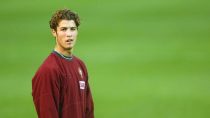
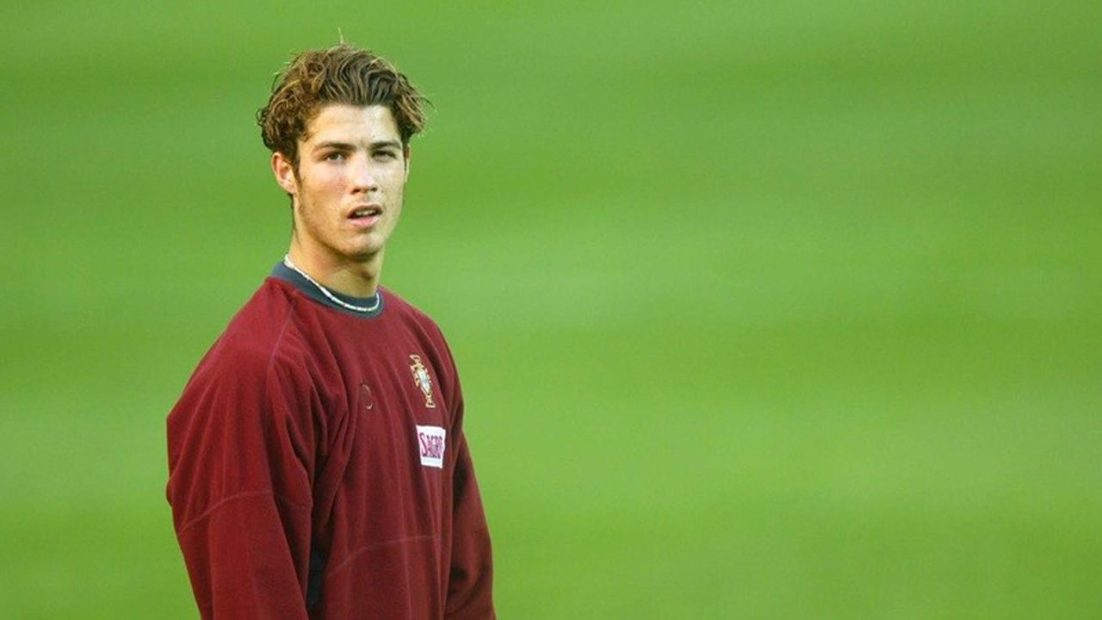
When the young Ronaldo first joined the national team, he arrived at the camp wearing a baseball cap backwards, large sunglasses and headphones playing loud music. Even at the dining table, he did not take off his cap in front of experienced players such as Luis Figo and Rui Costa.
Coach Luiz Felipe Scolari saw great talent in him. But he also saw immaturity and a desire to show himself. He criticised Ronaldo publicly but privately told him that if he changed his behaviour, he could one day become Portugal’s captain.
His first major heartbreak came at a very young age.
At the Euro 2004 final, Ronaldo was only 19 when he played at Lisbon’s Estadio da Luz. The whole country expected Portugal to lift the trophy. But Greece unexpectedly won the title through Angelos Charisteas’ only goal.
Ronaldo could not hold back his tears after the final whistle. Images of the teenager crying on home soil spread around the world.
That defeat taught him how much it takes to win a final. It also created an unstoppable hunger inside him that never completely disappeared.
At that time, Figo wore the No. 7 shirt, so Ronaldo had to wear No. 17. Figo helped him adjust, but did not make things easy for him. After Figo left the national team in 2006, the No. 7 shirt became Ronaldo’s, and the team gradually became his as well.
Before a match against Russia in 2005, Scolari and Figo went to Ronaldo’s room and told him that his father had died. Scolari gave him the chance to return home. But Ronaldo decided to play.
He asked his teammates to behave normally and continued practising with the ball in the dressing room. This was how he dealt with his grief. Later, he even referred to Scolari as “father”. The national team had become the biggest source of comfort in his life.
His relationship with Carlos Queiroz later became difficult. After Portugal were eliminated by Spain at the 2010 World Cup, Ronaldo was asked by journalists to explain the team’s poor performance. He told them to ask the coach.
By then, Ronaldo’s influence over the team had become so strong that many routines and habits were built around him. Queiroz felt that this was weakening his authority.
Sociologist João Nuno Coelho said the Portuguese national team had become a symbol of Portugal’s identity and its desire to present itself to the world.
During a time of economic crisis and a lack of confidence, success and praise on the international stage meant more than football. Ronaldo was at the centre of that ambition.
Some people criticised his individualism and ego, while many others were proud of him. As his success grew, the doubts about him also began to disappear.
A major change came under Fernando Santos in 2016. Ronaldo agreed to play as a centre-forward alongside Nani. He had never accepted a coach’s instructions so easily before.
After the draw against Iceland, he personally told Nani that he trusted Santos. Gradually, he became a true leader in the dressing room.
After missing a penalty against Austria, Ronaldo could hardly sleep. When Santos woke up, he found that Ronaldo was already awake.
At the training camp in Marcoussis, Ronaldo took a supporter’s megaphone and reminded everyone that Portugal had still won nothing. He had started to enjoy his leadership role.
In the Euro 2016 final in Paris, he was injured and left the field in tears. He could not give his best. Nani took the captain’s armband.
However, during the break, Ronaldo regained his composure and continued encouraging his teammates. Before extra time began, he told Éder, while walking with a limp, that he would score the goal.
And Éder did score.
But Ronaldo’s old habits had not completely disappeared. During extra time, he was seen standing in the technical area and giving instructions until the fourth official moved him away. Many coaches considered this too much.
His strong desire to influence the result was both his greatest strength and the reason he found it difficult to accept limitations.
When he made his debut in 2003, Portugal were still looking for their first major trophy. Some players define an era, while others transform a national team. Ronaldo belongs to the second group.
That night in 2016 brought Portugal their first European Championship.
Three years later, Ronaldo scored a hat-trick against Switzerland to take Portugal to their first Nations League final, which they won. In 2025, when most players of his generation had retired, he was still lifting his second Nations League trophy.
No one has scored more goals for Portugal than Ronaldo. No one has worn the Portugal shirt more times than him.
Under his influence, Portugal stopped being simply a talented team and became a title contender in every tournament. An entire generation grew up in a dressing room where Ronaldo himself set the standards.
After 2016, the question changed. Earlier, people asked whether he was selfish. Later, they began asking whether Portugal had become too dependent on him.
At the 2018 World Cup, he scored a hat-trick against Spain, including a free-kick goal that came on his 45th attempt in a major tournament. Yet Portugal were eliminated by Uruguay.
Even after the difficult 2026 World Cup, many questioned why he was still starting. But the statistics showed that it was one of the best periods of his career.
Under Roberto Martinez, he scored 28 goals in 37 matches, with an average of 0.756 goals per match. This was better than his 0.624 average under Fernando Santos.
The Portuguese Football Federation has announced a special ceremony to honour his contribution. His farewell came in a way that did not allow fans to give him the celebration they felt he deserved.
He did not just lead a generation that grew up watching him. He also took that generation to heights they had never reached before.