Flooding Submerges 1,250 Hectares of Farmland in Kumarkhali, Causing Tk 35 Crore in Annual Crop Losses
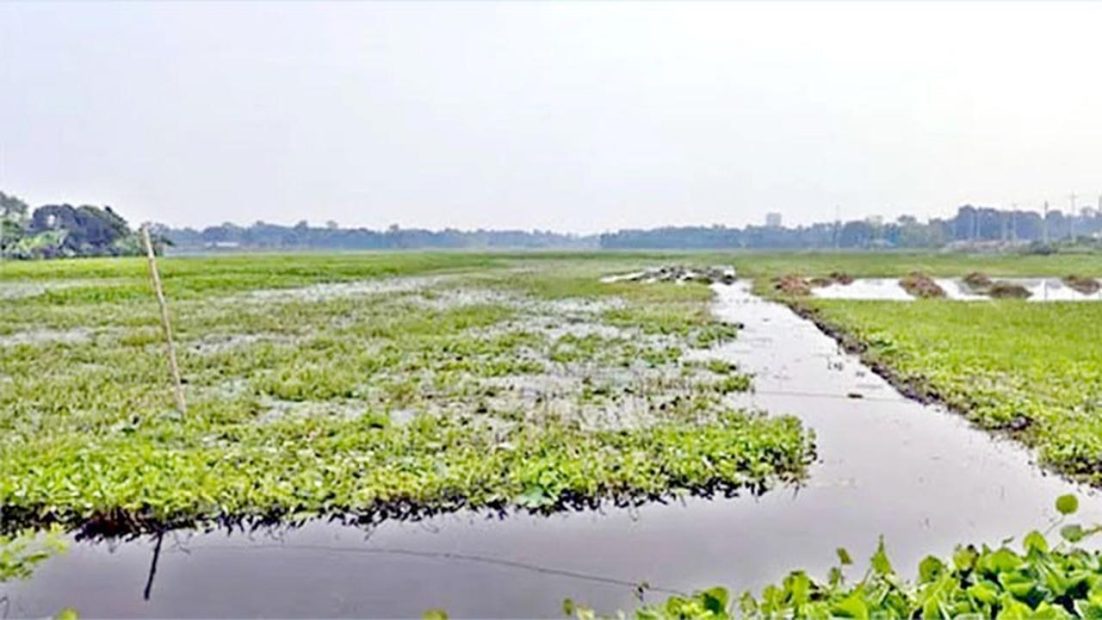
Severe waterlogging has hit Kumarkhali in Kushtia due to unplanned filling and occupation of canals and the lack of a proper drainage system. About 1,250 hectares of farmland in the upazila remain under water for seven to eight months a year. As a result, farmers are unable to grow crops two to three times a year.
According to the agriculture department, if the waterlogging could be removed, farmers could produce about 10,000 more tonnes of paddy and other crops during the Aman and Aus seasons. The market value of the additional crops would be about Tk 35 crore.
The upazila is surrounded by the Padma, Gorai, Kaliganga and Dakua rivers. It has a total of 18,240 hectares of farmland. Farmers have long complained that although there are many small and large GK canals for irrigation, there is no proper drainage system. The existing canals are also almost dead because they are not maintained regularly.
In some places, canals have been filled to build houses. In other places, dams have been built across canals for fish farming. Ponds have also been dug in canals near wetlands. As a result, large areas of land that once produced three crops a year have become one-crop land. This is badly affecting food production.
A recent visit to Bahalbariya, Chandpur, Banshara, Bakhai, Karatkandi and Jagannathpur wetlands found large areas under water. Water hyacinth, water spinach, water lilies and other weeds have grown on the farmland.
Some farmers are catching fish in small boats because they have no other option. Others are spending extra money to clear weeds from their land for the current Boro season. Unable to bear the losses for years, many farmers have dug ponds on their farmland and started fish farming.
Farmers are suffering greatly because of the waterlogging. Robiul Islam, a farmer from Bahalbariya wetland in Nandalalpur Union, said he owns 16 bighas of land. He said water used to flow normally through the canal into the Gorai River even a decade ago, allowing farmers to grow paddy three times a year.
But now, as the water cannot flow out, he can only grow Boro paddy. Farmers Mazed Ali of the same area and Abdus Samad of Gobindapur wetland said weeds are growing heavily on their land because there is no proper drainage system despite rivers all around them. They have to pay six workers to clear weeds from each bigha of land.
Azahar Biswas, a farmer from Karatkandi wetland in Sadki Union, said he gets 12 to 14 maunds of paddy from each bigha after one crop. But the income is almost completely spent on clearing weeds. Local farmers believe that planned canal digging could allow them to grow crops three times a year on these lands.
According to the Upazila Agriculture Extension Office, about 1,250 hectares of farmland are severely affected by waterlogging. Of this, 290 hectares are in Nandalalpur Union, 250 in Sadki, 240 in Jagannathpur, 205 in Shilaidah, 75 in Jaduboyra, 120 in Kaya and 70 in Chapra.
The amount of waterlogged farmland is increasing every year because of rainfall. In 2024, 510 hectares of farmland were waterlogged. This year, the figure has more than doubled.
Upazila Agriculture Officer Md Monir Hossain said 6,225 tonnes of paddy are currently produced from the waterlogged land during the Boro season. If farmers could grow crops during the Aman and Aus seasons, another 10,000 tonnes of crops could be produced. Their market value would be about Tk 35 crore.
He said the local administration and higher authorities have already been informed in writing about the waterlogging problem.
Upazila Nirbahi Officer (UNO) Md Raisul Islam said proposals for digging two canals in Kumarkhali have been sent under the government’s ongoing canal excavation project.
He said the waterlogging would be reduced significantly once the canal digging project starts. He also said necessary steps would be taken soon after discussions with local representatives, the agriculture department, farmers, Bangladesh Agricultural Development Corporation (BADC) and the Water Development Board.