Reviving the Legacy: Traditional Dhakai Muslin Returns Through the Hands of Rupganj Artisans
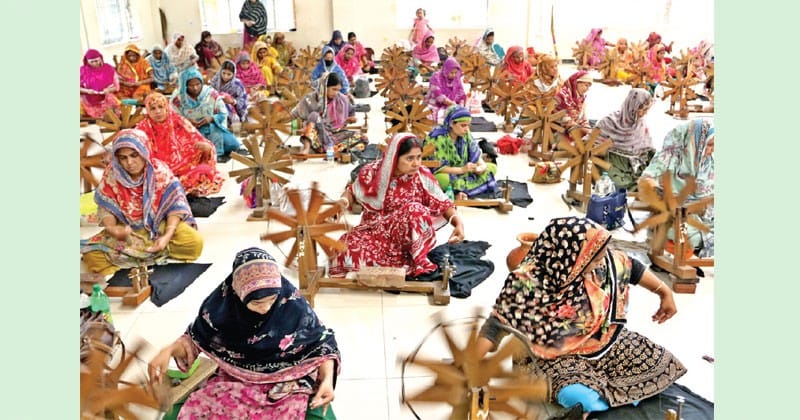
Nafiza Bahauddin, Director and Executive Editor of The Daily Inqilab, recently visited weaving units and small Jamdani factories in Rupganj, Narayanganj, to assess operating conditions and revival efforts for Bengal’s legendary Dhakai Muslin. Senior officials received her, along with the wife of Editor A. M. M. Bahauddin, Marketing Director Abdul Kader, and other company dignitaries. The delegation inspected various production units to observe thread spinning, loom weaving, and artisan welfare. Once celebrated globally as a pinnacle of heritage and elegance, this historic textile craft is undergoing a dedicated revival in the upazila to restore its ancient legacy.
Reflecting on her visit, Nafiza Bahauddin shared that she had previously read about Dhakai Muslin in books and seen preserved specimens behind glass at the Victoria and Albert Museum in London without handling the fabric. Seeing the craft brought back to life by local weavers in Rupganj filled her with immense wonder, and she noted that moving from viewing national heritage in a foreign museum to witnessing it alive at home brings an extraordinary sense of pride in the country’s culture and history.
Crafting a single Muslin saree requires exceptional skill and patience, currently taking approximately three months from specialized cotton spinning to final weaving. Although modern technical refinements have reduced the production timeframe from the historic ten to twelve months, the industry still faces formidable hurdles. Weather fluctuations, high production costs, and a critical shortage of skilled labor threaten sustainability. At present, 116 dedicated artisans, comprising 95 women and 21 men, are actively working to sustain this complex, labor-intensive handicraft against economic pressures.
The artisans themselves view their profession as a sacred duty rather than a mere livelihood. A female weaver emphasized that despite the immense time and effort required, workers refuse to abandon the trade because it remains deeply connected to Bengal’s ancient honor. Addressing these challenges, Rupganj Upazila Nirbahi Officer S. M. Abdullah Bin Shafiq said Muslin risks fading despite its rich history. He assured that the local administration is taking the labor shortage seriously and will implement support measures after directly evaluating factory conditions.
Experts emphasize that Dhakai Muslin is an integral element of Bangladesh’s cultural identity rather than a simple textile industry. Ensuring fair valuation for artisans, providing specialized training for the new generation, and securing robust public and private patronage are crucial steps required to sustain operations. Without immediate structural interventions and financial support, the legendary craft that once captivated global audiences risks becoming permanently confined to historical archives, losing its living artistic heritage forever.