Public Diplomacy: The Silent Strength in Bangladesh-China Relations
On June 26, 2026, during a meeting in Beijing between Chinese President Xi Jinping and Bangladesh Prime Minister Tarique Rahman, the two leaders announced a joint decision to build a Bangladesh-China community with a shared future. This was an important milestone in the history of bilateral relations, which have developed over more than five decades. However, behind this formal diplomatic achievement lies another force that has long been deepening and enriching ties between the two countries. It is people-to-people diplomacy, also known as informal diplomacy.
Traditional diplomacy is conducted through governments, foreign ministries, diplomats and authorised state institutions. People-to-people diplomacy, on the other hand, is built around individuals. Students, teachers, businesspeople, researchers, journalists, cultural organisations, military personnel, alumni and ordinary citizens are its driving forces. They build personal relationships, mutual trust and friendship between the people of the two countries. People-to-people diplomacy is not an alternative to state diplomacy. Rather, it provides a human foundation that makes official relations deeper, stronger and more lasting.
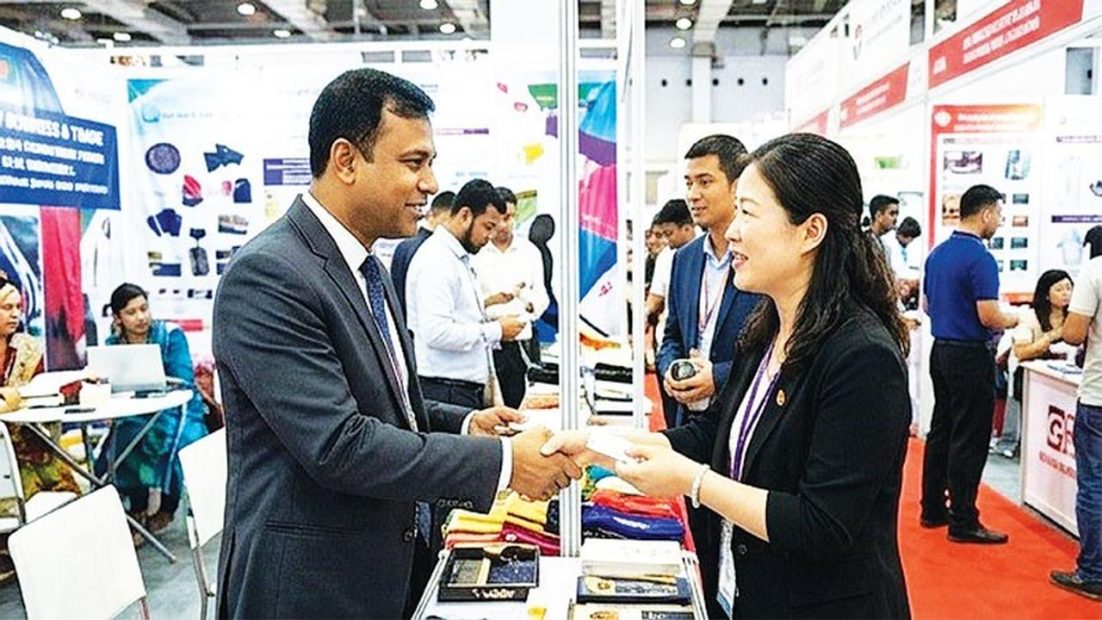
Bangladesh-China relations offer a notable example of this. At different stages of the bilateral relationship, people-to-people connections have developed through military training and defence cooperation, educational exchanges, business contacts and cultural activities. Bangladeshi students have travelled to China on government scholarships, businesspeople have participated in the Canton Fair, and people from different professions have created new channels of communication between the two countries. Together, these initiatives have strengthened the social foundation of bilateral relations.
My own involvement in this people-to-people relationship began on September 15, 1988. I went to Beijing on a government scholarship to study Chinese at Beijing Language and Culture University (BLCU). At that time, only nine Bangladeshi students were selected to study in China under that special scholarship programme. The situation is very different today. In 2024, the Chinese ambassador to Bangladesh said that around 20,000 Bangladeshi students were studying in China.
That journey changed my personal life. It also gave me an important insight into international relations: when sincere relationships develop between people from different countries, those individuals can eventually become bridges between their nations.
Over nearly four decades, I have seen many Bangladeshis return from China with a deeper understanding of its society, culture and people. Many later became involved in Chinese language education, translation, research, trade, cultural activities and friendship-based organisations. Similarly, Chinese citizens who visit Bangladesh take home their experiences of the country’s hospitality, society and people. In this way, a student, teacher, businessperson or ordinary tourist can become an informal ambassador of friendship between the two countries.
Many people in Bangladesh were once involved in China-related activities in official capacities and have continued to contribute to bilateral relations even after retirement. Lieutenant General (Retd) M Mahbubur Rahman, former Chief of Army Staff of the Bangladesh Army and former Defence Attaché in Beijing, is a notable example. His continued participation in seminars and discussions on Bangladesh-China relations shows that retirement from public office does not mean retiring from the responsibility of promoting friendship and cooperation.
My own experience is also closely connected with this process. During Prime Minister Begum Khaleda Zia’s visit to China in December 2002, I served as her official interpreter. I had the opportunity to accompany her during important engagements, including her meeting with Chinese President Jiang Zemin at Zhongnanhai on December 25. Later, I took part in various formal and informal exchanges involving Bangladesh-China delegations and cooperation in trade, communications, education and culture.
In 2010, I was also involved in presenting Bangladesh’s views on strengthening connectivity, investment, trade and people-to-people relations at the activities of the Dianchi Cooperation for Open Asia initiative in Kunming. Looking back, many of the ideas and initiatives discussed at that time remain equally relevant today.
Educational exchange is one of the most sustainable channels of people-to-people diplomacy. When a student spends several years in China, they gain more than professional knowledge. They also become familiar with its language, culture and way of life. After returning home, they can serve as a bridge of understanding and communication between the two societies. This makes the role of Bangladesh-China alumni organisations particularly important. Organisations such as the Association of Bangladesh-China Alumni bring together Bangladeshis who have studied, received training or gained professional experience in China and help promote mutual understanding.
Language and cultural organisations also make important contributions. The expansion of Chinese language education in Bangladesh, publication of Chinese-language learning materials, cultural events, seminars and professional networking are building a broad human network between the two countries. Although the immediate impact of these initiatives may be difficult to measure, they create a foundation of mutual trust and cooperation in the long run.
Both Bangladesh and China have recognised the importance of this approach at the state level. In 2024, the two countries decided to observe 2025 as the China-Bangladesh Year of People-to-People Exchanges. Various programmes were undertaken in education, culture, tourism, healthcare, think tanks, sports and youth activities. The 2026 joint declaration also emphasised expanding exchanges and cooperation in education, media, research, films, publishing, youth, sports and culture.
Global experience also highlights the importance of people-to-people diplomacy. The 1971 US-China “Ping-Pong Diplomacy” is a notable example. At a time of prolonged political tension, interactions between Chinese and American table tennis players helped create new possibilities for relations between the two countries. The lesson is that sports and personal contacts cannot replace state diplomacy, but direct interaction between people can sometimes create opportunities that formal diplomatic channels alone cannot achieve.
This lesson is equally relevant to Bangladesh and China. A community with a shared future cannot be built only through government agreements, infrastructure projects, trade figures or high-level visits. It must also be reflected in the thoughts, understanding and relationships of ordinary people in both countries.
Language plays a particularly important role in this process. There is no real substitute for the ability to communicate directly with one another. The more Bangladeshis learn Chinese and the more Chinese citizens learn about Bangladesh, the less dependent relations between the two countries will be on intermediaries. This will create greater opportunities for genuine mutual understanding.
People-to-people diplomacy is also extremely important in the economic sector. Bangladesh expects greater investment, technology transfer, industrial cooperation and access to the Chinese market. During Prime Minister Tarique Rahman’s visit to China in June 2026, the two sides discussed trade, investment, industrial cooperation, connectivity, education, healthcare and technology.
Achieving these goals requires more than the efforts of diplomats. Businesspeople need networks built on mutual trust, students need new opportunities, researchers need professional contacts, and cultural organisations need effective platforms.
This is where the strategic value of people-to-people diplomacy becomes clear. It creates an additional platform for promoting Bangladesh’s national interests and development priorities internationally. Direct engagement between Bangladeshi counterparts and Chinese investors, technologists, academics and researchers can make economic cooperation more practical and effective. At the same time, it can increase awareness in Chinese society about Bangladesh’s history, culture, potential and national interests. As a result, bilateral relations can extend beyond the state level and reach different sections of society.
However, people-to-people diplomacy does not mean unregulated diplomatic activities. Those involved must remain aware of national interests, respect the laws and sensitivities of both countries, and never present personal opinions as the official position of the state. Similarly, governments must clearly distinguish between responsible independent initiatives and activities that genuinely require official authorisation. What is needed is not control, but mutual trust and partnership.
The first five decades of Bangladesh-China relations were built by many leaders, diplomats, government officials, military personnel, students, teachers, businesspeople and ordinary citizens from both countries. To make the next five decades even more fruitful, this human foundation must be expanded and strengthened.
State diplomacy creates the structure of a relationship, while people-to-people diplomacy adds warmth, depth and durability to it. I therefore sincerely urge diplomats and government officials of both countries to recognise the importance of people-to-people diplomacy and support those who are responsibly engaged in this work. Student and alumni networks, language education, cultural exchanges, business contacts, academic cooperation, youth programmes and independent friendship initiatives should be encouraged and supported.
If state diplomacy signs agreements, people-to-people diplomacy makes those agreements meaningful to ordinary citizens. If state diplomacy builds bridges between two governments, people-to-people diplomacy builds bridges between the societies of the two countries.
The vision of a Bangladesh-China community with a shared future should not remain limited to a diplomatic phrase. It must become a reality through interactions between students in classrooms, entrepreneurs in business, researchers at universities, teachers and learners at language centres, and ordinary people in their daily lives.
The writer is an Adjunct Professor at the Institute of Professional Language, Bangladesh Maritime University; Secretary-General and Senior Research Fellow at We Speak Chinese Club Bangladesh Ltd; Founder and Teacher at Zhong Meng Chinese Academy; and a coordinator, interpreter, consultant and promoter of Bangladesh-China relations.
Email: shahadatb@gmail.com