Umera Ahmed’s Dar-e-Nijaat Triggers Sharp Divide Over Character Dynamics and Social Reality
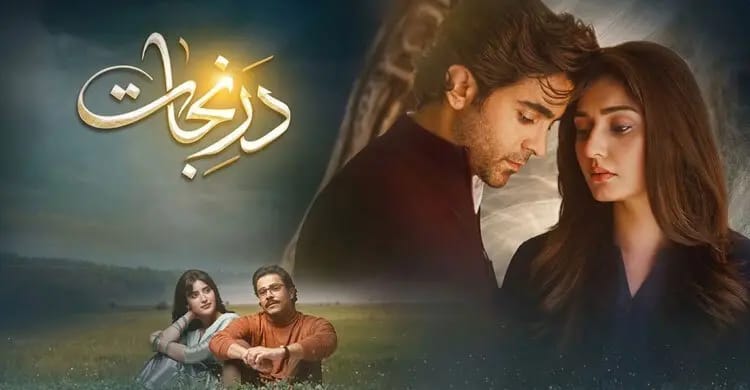
A heated controversy has erupted on social media over the drama series Dar-e-Nijaat, based on a novel by popular Pakistani writer Umera Ahmed. While the series has grabbed attention for defying traditional patriarchal narratives and social stereotypes, it has also sparked criticism from numerous celebrities and critics regarding its unrealistic portrayal. From general viewers to various segments of the cultural arena, discussions and reviews are underway concerning the show’s plot structure and character behaviors.
The core criticism centers on its reversed character dynamics. While hundreds of movies and series traditionally depict male characters going astray, engaging in multiple affairs, or struggling with substance abuse, only for the heroines to reform them with love, a trope audiences readily accept, Dar-e-Nijaat flips this narrative entirely. Here, the female lead was involved in premarital relationships and live-in arrangements before marrying a good man. The main plot twist is that despite her past, her husband harbors no resentment and does not lash out, while even her mother-in-law accepts her past and treats her like her own daughter.
A significant portion of critics argue that this portrayal bears no resemblance to social reality, as society in practice is rarely so forgiving; instead, typical scenarios involve a mother-in-law’s scheming, constant taunting over the past, a husband’s screaming, physical abuse, and ultimately divorce. Addressing the issue in a recent Facebook post, author Umera Ahmed remarked that we live in an era when even normal, humane behavior seems abnormal to people. She noted that ordinary gestures, such as a mother-in-law treating her daughter-in-law like her own child, are being questioned in society today.
Meanwhile, prominent columnist and researcher Faham Abdus Salam reacted sharply and satirically to the drama series. In a strongly critical Facebook post, he voiced extreme dissatisfaction with the show’s direction, screenplay, and characterization. He mentioned that he started watching the series while under severe mental stress, but it became unbearable after just twenty minutes. Mocking the male characters’ behavior and the overall production quality, he dismissed the series as substandard compared to other quality domestic dramas.
Addressing the younger generation, Faham Abdus Salam warned them not to be misled in real life by excessively idealistic characters in fiction, emphasizing that human psychology and social reality differ greatly from dramatic imagination. Overall, the drama series Dar-e-Nijaat has transcended entertainment to ignite a major debate on gender-based social perspectives and the definition of relationships.