NO ALTERNATIVE TO NATIONAL UNITY

The July Mass Uprising, achieved through the blood and sacrifice of thousands of students and ordinary citizens, brought an end to fascist rule in Bangladesh. Behind the rise of Awami fascism into such a monstrous force in the country was a sycophantic clique that served as a puppet of Indian hegemonic interests. These flatterers surrounding former Prime Minister Sheikh Hasina turned her into a leader detached from the people and opposed to public interests. As a rare exception, President Ziaur Rahman remains a shining star. Prime Minister Tarique Rahman, who now leads the new democratic order achieved through immense sacrifice, is undoubtedly mindful of these issues. He appears to be following in his father’s footsteps. Although he has demonstrated firmness in this regard, it cannot be expected that everything will remain under his constant watch. Several shortcomings and inconsistencies have already become evident.
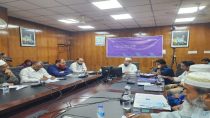
The disorder and commotion that erupted at the China Friendship Conference Center in the capital on August 5 during the screening of a documentary on the July Uprising, organized to mark its second anniversary, were highly unfortunate and regrettable. The controversy stemmed from the omission of martyred Abu Sayeed from the documentary and the presentation of Tarique Rahman as the proponent of the “One-Point Demand.” Acting President Hafizuddin Ahmed expressed both sorrow and anger over the incident. He said that any documentary on the July Uprising that does not include Abu Sayeed cannot be called a documentary. Foreign diplomats and guests left the venue citing security concerns after chaos erupted following angry protests by NCP leaders and activists against what they described as the distortion of history in the documentary, and counter-reactions from leaders and activists of the ruling party.
The Minister for Liberation War Affairs expressed regret over the overall incident and assured that the documentary’s factual and historical inaccuracies would be corrected. Speaking after inaugurating the July Memorial Museum at Sher-e-Bangla Nagar on July Uprising Day, Prime Minister Tarique Rahman reaffirmed his pledge to build the nation in the spirit of July. Following the July Uprising, the interim government had set three primary objectives: ensuring justice for the July massacre, carrying out state reforms, and holding the 13th National Parliamentary Election. The July Charter has since been adopted, reforms are ongoing, and the country has returned to the democratic path through an internationally credible national election. However, the country’s enemies remain as active as ever.
The Prime Minister rightly stated in his speech that creating unnecessary controversies and instability would pave the way for the resurgence of authoritarian rule. However, such issues are not being created solely by the opposition or third parties; collaborators of fascism embedded within the government and the ruling party are also attempting to manufacture unnecessary controversies. It must be investigated whether they were involved in the distortion of facts in the July Uprising documentary. The government’s top leadership must remain vigilant about overzealous individuals within its ranks. Those who participated in the July Uprising are now entrusted with governing the country. In a parliamentary system, the opposition is also regarded as part of the governance structure. Home Minister Salahuddin Ahmed said that although the ruling party and the opposition may engage in debates inside and outside Parliament on various issues, they remain united on the question of the Awami League.
In the interest of national security and the greater good, everyone must work to uphold democratic tolerance and national unity to prevent the resurgence of fascism with foreign backing. In this regard, the responsibility borne by the leaders and activists of the ruling party is considerably greater. The spirit of the July Uprising has laid the foundation for national unity, state sovereignty, and a prosperous future. Former Chief Adviser Dr. Muhammad Yunus said, “It is from the July Museum that we will find our path forward.” Those who are creating divisions among themselves over trivial issues, and those who seek to create instability in the country to weaken and corner the government, are in fact pushing the country’s democratic system toward danger.
Just as Hafizuddin Ahmed demonstrated the highest standards of trust and impartiality in Parliament as Speaker, he is now, as President, reaffirming his unwavering commitment to national unity above party lines. The ousted autocrat, now based in Delhi, along with her collaborators and patrons, does not want to see good governance and democratic stability in Bangladesh. They continue to conspire in pursuit of a common objective. The government has taken firm steps to ensure justice for the July massacre, the BDR massacre, the Shapla Chattar massacre, as well as the enforced disappearances and killings committed in recent years. It is to thwart these efforts that the ousted autocrat, by announcing her intention to return to the country, is seeking to reinvigorate leaders and activists of the banned Awami League. They are also continuing anti-July propaganda and attempts to undermine national unity through social media.
Although the Prime Minister, the President, and leaders of both the government and the opposition are aware of these challenges, signs of disorder and instability are emerging due to the controversial role of government sycophants and a section of party leaders and activists. Strict action must be taken against those responsible for creating such situations. At a time when the international community is extending its support, confidence, and cooperation to the government led by Prime Minister Tarique Rahman, India’s rulers continue to engage in what the article describes as disgraceful politics over Sheikh Hasina. While the nation marked July Uprising Day by turning the grief of losing loved ones into renewed determination to move the country forward, the Indian government sent a different message by allowing Sheikh Hasina, convicted in Bangladesh over the July genocide, to address the media in Delhi. However, Bangladesh will never return to its previous state. Dhaka has lodged a strong protest with Delhi over Sheikh Hasina’s press conference. In its protest note, Bangladesh described the decision to allow her to speak as an affront to the country’s sovereignty.
The shared position of the Prime Minister, the President, and opposition leaders on anti-Awami national unity offers hope to the nation. The Prime Minister has declared that Bangladesh will never become a subservient state. Echoing that position, the Foreign Minister said Bangladesh will never again bow to any country or become a client state. Yet the reality on the ground continues to cause concern. On the one hand, there are alleged conspiratorial designs originating from Delhi; on the other, clashes, threats, and instability among grassroots activists of both the ruling party and the opposition are serving no one’s interests. It has become imperative to put an end to such intimidation and confrontation and ensure a national platform for unity. At this moment, there is no alternative to national unity.