
Reforming Pakistan’s Administrative Governance
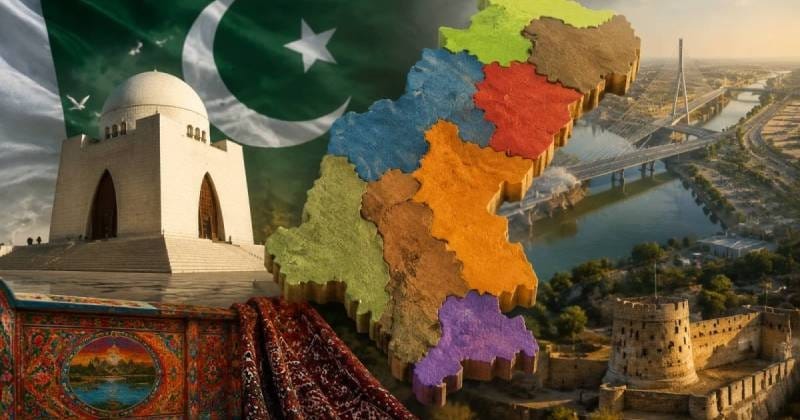
The Home Minister’s proposal to create smaller administrative divisions has revived Pakistan’s recurring debate over new provinces. The central question, however, is whether the government is close enough to the people to provide efficient public services. Administrative boundaries affect how quickly infrastructure, healthcare, education, justice and disaster assistance reach citizens. Pakistan, home to more than 240 million people, covering around 796,000 square kilometres, faces diverse geographical challenges. The needs of Kech, Upper Kohistan and Astore require locally responsive governance.
Pakistan’s history reflects a struggle to balance governance with national cohesion. At independence in 1947, West Pakistan comprised tribal regions, princely states such as Kalat, Bahawalpur and Swat, Punjab, Sindh, the North-West Frontier Province and Balochistan. The 1955 “One Unit” plan intensified regional grievances. Its collapse in 1970 and the 1973 Constitution reaffirmed provincial autonomy. Demands for new provinces in South Punjab, Hazara and Bahawalpur have continued despite the merger of the former Federally Administered Tribal Areas (FATA) with Khyber Pakhtunkhwa. The case for smaller divisions is administrative.
Balochistan accounts for about 44 percent of Pakistan’s landmass but has a comparatively small population, while Punjab has a population larger than that of many countries. Governments function better when decision-makers are closer to those they serve. Empowered local institutions can deliver assistance more quickly, as demonstrated by the 2022 floods. However, creating provinces requires political consensus, constitutional amendments and sustained funding.
International experience offers lessons. Bangladesh has strengthened districts, upazilas and union councils, while India has established new states including Chhattisgarh, Jharkhand, Uttarakhand and Telangana. Indonesia has pursued decentralisation, while France has granted autonomy to local governments without frequently redrawing boundaries. Nigeria has demonstrated the risks of expanding administrative entities without adequate financial stability. These experiences show that reform depends less on the number of units than on whether authority, resources and responsibility reach local institutions. Article 140A of Pakistan’s Constitution provides the legal basis for elected local governments and devolution of authority. Yet decentralisation has largely stagnated since the 18th Amendment.
Additional provinces should remain a constitutional option where public opinion, administrative necessity and economic viability support them. Provinces must give local governments authority over infrastructure, healthcare, education, water and sanitation, backed by reliable funding and regular elections. After more than eight decades, Pakistan’s experience shows that institutions matter more than boundaries. Administrative reform should improve living conditions and ensure that public services reach citizens across the country in a timely manner, effectively.