From Defusing Garment Sector Unrest to Boycotting Gopalganj Residents over Terrorism: PM Thwarts India’s Chanakya Strategy
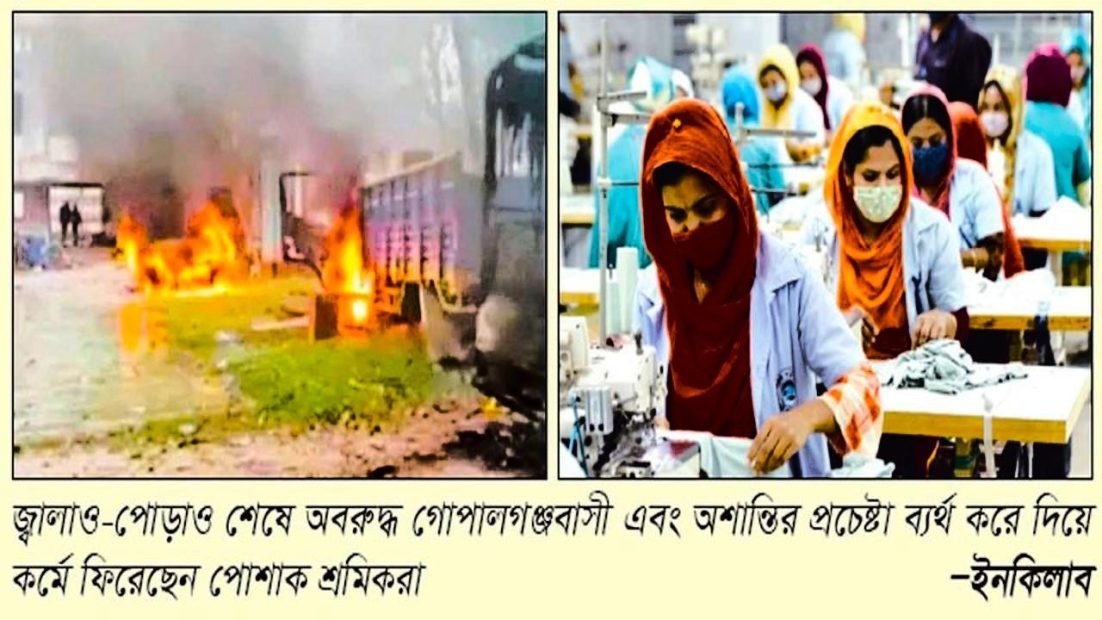
Prime Minister Tarique Rahman has outmanoeuvred India’s Chanakya-style political strategy, according to this opinion article. Through his political skills, he has put the traditional Awami League in a position where it is now facing the prospect of being labelled a ‘terrorist’ organisation.
Since the July uprising, India has allegedly made various attempts to create instability in Bangladesh. The latest efforts reportedly involved creating unrest in the garment sector and turning Gopalganj into a centre of violence through sabotage following Sheikh Hasina’s announcement that she would return to Dhaka.
Policymakers in Delhi expected the government to use police force against protesting garment workers. They believed that if several workers were killed in police action, the government could be portrayed as fascist.
However, demonstrating political foresight, Tarique Rahman avoided repression and took swift action. On November 1, he formed a six-member wage board to determine new minimum wages for workers in the ready-made garment industry. Workers’ wages have since been determined, and many have returned to work.
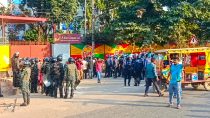
In Gopalganj, traditionally considered a stronghold of the Awami League, the situation was different. When protesters allegedly resorted to arson, vandalism and sabotage in the name of blockades, Tarique Rahman deployed the Border Guard Bangladesh (BGB) and police to protect police stations and public property.
The Awami League intended to exploit any excessive police action to attract international attention, including that of the United Nations. It alleges that the party wanted to create casualties among its own supporters and use them to justify the killings during the July uprising. It also sought to portray the BNP in the same category as the Awami League and accuse the new government of human rights violations, thereby reducing international scrutiny of Ms. Hasina’s alleged crimes during the July uprising.
By avoiding this trap, Tarique Rahman has challenged India’s political strategy and changed the traditional approach to dealing with opposition movements. For decades, governments in Bangladesh have generally relied on security forces to suppress destructive activities during political protests. This often resulted in scenes of violence being met with further violence.
However, Tarique Rahman handled the garment workers’ movement by taking an administrative step: forming a wage board. He also appointed experienced political figures Aman Ullah Aman and Shimul Biswas to lead the labour wing, seeking to build better relations with workers.
In Gopalganj, he reportedly adopted a different strategy. Instead of using force, he effectively imposed a counter-blockade by involving five neighbouring districts, leading to a ‘boycott of Gopalganj’. The boycott is reportedly still continuing.
Some Awami League supporters in Gopalganj, influenced by expectations that Sheikh Hasina would return from Delhi, engaged in violence and sabotage. They allegedly damaged two police stations, the homes of three MPs and around 50 houses and business establishments. Some of the properties were set on fire, while the article also claims that some supporters deliberately burned their own homes and shops to attract the attention of domestic and international media.
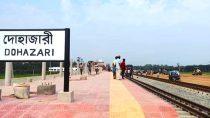
Tarique Rahman, however, maintained a measured approach and sought to isolate the district through a nationwide boycott. As a result, Gopalganj is reportedly facing widespread disruption. Trains are no longer stopping at railway stations in the district. The government says the stations were set on fire and services will resume after repairs.
With trains not stopping and passengers unable to board, protesters themselves are facing difficulties travelling. The article also claims that essential goods have not been transported to Gopalganj from other districts for several days, causing severe shortages in local markets. Prices of many products have reportedly doubled or tripled because of the gap between supply and demand.
The government has delayed repairing the damaged police stations, leaving residents without access to police assistance. Government development projects, TCB services, fertiliser supplies and banking services have also reportedly been suspended. Even online and electronic banking services have allegedly been disrupted.
Consequently, ordinary residents are facing serious difficulties. Some people who previously supported the Awami League have reportedly begun speaking out against party leaders accused of sabotage. However, ordinary residents who took no part in the violence are suffering the most. Small business owners, employees and other working people are struggling to support their families. They are reportedly receiving little assistance from the administration, lack legal protection from the police and are facing difficulties accessing proper treatment at local hospitals. Passengers are also being forced to wait for hours at railway stations without being able to travel.
Alleged Political Conspiracy and Government Strategy
Sheikh Hasina and her political allies in Delhi wanted to create bloodshed and casualties in Bangladesh. However, Tarique Rahman’s political strategy and administrative approach prevented the situation from escalating as they had expected. Domestic and international groups allegedly supported by India are actively working against Tareq Rahman and seeking to undermine his political image.
These groups attempted to push the BNP government towards using force in both the garment industrial areas and Gopalganj. Some officials within the government, allegedly accustomed to implementing Delhi’s agenda, reportedly advised Tarique Rahman to suppress the protests through force. Despite these suggestions, he chose a different approach. His strategy eventually forced protesters to withdraw and left them facing the consequences of their own actions.
Alongside containing the unrest in the garment sector and Gopalganj, the government identified individuals who had secretly financed the movements. Based on intelligence information, the National Board of Revenue (NBR) reportedly froze the bank accounts of some alleged financiers. However, most of them remain beyond the reach of law enforcement.
Political Unity and the Sheikh Hasina Issue
Alongside efforts to resolve unrest in the garment sector and counter the Gopalganj blockade, Tarique Rahman is reportedly working to rebuild national political unity over the Awami League and Sheikh Hasina issue.
According to a Reuters report cited in the article, Sheikh Hasina is expected to return to Bangladesh on December 16. Although her possible route of entry remains unknown, reports have circulated that fugitive Awami League leaders have visited the Benapole and Tripura border areas.
Regardless of the accuracy of these reports, political opposition to Hasina has become increasingly evident. Almost all political parties in Bangladesh, with a few exceptions, support the spirit of the July uprising.
However, Jamaat-e-Islami and the National Citizen Party (NCP), along with nine other parties, formed an 11-party alliance and attempted to create political unrest through nationwide long marches.
The alliance has organised programmes around seven to eight demands, including implementation of the referendum results and the July Charter, justice for the July killings and control of the prices of essential commodities.
However, Jamaat’s main objective is to secure a share of political power. It claims that the party, which has limited public support, secured 68 parliamentary seats through what it describes as a political arrangement involving Dr Muhammad Yunus, while its alliance partners won another eight seats. As a result, it is now serving as the opposition in parliament.
Using the Bengali proverb, ‘If you allow someone to sit, they will want to lie down,’ the article accuses Jamaat of seeking a share of government power. It further alleges that, instead of prioritising the broader unity formed around the July uprising, Jamaat attempted to create political instability soon after the new government took office.
Such instability serves the interests of both India and Sheikh Hasina. At a time when Bangladesh is struggling with a lack of new investment, a weak financial sector, banking sector instability and a global energy crisis affecting gas, electricity and power supplies, Jamaat has allegedly become involved in negative politics. It also accuses the NCP of following Jamaat’s approach in pursuit of political gains and expectations.
Meanwhile, Sheikh Hasina announced from India that she would return to Dhaka in December. Indian media outlets, described in the article as ‘godi media’, along with two international media organisations published in Britain, allegedly began campaigning in her favour.
Against this backdrop, Tarique Rahman decided to call for national unity and hold discussions with political parties. He has already met NCP leaders. All political parties have responded to his call and agreed to remain united around the spirit of the July uprising and oppose Sheikh Hasina, whom it describes as India’s political proxy.
India’s Alleged Strategy to Restore Ms. Hasina
India wanted to turn Bangladesh’s streets into scenes of bloodshed to facilitate Sheikh Hasina’s political rehabilitation. If police had opened fire to stop garment workers from engaging in arson and vandalism, Awami League supporters could have killed several people themselves to create confusion and attract international attention.
Similarly, if police had used force to stop violence during the Gopalganj blockade, the party could have staged further killings and portrayed the BNP government internationally as responsible for the deaths.
This would have provided domestic and international forces with an opportunity to justify the killing of around 1,400 students and ordinary people during the July uprising. However, Tareq Rahman avoided falling into the alleged trap and controlled the situation through a different political strategy. His approach has left the Awami League struggling to determine its next political moves after being outmanoeuvred by the new government.