
India’s “Cockroach” Movement Challenges Modi Government
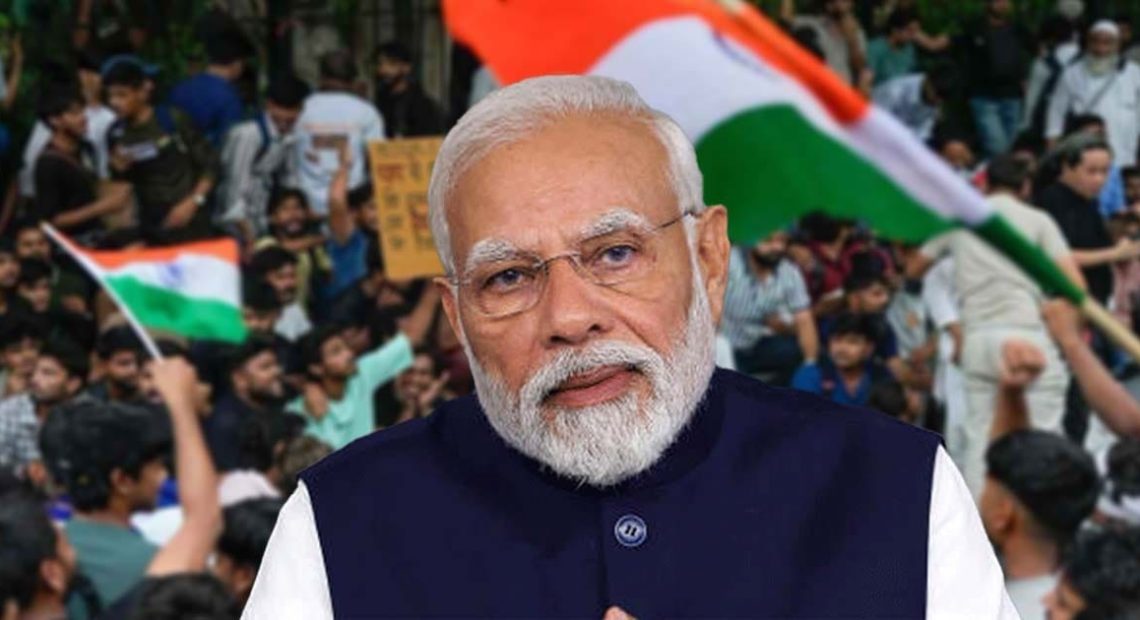
One of the biggest political obstacles facing Prime Minister Narendra Modi’s administration in India is a youth-led campaign called “Cockroach,” which was driven by exam irregularities and question paper leaks. What started as localised outrage swiftly grew into larger national demonstrations against persistent youth unemployment, poor career opportunities, and a growing lack of confidence in public institutions.
Social media mobilisation helped the protests, which started in Delhi, quickly spread to several other cities. The administration made a rare political retreat on July 25 when Union Education Minister Dharmendra Pradhan resigned as a result of the rising criticism. After receiving harsh criticism for using excessive force, the administration dismissed police cases against protesters in a few cities and established harsher legislative penalties for document leaks in an attempt to appease the public’s massive outrage.
The movement also raised important issues related to security and privacy. Artificial intelligence-based camera systems were allegedly used to track and identify demonstrators, according to activists, while internet access was banned in proximity to important Delhi rally locations. Additionally, following the widespread online circulation of demonstration footage, several female participants reported experiencing significant online harassment and threats.
The movement’s momentum is still strong despite obstacles to communication and surveillance. Abhijit Deep, the founder of the organization, revealed plans for a “listening tour” across the country to get feedback from young people at the grassroots level and maintain pressure on the government. The “Cockroach Janata Party” (CJP) has decided to function as a committed pressure organization, with policy improvements at the forefront, rather than instantly becoming a traditional political faction.
This uprising over work, education, and institutional responsibility has major consequences because India’s large youth population acts as a powerful voting bloc. As the nation prepares for the 2029 national elections, the growing dissatisfaction and economic ambitions of the country’s younger generation are forcing both the opposition parties and the incumbent administration to take them seriously.
Source: AFP