Most Election Manifesto Promises Fulfilled
By Faruk Hossain
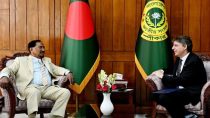
Six months ago, the BNP took power after winning the 13th parliamentary election, inheriting a fragile state structure. From day one, the administration led by Prime Minister Tarique Rahman confronted major hurdles: rebuilding the economy, restoring law and order, and tackling energy problems left behind by years of mismanagement and political instability. Government sources say the administration has also faced internal resistance, with holdovers from the previous order allegedly working to create obstacles. Even so, officials maintain that most welfare pledges from the election manifesto have already been delivered. Among the government’s notable achievements are Prime Minister Tarique Rahman’s official visits to Malaysia and China, the election of Bangladesh’s foreign minister as president of the UN General Assembly for the first time in nearly four decades, and the reopening of Malaysia’s labour market to Bangladeshi workers.
Early groundwork has also been laid for the Padma Barrage and the Teesta Master Plan. Ministers and senior BNP figures argue the government has done more than change hands in power – it has launched a broader process of state reform, steering the country toward a system built on accountability, human values, sustainable development, and good governance. Over its first 180 days, the government has taken action across economic stabilisation, agriculture, social protection, education, healthcare, investment, employment, and institutional reform. Its stated aim is an efficient, accountable state with a stronger economy whose benefits reach ordinary citizens. According to the Prime Minister’s Press Wing, a press conference marking the government’s first six months will be held Monday at the Prime Minister’s Office, accompanied by an e-book and a publication detailing major initiatives and achievements.
Officials say pressure mounted after war broke out in the Middle East, but the government responded with energy conservation, canal excavation, Farmer Cards, and Family Card distribution for low-income households. A five-year strategic plan has been drawn up targeting close to 10 million jobs between 2026 and 2031. Per a proposal from the Planning Commission’s General Economics Division, the goal is 9.327 million new jobs both domestically and abroad. Food security has also strengthened, with government warehouses now holding over 2.4 million tonnes of grain – the largest stockpile in the country’s history, comprising roughly 1.96 million tonnes of rice, about 295,689 tonnes of wheat, and 168,605 tonnes of paddy convertible to rice. Fulfilling welfare and election commitments, the government has rolled out special cards and social security schemes for farmers, women, students, athletes, expatriates, senior citizens, and low-income households. These include loan waivers for small farmers, food assistance priced at Tk 15 per kilogram, accessible loans for women entrepreneurs and young people, and startup funding.
In education, health, and sports, new smart classrooms, a revised curriculum, free dengue testing, expanded healthcare, and the “Notun Kuri Sports” programme have been introduced.
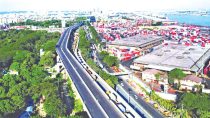
Infrastructure initiatives include electric buses in Dhaka, AI-based traffic management, automated cargo handling at Chattogram Port, and a new inter-district bus terminal, alongside a five-year plan to plant 250 million trees, rooftop solar projects, modern cold storage, and waste-to-energy initiatives. On foreign policy, the government describes its approach as “Bangladesh First,” grounded in equality and mutual interest. Cooperation has expanded with China, Malaysia, the European Union, and Middle Eastern nations across investment, trade, employment, and infrastructure. Bangladesh’s successful bid for the presidency of the 81st UN General Assembly session is cited as a major diplomatic win.
The administration has also worked to tighten border security, monitor airspace, and strengthen defence capacity, alongside coordinated action against illegal migration, cross-border crime, and organised terrorism. Economic recovery remains a top priority, with officials pointing to progress on controlling inflation, building reserves, boosting remittances, and expanding exports. The 2026–27 budget prioritises education, healthcare, and social protection, and the time needed to register a new business has reportedly dropped from a year to 14 days, alongside efforts to recapitalise banks and support new entrepreneurs. The 13th Parliament passed 105 bills in its first 52 working days. The government also points to faster trials in high-profile cases involving violence against women and children, arrests of long-standing fugitives, and international cooperation to extradite accused individuals.
Austerity measures have been introduced as well: leaders’ photographs are no longer displayed at government functions, and VIP seating, lengthy introductions, and personality-driven practices have been discouraged. Tarique Rahman is reportedly using his personal vehicle rather than an official one, covering the costs himself, and has trimmed the size of his convoy. Spending on dinners, hospitality, foreign delegations, and other non-essential items has been cut, officials urged to favour domestic products, work longer hours, and avoid unnecessary expenses, and the government has stressed political tolerance and courtesy toward the opposition. Prime Minister’s Office spokesperson and adviser Mahdi Amin said the government had made substantial progress over its first six months, with greater emphasis on accountability, transparency, human rights, and freedom of expression, and national sovereignty placed at the centre of state policy. He noted that nearly 1.3 million marginal farmers have benefited from waiving loans up to Tk 10,000, including interest, alongside Family Cards, Farmer Cards, expatriate cards, education and healthcare reforms, and investment-friendly policies.
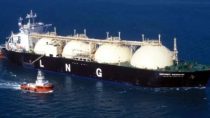
Amin acknowledged, however, that the energy situation has recently become a serious challenge. While fuel prices had stayed relatively stable despite global conflicts, the failure of an FSRU triggered a significant energy shortage. He said the government is working to ease public hardship and restore stability. He added that Tarique Rahman has personally discussed gas supply arrangements through Petronas with Malaysia’s prime minister, and described the Malaysia and China visits, along with progress on the Teesta Master Plan, as milestones that have elevated Bangladesh’s international standing. Government officials and political analysts agree that six months isn’t enough time to transform a country, but they believe the administration has made a solid start. The central challenges ahead, they say, will be reining in the cost of living and overcoming the energy crisis, all while continuing reforms and ensuring the benefits reach ordinary people.