
Govt steps up oversight to curb artificial fertilizer crisis
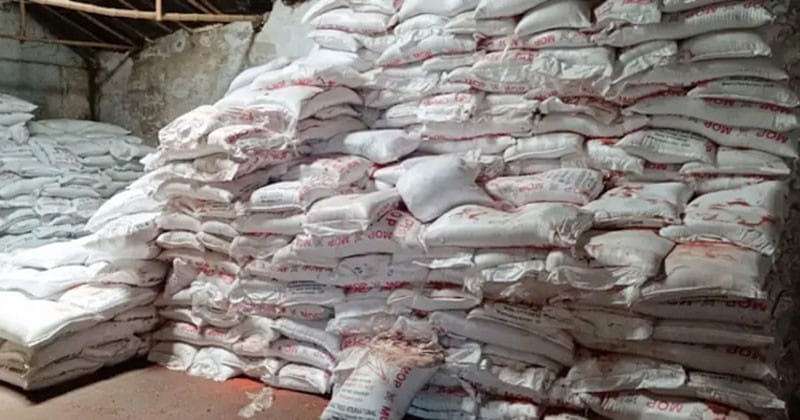
The public has been reassured by government representatives that Bangladesh has sufficient fertiliser stockpiles to ensure farmers receive supplies continuously during the current growing season. Data from the Ministry of Agriculture indicates that official allocations and regional demand are consistently in balance. Allocations in fiscal year 2024–2025 met demand in four important months: July (13,833 MT), August (9,807 MT), October (15,156 MT), and November (23,883 MT). With recent July allocations matching demand at 11,651 MT and 12,269 MT, August at 13,532 MT and 13,492 MT, October at 15,789 MT, and November at 23,969 MT, this balanced pattern continued through 2025–26 and 2026–27.
As of August 19, 2026, national inventory measures show a strong stock buffer across critical fertilisers, with overall inventory hitting 58.05 lakh metric tonnes and combined opening stocks at 17.674 lakh metric tonnes. In particular, the initial stock of urea was 6.142 lakh MT compared to a stock of 26.20 lakh MT. The estimated demand for 2026–2027 was 5.144 lakh MT via BCIC and 5.179 lakh MT via BADC. DAP opened at 4.588 lakh MT alongside 14.85 lakh MT total stock, MoP reached 2.849 lakh MT against 9.50 lakh MT, and TSP recorded an initial stock of 4.095 lakh MT against a total stock of 7.50 lakh MT.
In response to concerns raised by farmers in the north, ministry representatives attributed localised impediments to intentional market manipulation by partisan political networks associated with the overthrown government. During crucial Boro and Aman planting cycles, the government has established active field monitoring to provide fertilisers directly to farmers at officially regulated rates in order to combat these manufactured crises. In order to safeguard total crop yield and manage farming expenses, it is still essential to prevent supply uncertainties during these seasons of peak cultivation.
Md. Selim Khan, the recently appointed Agriculture Secretary, had operational meetings with Divisional Commissioners, Deputy Commissioners, and Department of Agricultural Extension (DAE) representatives while inspecting the Rajshahi and Rangpur divisions. Deputy Commissioners and Upazila Nirbahi Officers (UNOs) throughout the country are instructed by directives from the Cabinet Division and Agriculture Ministry to uphold efficient supply chains, closely monitor inventories, and take firm legal action against hoarding, market manipulation, or rumor-mongering.
Official pronouncements reiterate that there is no need to be alarmed by national stockpiles. Real-time delivery tracking, quick discovery of localised problems, and open upazila-level control are the agricultural administration’s top priorities going ahead in order to match allocations with actual ground demand and protect national food security.