Bangladesh Needs Sound Statecraft, Not Panic
Shamsul Alam
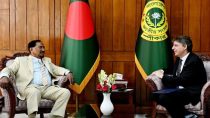
Today’s newspapers remind us that the state has no holiday. A new president has taken oath, new faces have joined the cabinet, a new system is being introduced to ensure attendance at hospitals, drones are being deployed to monitor Dhaka’s traffic, an official statement from across the border was issued and withdrawn, while uncertainty over gas supply continues at home. The state has opened several doors, while its windows remain mysterious Yesterday, Mirza Fakhrul Islam Alamgir took oath as Bangladesh’s 23rd president. Congratulations, Mr President. On the same day, four ministers and two state ministers joined Prime Minister Tarique Rahman’s cabinet New people in important state positions naturally create hope. But the bigger question is how much they can change old practices. The real test begins the next morning, with files, officials, budgets and public demands. The phrase “under consideration” seems older than several ministries combined.
The initiative to introduce biometric facial recognition to ensure attendance by doctors and health workers in government hospitals is more than an administrative measure. If the state expects citizens to follow rules, its employees must follow them too. Could AI one day allow citizens to report whether their work was completed, who delayed it, or who demanded money? Such information could be analyzed and sent to relevant authorities. If introduced across public institutions, the state could recognize not only an employee’s face but also hear the citizen’s voice The issue of attendance has another meaning in public health. A preventive oral cholera vaccination campaign has begun in 14 high-risk upazilas and areas. Protecting a child from disease is never a small project for a poor family; sometimes the state’s most beautiful face is seen at a village vaccination centre.
Dhaka is also about to see another face of the state- the face in the sky. The DMP plans to use drones to monitor roads and intersections. Yet a drone can only show where vehicles are stuck; humans must explain why. Limited roads, too many vehicles, illegal parking and weak traffic management remain the real problems. The drone can collect evidence; reforms must follow. In that sense, it is also a mirror for the state.
That mirror has now crossed the border and entered diplomacy. An Indian government statement concerning Prime Minister Tarique Rahman’s possible visit to Delhi was published and later withdrawn, creating speculation on social media. At the same time, Indian President Droupadi Murmu congratulated Bangladesh’s new president and expressed interest in strengthening bilateral relations. One statement disappeared; another offered goodwill. That is diplomacy: one hand offers a handshake while the other keeps the calculations. Should Bangladesh-India relations remain tied to one individual, one incident or one extradition issue? Certainly not. Relations between states should last longer than individuals. If extradition is a legal matter, it should follow the law. Relations with a neighbour should be based on mutual interests and respect.
In a changing geopolitical environment, the more important question is not “Whose side are we on?” but “Where do our interests lie?” Alliances may be discussed, but Bangladesh’s foreign policy must remain centred on its economy, security, trade, energy and sovereignty. Alliances can be made, but a country must keep its own head. Major powers carry calculators; smaller states should have them too—and first calculate their own interests. The biggest calculation at home is gas. The suspension of LNG supply from Excelerate Energy’s terminal may deepen the crisis. When supplies fall, factories slow down, electricity generation comes under pressure, production costs rise and the impact reaches the market.
Revenue must increase, development plans must be made and long-term railway investment must continue. But if the state plans for the future while today’s industries lack gas, that future begins to look like paper. Future railway lines must be planned, but the economy also needs energy today. “Today” and “tomorrow” must therefore sit at the same table Social media has changed how people understand the state. They want not only to know what has been decided but also what it means. News, commentary, speculation and rumours now arrive together. Information travels faster, but falsehood does too. Going viral does not mean being true.The wider world is unsettled. The Iran-US conflict, tensions around the Strait of Hormuz and threats of new sanctions are creating uncertainty in energy markets. Bangladesh may be far from Hormuz, but its effects can reach homes through energy prices and transport costs. The war in Ukraine sends the same lesson: while war technology becomes more advanced, human suffering remains painfully old.
There is no longer such thing as distance. Hormuz can affect Dhaka’s markets, wars in Europe can affect Asian economies, and a statement from Delhi can become a topic in Dhaka overnight. For Bangladesh, the greatest need today is therefore not panic, but sound statecraft. A new president has arrived, new ministers have taken office, accountability systems are being introduced and public-health programmes are underway. These are signs of change. But the ultimate test is simple: Has life become easier? Can patients find doctors? Was a child protected from cholera? Has traffic time been reduced? Did gas reach the factory? Are relations with neighbours proceeding with dignity? Do people feel more secure about their future?
That is all today’s Provatbarta has to say: Let the doors remain open. Let the windows remain open. And let the light of the state’s rooms ultimately fall into the homes of its people. Let new people come, new plans emerge and new technologies arrive. But let air enter the rooms of the state. Power and plans may enter through doors; public trust usually enters through windows. Once trust leaves, it cannot be found by drones.