Conflict is not the answer; harmony is the way forward
Dr. Mir Md Akhiruzzaman
The fundamental basis of human rights is the right to the inherent dignity, freedom, equality, security and justice of every human being. The progress of a state cannot be assessed solely through economic growth, infrastructure or technological advancement. Rather, the true measure of progress is how safely, respectfully and without discrimination ordinary people are able to live. This truth is as important to national life today as it is increasingly relevant on the international stage.
First, one point needs to be clarified. World Humanitarian Day is observed every year on August 19. The United Nations General Assembly declared August 19 as World Humanitarian Day in 2008 to commemorate the deaths of 22 humanitarian aid workers in the bombing of the United Nations Canal Hotel in Baghdad, Iraq, on August 19, 2003. The purpose of the day is to call for the protection of the lives, dignity and well-being of people affected by crises, as well as the safety of humanitarian workers. On the other hand, the United Nations General Assembly adopted the Universal Declaration of Human Rights on December 10, 1948; that historic day is observed as Human Rights Day.
There is therefore a profound connection between the two observances. While human rights provide the moral and international foundation for protecting people’s rights, humanitarian assistance represents the practical effort to protect their lives and dignity during war, conflict, disasters, displacement and other crises.
Following the devastating experience of World War II, the world realised that people must have certain fundamental rights beyond state power, war, oppression and discrimination. It was on the basis of this historic realisation that the Universal Declaration of Human Rights was adopted on December 10, 1948. The declaration recognises fundamental rights such as the right to life, liberty, personal security, equality before the law, freedom from torture, justice, freedom of expression, education, work, social security and a life of dignity.
The philosophy expressed in Article 1 of the declaration is particularly significant: all human beings are born free and equal in dignity and rights, and people should treat one another in a spirit of brotherhood. In other words, human rights are not merely citizens’ claims against the state; they also represent people’s responsibilities towards one another. This is the most important lesson for today’s world. If hatred, revenge, violence and division continue to grow in the name of establishing rights, the fundamental purpose of human rights itself becomes weakened. The most sustainable path to establishing rights is through law, justice, dialogue, empathy and mutual respect.
The humanitarian situation in the world today is extremely concerning. According to United Nations data for 2026, more than 252 million people were in need of urgent humanitarian assistance and protection at the end of May. Compared with the estimate made at the beginning of the year, the number of people in need had increased by about 13 million. At the same time, approximately $33.66 billion was required for humanitarian response plans, but only $8.21 billion had been received by the end of May, or about 24.4 percent of the requirement. These figures are not merely a calculation of a financial shortfall. Behind every number is a person, a family or a displaced community. In some places, homes are being destroyed by war; elsewhere there are shortages of food and water, hospitals and schools are coming under attack, while in other places people are being forced to cross borders in search of safety after leaving their own countries.
The United Nations’ 2026 Sustainable Development Goals report said that at least 37,163 civilian deaths were documented across 20 armed conflicts in 2025. Although this was 23 percent lower than the 48,111 civilian deaths recorded in 2024, the figure remains horrifying. Nearly one in every five civilians killed in conflicts in 2025 was a child. At the same time, the number of forcibly displaced people had reached approximately 117 million by June 2025. In other words, although the intensity of warfare may have declined somewhat, the depth of the humanitarian crisis remains dangerously high. Conflict does not merely take lives on battlefields; it also damages education, healthcare, food security, employment, families, social protection and the prospects of future generations.
Humanitarian situations around the world
Lebanon: Humanitarian workers and ordinary people are also being targeted amid conflict. A social worker was killed along with his parents and young son in a bombing at their home. The incident highlights the horrifying reality facing humanitarian workers.
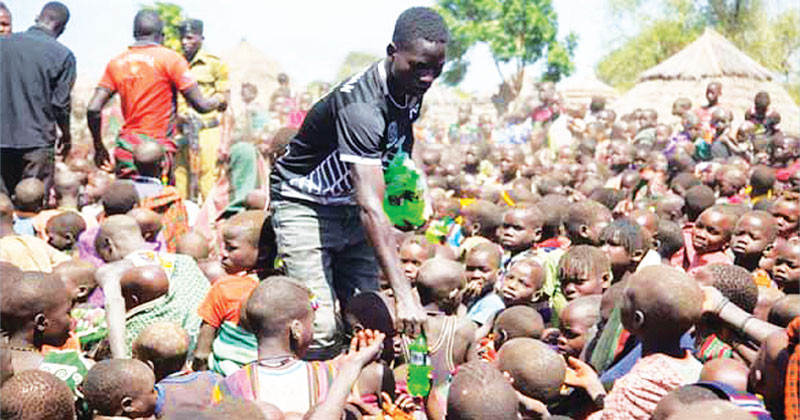
Sudan: Approximately 700,000 people are living in the Tawila displacement camp. The need for food, healthcare, security and other humanitarian assistance there is extremely acute.
Mexico: In the state of Querétaro, women are being connected with cultural heritage and the modern clothing industry while also being educated about human rights, sexual and reproductive health, and the prevention of gender-based violence.
Maldives: Initiatives are being taken for young people to provide sexual and reproductive health services, essential life skills and opportunities to enhance their future capabilities.
Although the nature of crises varies from country to country, the need to protect people’s lives, dignity, security and rights is universal. Human rights can be established through dialogue, humanity, harmony and mutual respect—not conflict. Another horrifying aspect of the humanitarian crisis is that those who stand beside vulnerable people are increasingly becoming targets of attacks themselves. According to the United Nations, at least 326 humanitarian workers were killed in 21 countries in 2025. The number of humanitarian workers killed over three years has exceeded 1,000.
In its 2026 World Humanitarian Day message, the United Nations Population Fund said that nearly 1,000 healthcare workers had been killed over the past three years and that 350 humanitarian workers were killed in 2025, making it the second-highest number of such deaths on record. Women and girls in particular face additional risks of sexual violence, denial of healthcare and insecurity in conflict zones. Attacks on humanitarian workers, doctors, midwives, ambulance drivers or rescue workers are not merely attacks on individuals; they also strike at the systems responsible for saving the lives of countless people in crisis. Therefore, respect for international humanitarian law and protection of medical and humanitarian facilities are more important today than ever before.
The Constitution of Bangladesh also recognises human dignity, equality and fundamental rights as important foundations of the state structure. Article 27 of the Constitution guarantees equality of all citizens before the law and equal protection of the law. Article 28 establishes the principle of non-discrimination on the grounds of religion, race, caste, sex or place of birth and recognises equal rights for men and women. Therefore, human rights are not a foreign concept for Bangladesh; they are also one of the foundations of our constitutional system. However, recognition of rights in law and the effective enjoyment of those rights in real life are two different matters. Establishing rights in practice requires the rule of law, an independent and effective judicial system, accountability, a firm stance against corruption, reduction of discrimination, citizens’ security and public trust in state institutions. The National Human Rights Commission of Bangladesh regularly monitors the human rights situation and publishes reports.
One of the greatest examples of Bangladesh’s humanitarian responsibility is the Rohingya crisis. According to data from June 2026, the number of registered Rohingya refugees in Bangladesh was approximately 1.217 million. Of them, around 1.166 million were staying in Cox’s Bazar and approximately 33,800 in Bhasan Char. Since 2017, Bangladesh has provided shelter to a huge number of displaced people, setting a major example of international humanitarianism. However, a protracted refugee situation creates growing uncertainty not only for the host country but also for the refugees themselves. Unless an environment conducive to voluntary, safe and dignified repatriation is created, the crisis will continue for years.
The writer is a banker and information systems researcher.