PM’s Directive Overlooked, Excuses Mount Over Terminal Removal
Bangladesh Road Transport Workers Federation, the country’s largest organization of road transport workers, has 253 affiliated unions across the country. According to the Labour Ministry, there are 932 organizations representing owners and workers in the road transport sector. These organizations have been accused of collecting money from the transport sector in various ways. Several research and investigative reports have also found allegations of involvement by politically influential individuals, city corporations, municipalities, local authorities, members of law enforcement agencies, and some government officials and employees in extortion activities.
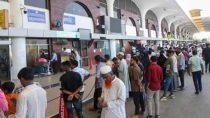
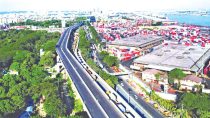
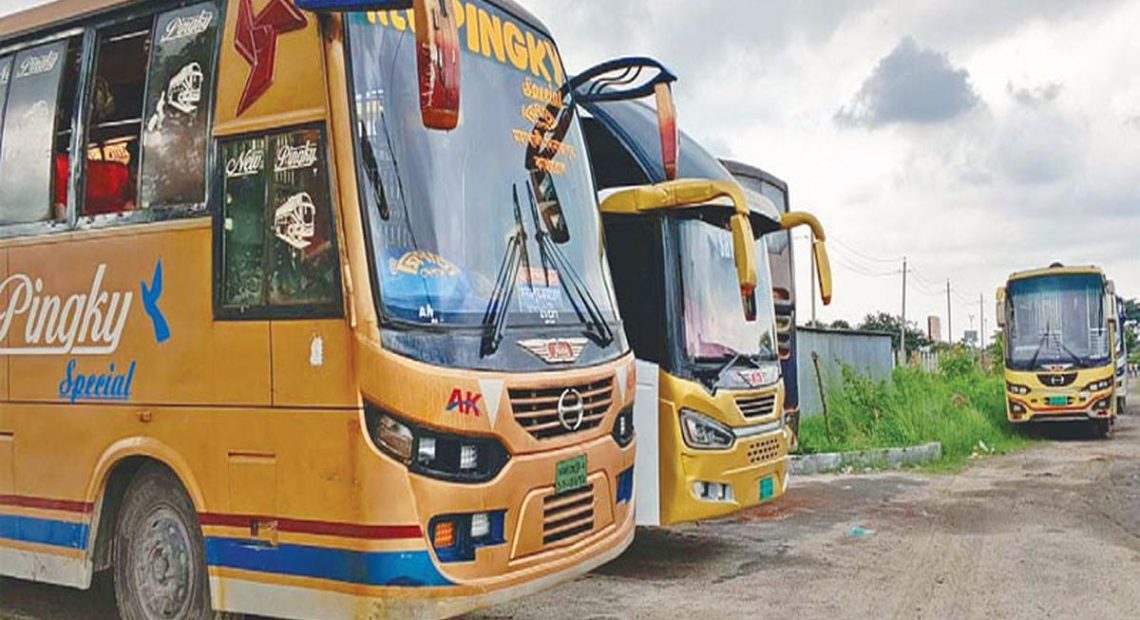
The initiative to relocate Dhaka’s bus terminals outside the capital, taken in line with the Prime Minister’s directive, has also largely stalled. So far, work has begun only to relocate the Mohakhali Bus Terminal to a temporary bus depot in Purbachal, Narayanganj. The depot was inaugurated on July 16 in the Gutiab area of Sector 2 in Purbachal. Construction of the depot is underway on 7 acres and 13 decimals of land. Around 200 buses are now sent there every day, bringing considerable order back to the Mohakhali terminal. Previously, queues of buses would stretch as far as Hatirjheel, but that is no longer the case.
However, no final decision has yet been made on where the other three terminals will be relocated. The site for the proposed depot in Kanchpur, Narayanganj, has not been finalized. The situation is similar for the Gabtoli terminal. Although Hemayetpur near Savar was initially selected as the relocation site, work has not yet begun. The initiative to move the Fulbaria terminal to Keraniganj has also made little progress. There is sufficient government land there, but local sand traders have occupied parts of it and are extracting sand illegally. Locals allege that they pay substantial sums to officials responsible for the Bangladesh Inland Water Transport Authority (BIWTA) and continue their business by occupying the Buriganga riverbank.
There are also areas used for brick trading. Locals say the government could clear these sites and construct a bus depot if it wished. An office of the Bangladesh Road Transport Authority (BRTA) is also located near the Buriganga Bridge. Relocating the office elsewhere could make the site available for a bus depot. Questions have therefore arisen as to why the terminal relocation process remains stalled despite the Prime Minister’s directive. There is also speculation over whether transport owners are reluctant to relocate the depots or whether extortion-related interests are involved. Workers say sending buses to the new depot has increased fuel costs. They also cite the lack of food hotels and mechanics as reasons for their concerns.
However, those familiar with the matter consider these to be excuses, as lobbying has already begun with the owners’ association to establish shops at the Rupganj depot. Leaders of the owners’ association say permission is not being given to establish shops without a proper plan because construction of the depot is still underway. They argue that unplanned shops could create disorder and prevent buses from leaving the depot on time. Once construction is complete, there will be opportunities to establish the necessary shops. Although there are no precise statistics on extortion in the transport sector, information from a government intelligence agency reportedly shows that Tk 2.21 crore is collected daily through extortion in Dhaka’s transport sector.
A significant portion is reportedly collected in the name of transport owners’ and workers’ associations. During the previous Awami League government, workers’ organizations led by Shajahan Khan and owners’ associations led by Khandaker Enayet Ullah were accused of openly collecting large sums of money across the country. Although the amount has reportedly decreased under the current government, transport owners say they are still required to make such payments. One transport owner said a bus travelling from Dhaka to Cox’s Bazar has to pay money at around 30 points along the route. The amount ranges from Tk 30 to Tk 40 at each point. Ultimately, the cost is passed on to passengers. The collection reportedly stopped for a few days after August 5, 2024.
Sources among transport owners’ and workers’ leaders said the collected money is spent on organizational operations, transport management and allowances for leaders. However, sector insiders allege that much of the collected money has no visible expenditure trail and that portions are distributed among influential political and administrative figures. Workers at the Mohakhali terminal said extortion is no longer collected openly. Counters maintain records of how many buses leave each day. In the evening, representatives of the workers’ organization and owners’ association collect money based on the number of buses. As a result, the collection of such payments is no longer visible publicly.
Saiful Alam, secretary-general of the Bangladesh Road Transport Owners Association, said they are working to implement the Prime Minister’s directive. He said work on the Rupganj depot is progressing rapidly and efforts are also underway regarding the remaining three terminals. Relocating all four terminals outside Dhaka would restore greater discipline to the transport sector, he said. Although fuel costs would increase, the owners would bear the additional expense and fares would not be increased. Denying allegations of extortion, he said transport operations involve various expenses, including office staff, waybills, ticketing, counter managers, serial managers and maintenance workers. These costs are collected from transport operations under mutual agreements between owners and companies, he said, adding that such collections should not be considered extortion.