Delhi cannot evade responsibility for Hasina’s provocative remarks: Rizvi
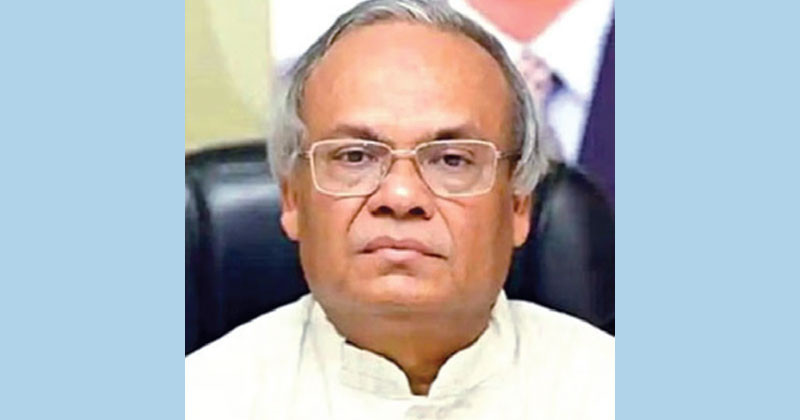
Exclusive interview with Ruhul Kabir Rizvi — Part 1
Mirza Fakhrul Islam Alamgir resigned after being elected president, and BNP Standing Committee member Ruhul Kabir Rizvi has taken charge as the party’s new acting secretary general. He is the first person to assume the post of secretary general after rising through the leadership ranks of Jatiyatabadi Chhatra Dal. His rise in politics began through the anti-Ershad movement in the 1980s; at the time, he was RUCSU vice-president and the first elected president of Chhatra Dal. Although he was seriously injured after being shot in the abdomen during the 1988 movement, he did not retreat from politics.
Later, he served as president of Jubo Dal and held various important central positions in the party. Particularly during the political crisis of 1/11 and the period of the previous Awami League government, he kept the party’s activities operational by continuously staying at the Nayapaltan central office despite adverse circumstances. Despite hundreds of political cases, several periods of imprisonment and physical illness, he regularly held press conferences and ensured the party’s presence on the streets through “flash processions.”
When BNP Chairperson and former Prime Minister Begum Khaleda Zia was in prison and current Prime Minister and BNP Chairman Tarique Rahman was leading the movement to restore democracy in the country while in exile in London, Ruhul Kabir Rizvi could be seen almost every day at the party’s central office. He appeared at press conferences whenever any crisis emerged. For 15 consecutive years, this man spoke for the country and the party’s needs.
It is because of his unwavering loyalty to the Zia family, rising above personal gains and losses, and his dedication as a full-time political worker that Rizvi, who enjoys the trust of grassroots leaders and activists, was chosen for the post of secretary general. After four decades of struggle and political activism, he has assumed this important position in the party.
After taking charge as acting secretary general, he spoke to Daily Inqilab yesterday. He discussed the past movement against authoritarianism, contemporary politics and the party’s future plans.
Inqilab: Welcome.
Ruhul Kabir Rizvi: Many thanks to you. Thank you for inviting me.
Inqilab: Mr Ruhul Kabir Rizvi, you are now the acting secretary general of BNP. You have been closely involved in BNP politics for a long time. Now you have been given a major responsibility in the party. Essentially, you have an important role in running the party. How do you feel after receiving this responsibility?
Ruhul Kabir Rizvi: I have already spoken about my feelings. Undoubtedly, I am happy. The fact that the party and the party chief, our chairman and Prime Minister Tarique Rahman, considered me for this responsibility is what makes me happiest. I am very pleased about it.
At the same time, I am also afraid. There is a sense of fear about whether I will be able to properly fulfil the responsibility entrusted to me with his confidence. If there is any deviation or if I fail to perform my responsibilities properly, that also creates a sense of fear in my mind.
So, I have two mixed reactions. I hope that since I have worked as senior joint secretary general for nearly 10 years, it will be my responsibility to work in line with the way the party wants and the way the party’s principal leadership wants to build the party, and to implement those decisions.
Inqilab: You said you have worked as senior joint secretary general for 10 years. You know the party’s strengths and weaknesses and its good and bad sides very well. Now that you have become acting secretary general, which tasks will you give greater priority to?
Ruhul Kabir Rizvi: Our main task is to conduct organisational activities. Alongside that, there are various political issues. Now a party elected by the people has formed the government. The party is carrying out positive initiatives and trying to implement the commitments it made before the election. There are many obstacles, but the government is working by overcoming them. If these activities are not properly presented to the people, they will not know about them or will know only partially. This is the party’s responsibility.
We have to go to the people, from the grassroots to the national level, taking everyone with us. We have to inform the people that the government led by Tarique Rahman is working for public welfare, social protection, infrastructure development and people’s empowerment. Initiatives are being taken to increase people’s employment opportunities and financial capacity. For example, the government has also included honorarium allowances for imams and muezzins, as well as religious leaders from different religious communities.
Inqilab: It is being said that Sheikh Hasina may return to the country by December. There is pressure from India to arrange VIP status and SSF security for her or to create political space for the Awami League. What is your view on this?
Ruhul Kabir Rizvi: I do not know whether pressure is being exerted from anywhere. However, the Bangladesh government has repeatedly called for Sheikh Hasina’s extradition. She is a convicted accused and a neighbouring country has given her shelter. A person who has oppressed the people of Bangladesh and is responsible for the killing of students and young people must be brought under the law. Her trial is ongoing and she has already been sentenced in several cases. Therefore, she should be returned to Bangladesh and brought before the law.
Inqilab: But while the government is quite vocal about bringing Sheikh Hasina back, there does not appear to be similar activity to bring back nearly 500 Awami League leaders and activists who are accused of being involved in various crimes and have fled to India or other countries and bring them to justice.
Ruhul Kabir Rizvi: When the person who did not hesitate to shed the blood of her own country’s people to remain in power is brought to justice and given exemplary punishment, those who have fled and are making boastful statements from there will also see that there will be no environment to provide them shelter.
Inqilab: Sheikh Hasina has been making provocative statements through various audio messages from India. The Bangladesh government has protested. India says it is a democratic country and it is her freedom to say whatever she wants. Is India’s statement enough to evade responsibility?
Ruhul Kabir Rizvi: A responsible country cannot evade responsibility in this way. When they know that a person has committed crimes in her own country and taken shelter in another country, giving her shelter is one matter. But if that person uses the country where she has taken shelter to give instructions for creating instability in her own country, that is an extremely serious matter.
As far as I know, in many countries around the world, people who have been granted asylum face restrictions on their political activities in such circumstances. In the case of Bangladesh, Sheikh Hasina is being allowed to speak and conduct political activities from there. This damages the relationship of mutual respect between our two countries.
Inqilab: There is always a major challenge for a party in government. The political party disappears within the government and a distance develops between ministers and MPs and the party workers. As acting secretary general, what role can you play in this regard?
Ruhul Kabir Rizvi: Ministers and MPs are members of the party. They hold various positions in the party or are included as primary members. The message needs to reach them that they should remain connected with the people in their respective areas and stand beside the people together with party leaders and activists.
At the same time, it must also be ensured that party leaders and activists do not engage in activities beyond their limits. Because if activists become involved in unethical or unjust activities, people become dissatisfied and annoyed. This is also the responsibility of MPs and ministers.
Ministers must be held accountable in two ways. First, to the party. An example of the process initiated by our Prime Minister is that on May 9, several ministers had to be held accountable before grassroots leaders of the party. District presidents and general secretaries questioned the concerned ministers about why the work assigned to their ministries had not been completed or how it would be completed. The ministers answered those questions. In other words, ministers’ accountability to the party’s grassroots has also been ensured.
Second, they must remain accountable to the people. In Parliament, the opposition will raise various questions and ministers will have to answer them. Through this, the government will remain accountable. The media will also question ministers. The answers they provide will also be part of their accountability to the people. If the accountability of a democratic government is ensured in this way, the path of democracy will become stronger and freer of obstacles.
Inqilab: You study yourself and enjoy reading. In terms of BNP’s political and ideological framework, a clear written narrative on various issues including religion, culture, economy and foreign relations is not easily available to ordinary party workers or researchers. What role will you play in developing these issues and conveying them to party workers?
Ruhul Kabir Rizvi: We have these issues. Many of them are mentioned in our party constitution’s declaration and in the 19-point programme. BNP’s thinking on religion, culture, women’s empowerment, employment for unemployed young people and various other issues is outlined there. Over time, these ideas have been further developed. Through Vision 2030, they were made more modern and relevant to the times. Later, they were made more concise and practical in the form of the 31-point programme.
After August 5, our leaders and activists widely promoted these programmes from house to house, door to door and in various places. Their reflection can also be seen in various activities of the government. For example, the Family Card, Farmer Card, canal excavation, tree plantation and various other programmes.
There is also continuity in how BNP views the state and what policies it follows in social welfare, education, employment and various other sectors. President Ziaur Rahman initiated a process in the field of education. Later, Begum Khaleda Zia took it further, and now that continuity is being carried forward under the leadership of Mr Tarique Rahman.
Let me give you an example. At that time, the literacy rate in the country was below 20 percent. Ziaur Rahman undertook extensive programmes to at least teach people how to sign their names. Initiatives were taken for mass education, mass literacy, night schools and establishing schools in villages and rural areas. Even university and college students were involved in mass literacy programmes when they returned home during holidays. It was an initiative that was almost like a revolution.