
Salafi cannot head religious affairs ministry in a Madhhab-Tariqa majority country: Jamiat-e-Modarresin
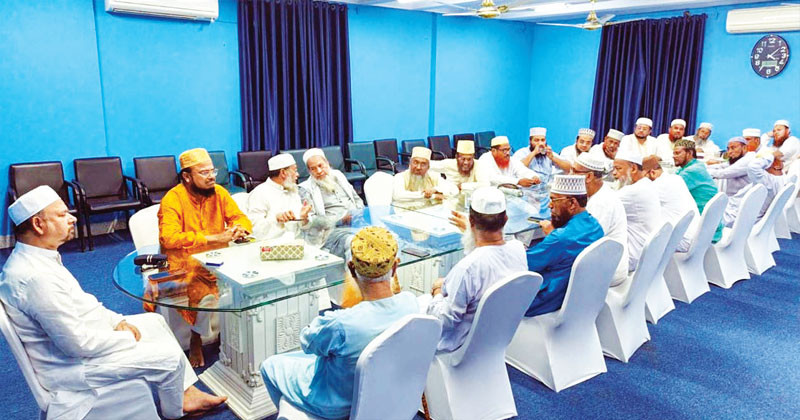
A meeting of the leaders of Bangladesh Jamiat-e-Modarresin was held yesterday. The meeting, chaired by the organisation’s president Mr. A M M Bahauddin and moderated by Principal Maulana Sabbir Ahmed Momtazi, discussed the country’s current religious and social realities. In a statement unanimously adopted at the meeting, the leaders said the overwhelming majority of Muslims in Bangladesh have long been associated with the country’s madrasa-based Islamic traditions and Tariqa-Tasawwuf practices. They said the current government has gained public confidence with the support and cooperation of the country’s Alims, Pirs, Mashayekhs, followers of different schools of thought and religious people. In such circumstances, appointing a representative of an ideology that is not compatible with the religious beliefs and traditions of the majority of the people to the Ministry of Religious Affairs could create concern and dissatisfaction among the public, they said.
The leaders said there should be no objection to followers of Hanafi, Salafi or other schools and traditions practising their religious lives according to their respective beliefs and views. Differences of opinion can exist in Islam, and in a democratic and pluralistic society, everyone has the right to hold and express their own beliefs and views. However, they said, while assigning important state responsibilities related to religious affairs and education, it is essential to give due importance to the religious sentiments, traditions and beliefs of the majority of the country’s people.
The statement further said the Ministry of Religious Affairs is not a platform for promoting or establishing any particular ideology, but an important institution for earning the confidence of and providing services to the country’s religious population. Therefore, a person should be appointed to lead the ministry who respects the religious traditions, beliefs and practices of the majority of Muslims in the country and is capable of maintaining cordial relations with Alims, Pirs, Mashayekhs and various religious institutions.
The leaders expressed concern that ignoring the country’s religious realities and the sentiments of the majority while making decisions could lead to unnecessary disagreements and social instability. Instead of putting the government in confrontation with the people, they said, the priority should be to establish mutual respect, harmony and unity among people belonging to all religious groups and schools of thought. At the meeting, the leaders strongly urged the government to reconsider the current appointment to the Ministry of Religious Affairs. If necessary, they said, the incumbent could be assigned to another ministry or an appropriate position, while a qualified and acceptable person who respects the mainstream religious traditions of the country’s majority Hanafi followers and Ahlus Sunnah wal Jamaat should be appointed to head the Ministry of Religious Affairs.
They further said people of different religions and ideologies live in Bangladesh and will continue to do so in the future. Everyone practising their respective religion and ideology freely is normal and acceptable. However, they said, when making appointments to important state positions responsible for religious policymaking, the country’s religious realities, public confidence and national harmony should be given special consideration. Bangladesh Jamiat-e-Modarresin believes that the government’s primary objective should be to preserve mutual respect, religious harmony and national unity rather than differences and divisions. The organisation strongly urged the government to appoint to the Ministry of Religious Affairs a person who is acceptable to all and respectful of the country’s mainstream religious traditions, while respecting the religious sentiments of the majority of the people.