The Greatest Human Being of All Time
Ruhul Amin Khan
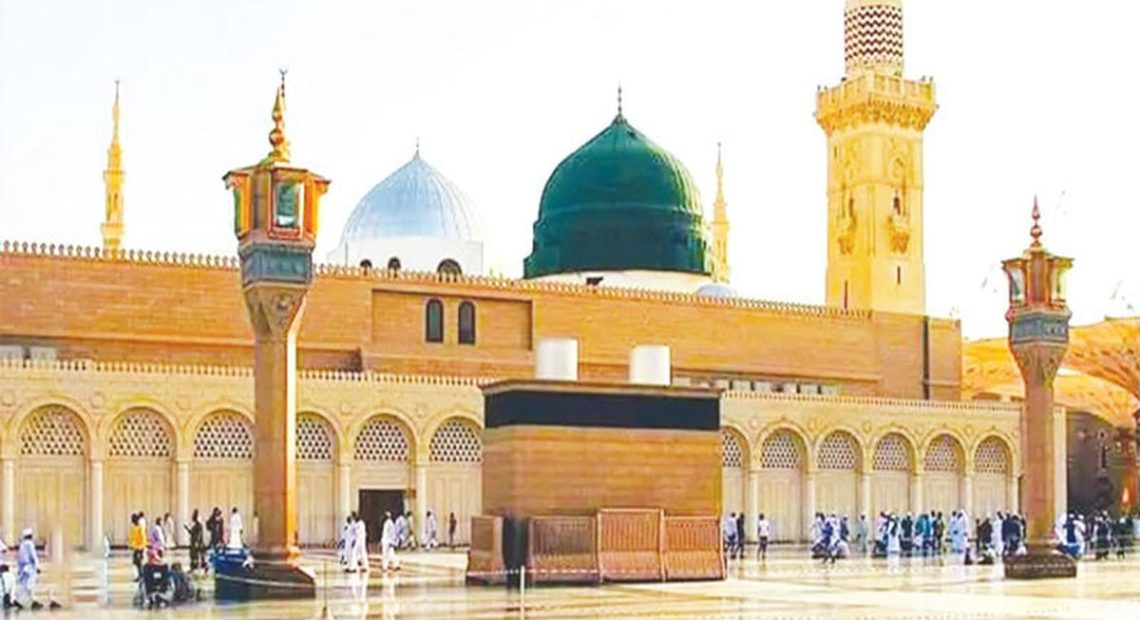
Today is the holy occasion of Eid-e-Milad-un-Nabi (S.), commemorating the birth of Hazrat Muhammad Mustafa (S.), regarded as the greatest human being in history. His influence was felt throughout the world during his lifetime and has continued across centuries. While times, societies and human needs change, his teachings and example remain relevant across generations and circumstances. He is regarded as the greatest and noblest of creation, the beloved of Allah and Rahmatul-lil-Alamin– the Mercy to the Worlds. No one as complete and endowed with such a wealth of virtues has appeared on Earth, nor will anyone equal him in the future. He is incomparable and without equal.
The great poet Imam Busiri wrote:
“Munazzahun an sharikin fi mahasinihi
Fa jauharul husni fihi ghairu munqasimi.”
(He is beyond comparison in his virtues; the essence of beauty is uniquely embodied in him.)
Allah created beauty, virtues and abilities and, according to Islamic belief, brought their finest qualities together in one person and sent him to the world as Shamsuddoha, Badruddoja, Nurul Huda and Khairul Wara– Hazrat Muhammad Mustafa (S.).
The great poet Sheikh Saadi wrote:
“Balaghal ula bi kamalihi
Kashafad duja bi jamalihi
Hasunat jamiu khisalihi
Sallu alaihi wa alihi.”
(He reached the highest heights through his perfection; his beauty dispelled darkness, and all his qualities were noble and beautiful. Blessings upon him and his family.)
No poet’s imagination, philosopher’s thought, writer’s pen or musician’s melody can fully express his greatness. Even the finest words and most precious expressions from every language would be insufficient to portray his beauty, character and virtues. He is described as the finest creation of the Great Creator, Muhammadur Rasulullah (S.). No comparison can adequately capture his greatness.
“La imkânu sanâuhu kamâ kâna haqqahu / Bad az Khoda buzurg tui qissa mukhtasar”— “After Allah, beloved of Allah, your rank is the highest.”
Allah honoured him in unparalleled ways. His name was associated with Allah’s name, his remembrance was exalted, and he was praised in the Holy Quran. He was invited to the Arsh-e-Azim and honoured with divine vision. He was given the greatest community and the privilege of intercession on the Day of Judgment. Islamic tradition also holds that his coming was foretold in earlier revealed scriptures.
He is described as Khatam-un-Nabiyyin, the Seal of the Prophets; Sayyidul Mursalin, the Master of the Messengers; Shafiul Muznibin, the Intercessor for sinners; and Anisul Gharibin, the companion of the lonely. He is Khulukun Azim, possessing magnificent character: “Indeed, you are of a great moral character.” He is Rahmatul-lil-Alamin: “We have not sent you except as a mercy to the worlds.” He is Khatam-un-Nabiyyin, the final prophet, and Uswatun Hasanah, the best example for believers.
He is described as a prophet, witness, bearer of glad tidings, warner, caller to Allah and a radiant lamp. The Holy Quran describes him as a light from Allah, while a Hadith states that his character was the Quran. His words and actions are presented in Islamic scripture and tradition as guided by divine revelation. Following him is described as an expression of love for Allah, while remembering him is associated with remembering Allah. He is also described as being closer to believers than their own selves and as compassionate and merciful toward them. His life was an example of justice, compassion and service to humanity. From his earliest years until the end of his life, he stood beside the poor, distressed, hungry, orphaned, helpless and oppressed. He comforted them, wiped away their tears, eased their suffering and provided shelter. He broke down barriers between the privileged and the underprivileged and challenged divisions based on race, tribe and language. He established the dignity and rights of women, promoted equality, friendship, brotherhood and compassion, and sought to end exploitation, deprivation, hatred, violence and conflict. He transformed individual, family, social and national life and united a deeply divided people.
Despite being a powerful leader, he lived humbly. Even when his enemies were under his control, he chose forgiveness over revenge. Those who had persecuted him, expelled him from his homeland, attacked him and sought his destruction were ultimately forgiven when they came under his authority. He embraced them instead of taking revenge. He transformed a society immersed in disbelief, superstition, ignorance and moral degradation through the message of monotheism, knowledge and unity. His followers, once forced to flee their homeland, became a powerful community within a short period, winning successive battles and defeating major powers of the contemporary world.
He transformed the Age of Jahiliyyah, or ignorance, into a golden age, turned desert-dwelling people into a world power and changed the course of history. He gave birth to a new civilization and culture and established the sovereignty of Allah. Such a revolution, the article concludes, had never occurred before and would never be repeated. Its leader was unique, incomparable and without equal.
Therefore, the day of his birth is celebrated as the greatest day in human history—the day of a great transformation, supreme joy and the fulfillment of humanity: Eid-e-Milad-un-Nabi.