
China’s Masterstroke in the Middle East Challenges US Influence
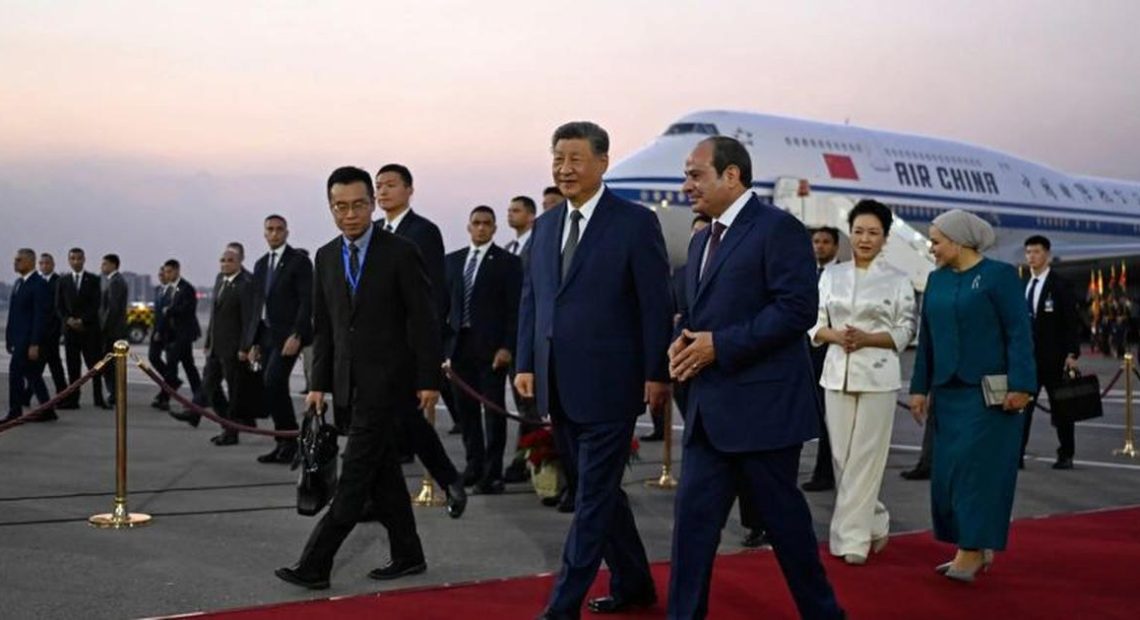
Chinese President Xi Jinping has directly challenged US influence in the Middle East with a surprise visit to Egypt, a traditional military and diplomatic ally of the United States in the region. During his first visit to Egypt in 10 years, President Xi met with Egyptian President Abdel Fattah Al-Sisi. His three-day visit comes at a time when renewed conflict has erupted between the United States and Iran, posing serious threats to regional stability and energy markets.
Upon arriving in Cairo, Xi Jinping received a red-carpet welcome and a ceremonial reception. President Sisi himself greeted him at Cairo airport. During their meeting, China and Egypt described each other as “close brothers” and recalled their shared history of opposing imperialism. Analysts believe Mr. Xi is seeking to present Beijing as an alternative and responsible global power at a time when regional allies’ confidence in Washington has been somewhat shaken.
Following the meeting, China’s state news agency Xinhua reported that several important agreements were signed in areas including artificial intelligence (AI), bilateral trade, supply chains and other economic sectors. Without directly naming the United States, Xi Jinping said, “Extra-regional major powers should abandon double standards and respect the sovereignty of Middle Eastern countries.” Egypt also reiterated a joint position against targeting specific religions or groups in the name of combating terrorism.
Although Egypt receives $1.3 billion in military assistance from the United States every year, its trade and technological ties with China have grown dramatically over the past decade. Bilateral trade between the two countries stood at $13 billion in 2015 and increased to $20 billion last year. Beijing is playing a major role in projects including the construction of Egypt’s new administrative capital, light rail projects and the local assembly of Chinese vehicles.
In recent times, the relationship has expanded beyond the economic sector to military and technological cooperation. Last month, the two countries held joint air exercises involving China’s J-16 fighter jets and Egypt’s French-made Rafale fighter jets, providing China with a major opportunity to assess the military technology involved.
Experts say Middle Eastern countries no longer want to remain dependent on a single global power. As an alternative to Washington, Cairo is embracing China as a strategic partner to strengthen its position on the global stage. By expanding its influence in the Middle East, the Chinese president has placed Washington under diplomatic pressure.
Source: The New York Times